Is talent overrated?
Insights on guitar practice and natural talent
 If you've been following this site for a while you will already know that here I try to help people learn how to play guitar in the most effective way, providing
software tools
and insights on
how to learn the guitar
in the best way.
If you've been following this site for a while you will already know that here I try to help people learn how to play guitar in the most effective way, providing
software tools
and insights on
how to learn the guitar
in the best way.
A couple of weeks ago I was in Ottawa for a road trip vacation (by the way Canadian friends, I love your country, amazing, even if someone told me "don't come in the winter"), and in a bookstore near the Parliament a book drew my attention.
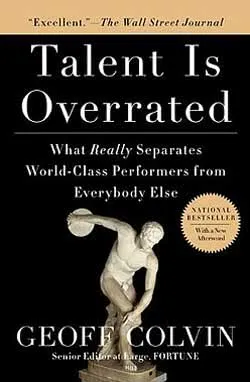
Its title was "Talent is overrated" by Geoff Colvin . I bought it and read it, and here I share with you some insights that I hope will be useful for our guitar practice and our vision of the instrument in general.
Deliberate practice
Probably many of you have a musically gifted friend, a natural talent, maybe with absolute pitch, able to play tricky parts effortlessly, and so forth. Usually, we use a word to explain to ourselves this kind of people: TALENT .
For some inscrutable reasons, your friend was born lucky. But is this really the end of the story? The new findings on great performance tell more.
Research works that analyzed top-level violinists, swimmers, pilots, surgeons did not find any magical and innate gift .
It could sound a bit counterintuitive, but it seems that no one is born guitar virtuoso, or top chess player (democracy at its best?). Research has also shown that superior musical skills are not directly related to great memory or high IQ.
So what is the factor that explains the reason why some people have mind-blowing superpowers ? Researchers called this mysterious ingredient " deliberate practice " (the term appeared for the first time in this paper ).
Deliberate practice has nothing to do with rehearsing with your band, or noddling in front of TV. As written on the book, " Deliberate practice is hard. It hurts. But it works ". We'll get to that later.
What about Wolfgang Amadeus Mozart's talent?
 Of course it is not my intention to doubt the greatness of an absolute musical genius such as
Wolfgang Amadeus Mozart
.
Of course it is not my intention to doubt the greatness of an absolute musical genius such as
Wolfgang Amadeus Mozart
.
He composed music at age 5, and played amazing piano and violin concerts at age 8. Definitely the God of Music, that epitomized musical talent .
But there is more to say. Mozart's father was Leopold , composer and teacher, very keen on children musical education. He was famous thanks to his book on violin learning.
When his son was 3 years old, Leopold started teaching him composition and performing, with an intensive and structured training program .
This early training, provided by a high skilled teacher, seven days a week for many hours, had an enormous impact on the development of Wolfgang.
Regarding Wolfgang's compositions, many scholars agree that the early pieces have been always corrected and revised by his father.
Moreover, none of the early compositions are considered today masterpieces. The first Mozart's great composition is the Piano Concerto no. 9 , composed at age of 21, thus after 18 years of intensive musical training !
Wolfgang Amadeus Mozart was a genius, but beyond the scenes there were tons of hard work !
An interesting experiment on contemporary violin players
 To really understand what it takes to become a great musician, it's worth it to analyze an experiment reported in the paper previously cited.
The research has been carried out at the Music Academy of West Berlin , a music school that creates very good musicians.
With the aid of professors, the researchers grouped violin students in three groups (all students was about 20 years old):
- Group A : the best violinists of the school
- Group B : good violinists but not so good to be included in group A
- Group C : violinists from a department of the school with lower admission standards
Then the researchers investigated on data of the subjects:
when they started learning violin, competitions they won, how many hours a week they practiced, and so forth.
The subjects were also asked to complete a list of music-related and non-music-related activities, filling it with the time spent for each activity.
At first glance, all the three groups were similar: they started learning violin at the same age, and at the time of the experiment they have been studying violin for about 10 years; they were spending the same amount of time in lessons, with the same daily routine composed of practice and classes.
One different element was the amount of time dedicated to solitary practice . Group A and B (best and good violinists) practiced alone about 24 hours a week , while group C only 9 hours a week . All students considered practicing by themselves hard and not fun, but really useful for improvements.
Another interesting difference: Group A and B practiced in morning or early afternoon , when they were still fresh. Group C practiced in late afternoon . And, by tracking students lifestyle, researchers discovered that Group A and B slept more than Group C!
At this point of the experiment, the researchers were in front of another question: if Group A and Group B were practicing the same amount of time (24 hours a week), why they were not at the same level?
The solution of the mystery lies in the students cumulative practice time measured from the beginning of their violinist career: 7410 total hours for group A, 5301 total hours for group B, and 3420 hours for group C.
Again, data tell that hours and hours of hard work are required in order to get to the top level of performance. Talent was not part of the equation .
4 rules for an effective practice
 So far we have learned that in a certain way we are
masters of our musical destiny
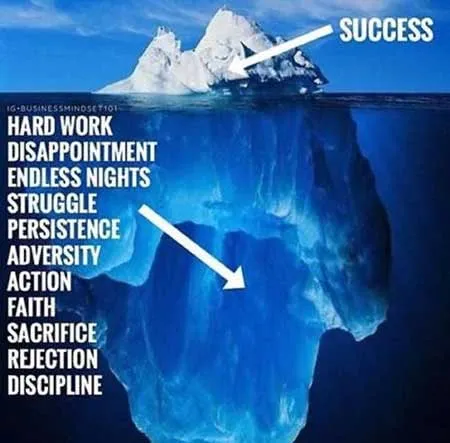
. It seems that we don't need any kind of natural talent, but tons and tons of hard work, or better, deliberate practice.
So far we have learned that in a certain way we are
masters of our musical destiny
. It seems that we don't need any kind of natural talent, but tons and tons of hard work, or better, deliberate practice.
Let's start with the definition of deliberate practice: " the differences between expert performers and normal adult reflect a life-long period of deliberate effort to improve performance in a specific domain ".
The rule of the thumb of what it takes to become a real expert in any field encompasses 10.000 hours of practice , or 4 hours a day, 6 days a week for 10 years.
But don't worry, even if you have less time to dedicate to your axe, the following tips will be useful for improving your performance.
1) Design your practice for specific needs
You should try to identify your lacks and create exercises that address specifically your weakness.
For example, if you have difficulties in crossing strings while you're playing a scale or a chord, isolate the problem and conceive an exercise that drills on the difficult passage. Get out of your comfort zone and play what you find difficult.
2) Practice mindfully
Try to be always 100% focused on your training session. Turn off the phone, close browser and social networks, set a time slot in which you only focus on your exercise.
Believe me, we live in the era of Information Overload and Multitasking; learning how to focus on one single thing will improve your life in general!
3) Include feedback
Of course the most effective way would be a skilled teacher that can draw your attention to mistakes or imperfections. You can also record yourself and analyze later your performance , trying to be as much as possible objective.
If you are learning guitar with online guitar lessons , always try to interact as much as possible with your fellow students.
4) Periodically, evaluate yourself and take adjustments
Check your performances on different topics (alternate picking, string skipping, ear training, theory, and so forth) and track your progress. Then back to rules 1.
Hard Work Vs Natural Talent: conclusions
This kind of practice is highly demanding mentally , and it is not so much fun. Thus deliberate practice should not be the whole of your practice. At the end of the day, you should have fun with your instrument.
But now you know that the more hard work you put in, the more your guitar skills will improve.
Even if you have always considered yourself not particularly musically gifted.
To stay updated on new learning material, subscribe here.

Created by
Giancarlo is a musician (teaching guitar since 2000), software engineer, AI consultant and published researcher
FAQ
What is 'deliberate practice' for guitarists, and how does it differ from regular playing or band rehearsals?
For guitarists, 'deliberate practice' is a highly focused and structured type of practice specifically designed to improve performance in a particular area. Unlike casual playing, noodling, or band rehearsals, it involves isolating specific weaknesses, consciously pushing past your comfort zone, and is often mentally demanding. Its primary goal is targeted skill development, not just enjoying the instrument or performing existing repertoire.
If natural talent is considered overrated, what is the most crucial factor for a guitarist to achieve a high level of skill?
According to the research, the most crucial factor for achieving high-level skill in guitar, or any domain, is 'deliberate practice.' This involves a consistent, life-long period of intensive, focused effort dedicated to improving performance. Studies have shown that top performers are not born with innate magical gifts, but rather accumulate significantly more hours of this type of purposeful, challenging practice.
How can I apply the principle of 'designing practice for specific needs' to my guitar routine?
To design your guitar practice for specific needs, first identify your personal weaknesses, such as difficulty with string skipping, alternate picking, or a particular chord transition. Once identified, isolate that specific problem and create targeted exercises that drill that difficult passage. This means intentionally practicing what you find challenging, rather than just playing what you're already comfortable with.
How can I get effective feedback on my guitar playing if I don't have a personal teacher?
If you don't have a personal teacher, you can still get effective feedback by recording yourself playing. This allows you to objectively analyze your performance, identify mistakes, and pinpoint areas for improvement. Additionally, if you're part of online guitar communities or lessons, actively interacting with fellow students can provide valuable peer feedback and different perspectives.
Why did the research on violinists emphasize 'cumulative practice hours' over just weekly hours for reaching top-tier performance?
The research emphasized 'cumulative practice hours' because it revealed that top-tier violinists, despite potentially practicing similar weekly hours to 'good' violinists at a given time, had accumulated significantly more total hours of practice throughout their entire musical journey. This indicates that sustained, long-term dedication to deliberate practice over many years is a more accurate predictor of reaching the highest levels of performance than short-term weekly effort alone.