Lap Steel Guitar
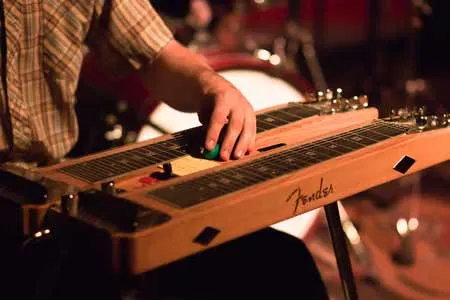
Pedal steel and poor man's lap steel guitar
 It's likely that a few readers may like to play slide guitar, whether with a
finger length slide
or perhaps just a partial slide. It really provides a whole new dimension to
playing and requires
a
skill beyond just fretting the strings with your fingers.
It's likely that a few readers may like to play slide guitar, whether with a
finger length slide
or perhaps just a partial slide. It really provides a whole new dimension to
playing and requires
a
skill beyond just fretting the strings with your fingers.
Now if we take that slide to the next level, by removing all fretting and playing all the strings with a heavier metal or glass slide we almost start playing an entirely different musical instrument. Acoustic , electric , and lap steel guitars are all so very similar, yet at the same time the lap steel can take on a life of its own!
The lap steel guitar is really fun to play, comes in a variety of styles, and can be bought or built at a low cost. Some of the more popular lap steels use pedals and are incredibly expensive, and these are the ones you most often hear on Hank Williams tunes. Resonator guitars, like Dobro's, are often played like lap steels but have metal resonating cones to help amplify the sound.
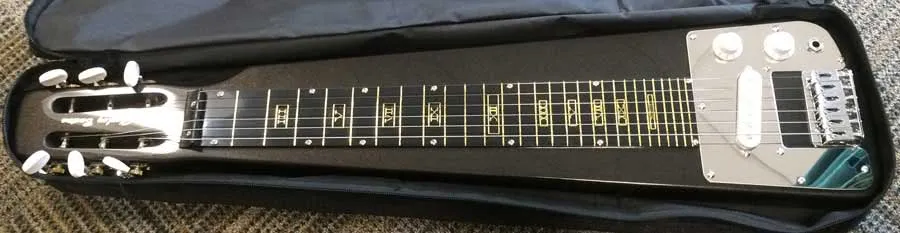
The key difference between a regular guitar and a lap steel is that the strings are placed much higher above the frets. That way when you rest the bar on the strings it does not touch any frets.
This is one reason why it is sometimes ok to buy lap steels that are not too expensive. When we play a regular guitar it is important that the action and neck bow are just right, otherwise it can be too difficult to play with buzzes or impossible fretting . However, with a lap steel, the action can be incredibly high and no big deal.
Lap steel guitar tunings
Lap steels are often tuned to specific chords, because standard tuning doesn't work well for sliding on all strings. If you tune your lap steel guitar to an open G chord , this will allow you to play specific major chords up the fretboard. Another common tuning is C6 , which is also the tuning of ukuleles. C6 tuning is what gives us that " Hawaiian Sound " so often heard in Hawaiian music and early country, including the famous Mele Kalikimaka !
E7 tuning is also common and so is open D , if you purchase a lap steel with more than six strings than you can start using tunings like E9, C13, and even B11 . I love B11 tuning, it can give the song a moody Hawaiian feel.
How to play lap steel guitar
The key to playing good lap steel lies in buying a suitable bar and using proper barring technique .
Some musicians like to use lighters, or hollow bars to play slide guitar, or even anything that is straight and flat enough to cover all the strings. These will not work the greatest for playing proper lap steel, you want the bar to be heavy and flat.
In fact, a good lap steel bar is what I call a " toe breaker ", because if dropped they can do serious damage! After getting a proper slide the next step is using the right technique .
As the bar rests on the strings you want to place your middle or ring finger BEHIND it so it will mute out any screeches or unwanted noises. The index finger will be placed on top and as you glide back and forth make sure to always keep the back of the strings muted.
As far as picks go, it is fine to use a simple guitar pick to strum or pick single strings. Even better is purchasing a thumb, index, and middle finger pick, that way you have three fingers to pick melodies. The more picks the better , for a very simple reason; because you are limited on what chords and notes you can play.
Say you have a lap steel tuned to C6, as you move to the next fret it will be C#6, D6 , and so on up the guitar. So how do we play a minor chord or a seventh?? We simply have to pick the notes for chords that aren't playable. And with 3 picks this allows us to use the thumb for bass notes and the other two fingers for treble. This is a common issue for folks who play wind and brass instruments. A saxophonist cannot play a C major chord , but they can pay the underlying notes of C, E, and G . This is why the lap steel is great for playing melodies and solos because we are often picking single notes.
Poor man DIY Lap Steel Guitar
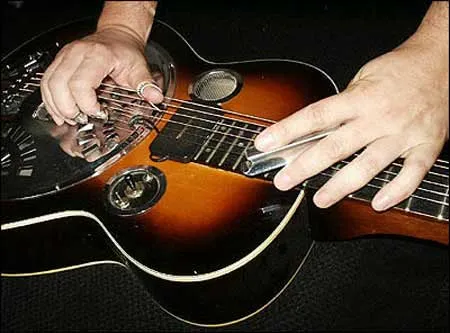
In reality it is not all that difficult to start playing a lap steel guitar. In some cases, you can literally flip your guitar over, lay it flat, and start playing it just like a lap steel or dobro. In some cases it doesn't take much to play a simple slide steel guitar, here below Jack White shows the basics:
As mentioned before you will not usually want to use standard tuning so find any steel string tuning you like and try it out. If your guitar action is to low, try finding an old acoustic that has high action and it can be repurposed to serve as a lap steel. This makes an excellent DIY project , even if you aren't the most mechanically inclined person. You can even take out the old nut of the acoustic guitar and add a thicker one to raise the strings up.
 There are a variety of possibilities when "building" your own lap steel. Say you have an old acoustic with high action, there is more to experiment with than just the string height. (Make sure
you
are using a steel string acoustic and not a classic nylon string, or you could have a guitar snap on you!) Try using different strings to get different tunings and sounds. Clearly we can take
standard tuning strings and use them for
different tunings
, however we are limited at times.
There are a variety of possibilities when "building" your own lap steel. Say you have an old acoustic with high action, there is more to experiment with than just the string height. (Make sure
you
are using a steel string acoustic and not a classic nylon string, or you could have a guitar snap on you!) Try using different strings to get different tunings and sounds. Clearly we can take
standard tuning strings and use them for
different tunings
, however we are limited at times.
You always have to watch how much you tighten a string or it will break, loosen it too much and there will be too much slack to play. By experimenting with different gauges and metals we can come up with all sorts of sounds for our cheap little lap steel. We can also take pickups out and replace them with other styles. I personally like to buy a simple and affordable lap steel and then replace the pickup with a more expensive one . This gives me a great sounding lap steel on a budget.
Lap steel guitars: conclusion
Some readers may wonder why bother with playing a lap steel, perhaps the acoustic or electric is enough. However, a whole new world is opened up when we stretch our instruments capabilities. It allows us to learn the fretboard with different tunings, it gives us a unique sound, and teaches us new techniques of sliding and slurring. It is also a great way to get into building guitars , as it doesn't require specific luthier knowledge for the most part. You may find you love building your own lap steel guitar and advance on to bigger and better ideas. Whether you use an old acoustic, turn your guitar on its back, or buy a fancy pedal lap steel you will find the world of lap steel and slide guitar quite enjoyable!
Further resources
- Video tutorial on how to transform your old guitar in a lap steel guitar: click here
- In this lessons Neal Walter teaches you how to use the slide
- Learn how to play the bottleneck slide

Created by
Giancarlo is a musician (teaching guitar since 2000), software engineer, AI consultant and published researcher
FAQ
What is the main difference between a regular guitar played with a slide and a lap steel guitar?
The primary distinction is in their setup and playing style. On a lap steel guitar, the strings are set significantly higher above the frets, allowing a heavy metal or glass bar to glide over them without touching. This eliminates the need for fretting, which is still typically done on a regular guitar played with a slide.
Why do lap steel guitars use specific open chord tunings instead of standard guitar tuning?
Lap steel guitars are typically tuned to specific open chords (like C6, Open G, or E7) because standard guitar tuning doesn't work well for sliding across all strings simultaneously. Open tunings allow you to easily form major chords by simply barring straight across any fret, which is fundamental to lap steel technique.
How can I play different types of chords, like minor or 7th chords, on a lap steel if it's tuned to a single open chord?
Since a lap steel is tuned to an open chord, moving the bar up the fretboard changes the root of that chord (e.g., C6 to C#6). To play minor or 7th chords, you must pick individual notes that form those chords, rather than barring across all strings. Using multiple fingerpicks (thumb, index, middle) allows you to isolate and combine specific notes to create the desired harmonic voicings, making it great for melodies and solos.
What kind of slide bar and picks are recommended for playing lap steel guitar?
For the slide (often called a 'bar'), a heavy and flat metal or glass bar is recommended, as it provides optimal sustain and tone. Unlike lighter slides used for regular guitar, a 'toe-breaker' bar is ideal for lap steel. For picking, while a simple guitar pick can be used, purchasing a thumb pick, index pick, and middle finger pick is better. This setup allows for greater articulation and the ability to pick individual notes for melodies and chord voicings.
Why is high string action beneficial for a lap steel guitar, unlike a standard guitar?
High string action is crucial for a lap steel guitar because it ensures that the heavy slide bar does not touch the frets. This allows for clear, sustained notes and glides without unwanted fret buzz. In contrast, on a standard guitar, high action would make fretting notes extremely difficult and lead to poor playability.
Can I convert a regular acoustic guitar into a DIY lap steel for practice?
Yes, you can repurpose an old steel-string acoustic guitar to function as a DIY lap steel. You can simply lay it flat and play, but for better results, consider using an acoustic with naturally high action. For a more dedicated conversion, you can replace the original nut with a thicker one to significantly raise the string height, mimicking the setup of a true lap steel.
