Practice Esus4 Chord for Guitar with Our Interactive Tool
Want a structured chord roadmap instead of jumping between pages?
Go to the full guitar chords tutorial.
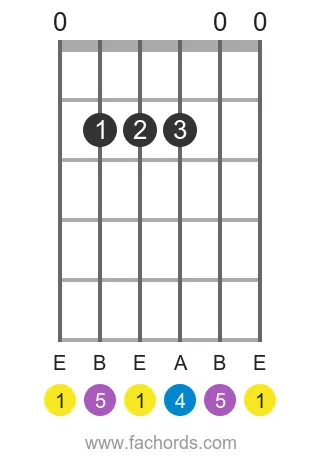
Struggling to play the Esus4 chord for guitar cleanly? Our interactive fretboard is here to help you master it. Get instant feedback from your guitar's microphone, verifying every note you play in real-time. This unique suspended (sus) chord is formed by the notes E, A, and B, representing the 1st (Root), 4th (Perfect Fourth), and 5th (Perfect Fifth) intervals. You can also listen to precise chord playback and practice with a rhythmic drum track, ensuring you develop perfect timing and accuracy.
Suspended chords, like the Esus4, deliberately omit the third, creating a unique sound that feels unresolved and 'suspended'. This tension is often used creatively in music, resolving to a major or minor chord to create satisfying harmonic movement. To dive deeper into this chord family, explore our tutorial on suspended guitar chords. Moreover, understanding the intervals that make up a chord is fundamental; learn more about chord construction and how to use intervals to build any chord.
Before scrolling down to our comprehensive diagrams (ranked easiest to hardest) and exploring the theory behind them, we encourage you to use the interactive tool above. Test yourself with various voicings of the Esus4 chord, then apply your knowledge to practice songs and understand how it functions across different keys. Your hands-on practice with the tool will accelerate your learning and solidify your understanding.
E suspended 4th guitar chord is also written as Esus4, Esus or E4.
Notes that compose the E sus4 chord:
Tones in the Suspended Fourth chord:
E Sus4 Guitar Chord Diagrams
Position 1
Open
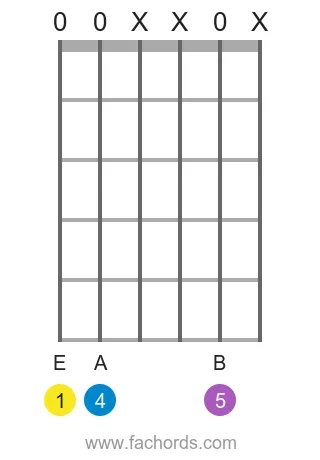
Position 2
Open
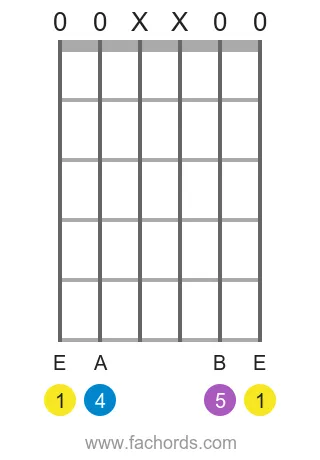
Position 3
Open
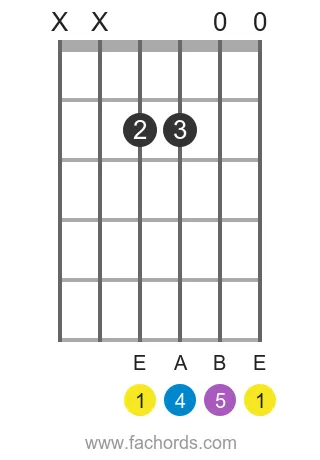
Position 4
Open
Position 5
Open
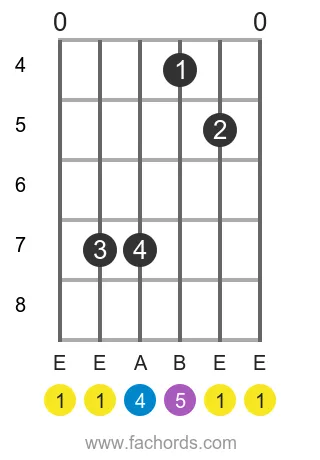
Position 6
Barre
Movable
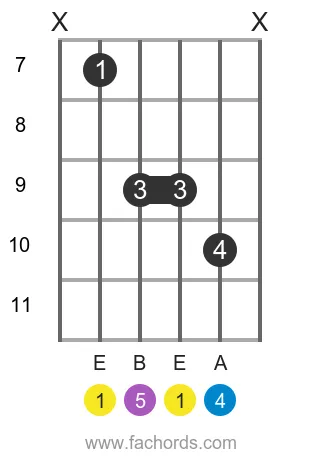
Position 7
Barre
Open
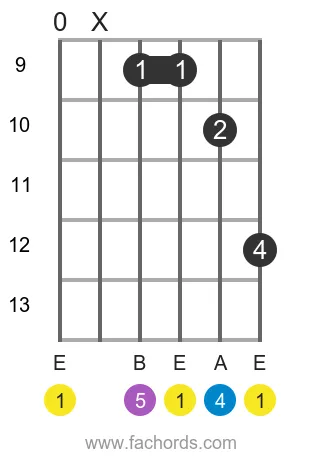
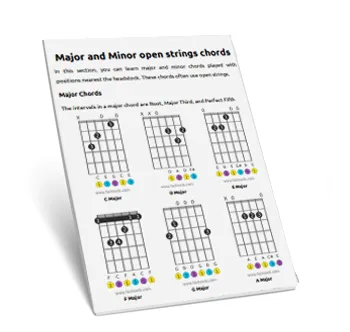
 Find more shapes in our all guitar chords online library. If you
prefer a printable pdf, download
the Free Guitar Chords Chart Pdf
Find more shapes in our all guitar chords online library. If you
prefer a printable pdf, download
the Free Guitar Chords Chart Pdf
You can also use this accessible Esus4 chord page, with written diagram instructions and screen-reader support for blind users.

Created by
Giancarlo is a musician (teaching guitar since 2000), software engineer, AI consultant and published researcher
FAQ
What notes make up the E sus4 guitar chord?
The E sus4 chord is composed of the notes E, A, and B. E is the root, A is the perfect fourth, and B is the perfect fifth.
Why is the E sus4 chord referred to as 'suspended'?
The E sus4 chord is called 'suspended' because it replaces the typical major or minor third with a perfect fourth, creating a sound that feels unresolved or 'hanging'. This characteristic tension is key to its name.
What is the primary function of an E sus4 chord in music?
The primary function of an E sus4 chord is to create tension in music. It is often used to build anticipation and is typically resolved by moving to a major or minor chord, providing a sense of release.
How do the intervals 1, 4, and 5 define the E sus4 chord?
For the E sus4 chord, the '1' interval represents the Root note (E), the '4' interval represents the Perfect Fourth (A), and the '5' interval represents the Perfect Fifth (B). These specific intervals are the foundational building blocks of the chord.
Is the E sus4 chord considered a power chord?
Yes, the E sus4 chord is also described as a Suspended/Power chord. This indicates it shares some characteristics with power chords, typically known for their strong, open sound derived from the root and fifth.
What distinguishes the E sus4 chord from standard major or minor chords?
The E sus4 chord is distinguished from major or minor chords by the absence of a third interval. Instead of a major or minor third, it uses a perfect fourth, which gives it its characteristic unresolved or 'suspended' quality, differing from the definitive sound of major or minor chords.