The Sears Roebuck Bridge: III7 VI7 II7 V7 and Its Two Sliding Lines
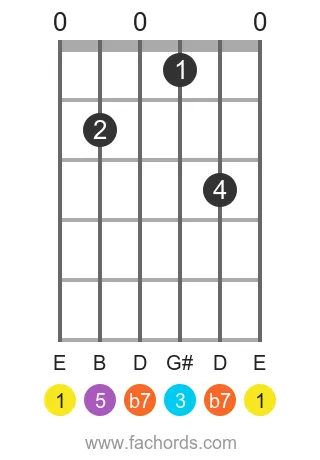
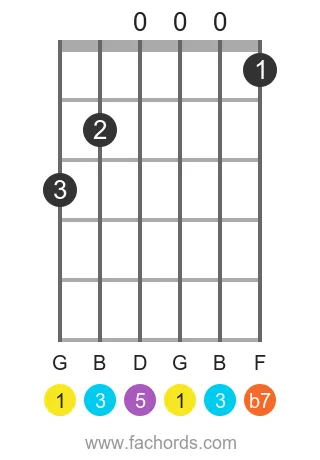
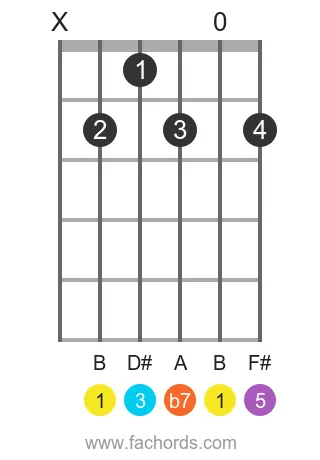
Four open shapes, B7 E7 A7 D7, and none of them is the tonic. That's the Sears Roebuck bridge, III7-VI7-II7-V7, here in the key of G.
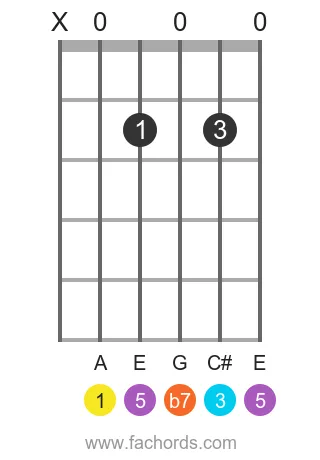
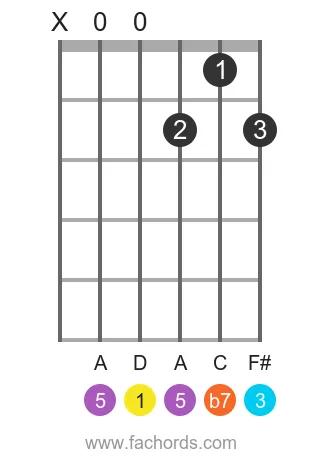
In the Nashville Number System it's 3(7) 6(7) 2(7) 5(7). In the key of C it reads E7 A7 D7 G7, and only G7 belongs to the key: E7, A7 and D7 bring in G#, C# and F#. You'll also see it called the rhythm bridge or the rhythm changes bridge. Grab the diagrams and audio for all five keys and follow along.
Every Chord Is the V of the Next
B7 is the V of E7, E7 is the V of A7, A7 is the V of D7, and D7 is the V of G, the tonic you're heading for. The roots fall by fifths the whole way. Since every chord is a dominant, no key gets confirmed until the end. Listen for that restless lift. In rhythm changes each chord lasts two bars, so those four chords fill eight bars.
Two Lines Sliding Down by Half Steps
Now look only at the third and seventh of each chord. Two lines appear:
- D# D C# C: third of B7, seventh of E7, third of A7, seventh of D7.
- A G# G F#: seventh of B7, third of E7, seventh of A7, third of D7.
Here's something to try. Play the open B7, E7 and A7 slowly and watch the third string: fret 2, fret 1, open. That's the second line, right under your fingers. It finishes on the first string, fret 2, in the D7. Pick that one note out of each chord and the bridge becomes a tiny melody. These voice leading ideas take it further.
Rhythm Bridge or Ragtime Progression?
The ragtime progression name turns up for this chain too. The ragtime progression I-VI7-II7-V7 opens on I, though. Here the first chord is III7, so there's one more dominant and no tonic at the start.
I Got Rhythm and Mr. Sandman
The chain turns up in a bridge and in a verse:
| Song | Artist | Section | Chords | Key |
|---|---|---|---|---|
| Mr. Sandman | The Chordettes | verse | G#(7) C#7 F#(7) B(7) E(7) A | A major |
| I Got Rhythm | George Gershwin | bridge | D7 | G7 | C7 | F7 | Bb major |
I Got Rhythm plays D7 G7 C7 F7 in Bb. Put a capo on the third fret and those are your B7 E7 A7 D7 shapes. Mr. Sandman sits in A and runs longer: it starts a fifth further back on G#, walks through C#, F#, B and E, then actually lands on A.
Sears Roebuck Bridge: Chords and Audio in C, G, D, A and E
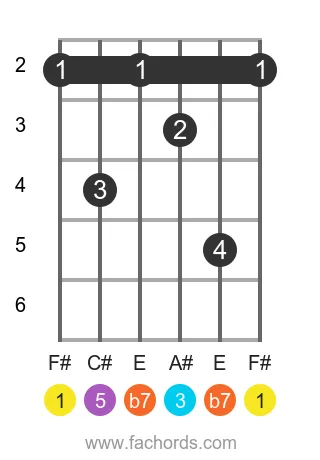
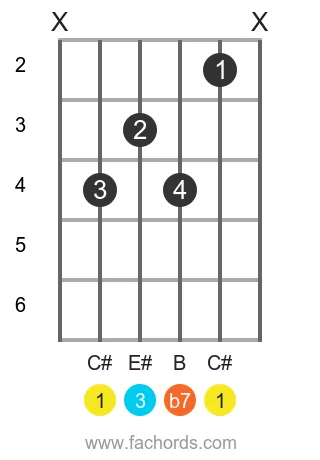
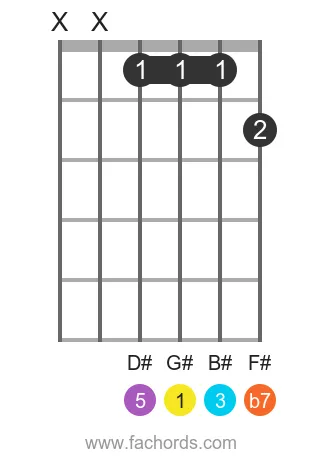
Press play to hear each key. The diagrams show the shapes used in the audio, and every chord links to its full page.
More progressions like this one
- Tritone substitution cadence: Dm7 Db7 Cmaj7
- Tadd Dameron turnaround: Cmaj7 Eb7 Ab7 Db7
- Take the A Train changes: Cmaj7 D7 Dm7 G7
- Girl from Ipanema changes: Cmaj7 D7 Dm7 Db7

Created by
Giancarlo is a musician (teaching guitar since 2000), software engineer, AI consultant and published researcher
FAQ
What is the Sears Roebuck bridge?
It is a chain of four dominant chords, III7-VI7-II7-V7, each one the V of the next. In G that means B7 E7 A7 D7. It is also called the rhythm bridge or rhythm changes bridge.
Which chords make up III7 VI7 II7 V7 in the five keys?
In C major: E7 A7 D7 G7. In G major: B7 E7 A7 D7. In D major: F#7 B7 E7 A7. In A major: C#7 F#7 B7 E7. In E major: G#7 C#7 F#7 B7.
How long is each chord in the rhythm changes bridge?
In rhythm changes each chord lasts two bars, so the four dominants fill eight bars. In I Got Rhythm, which is in Bb, the chords are D7 G7 C7 F7.
Is the Sears Roebuck bridge the same as the ragtime progression?
The name is used for both, but they start differently. The ragtime progression I-VI7-II7-V7 opens on the tonic, while this bridge opens on III7, so all four of its chords are dominants.
