Exotic Scales on Guitar
8 uncommon scales you must know, Free ebook and Scale Finder Tool
Here's a selection of exotic scales that will boost your guitar improvisation skills. Some of these scales come from the East , where the concept of minor mode and major mode is less evident. They have a mystical flavor that will give variety and originality to your sound. If you are learning guitar scales you also might find useful our interactive guitar scale finder tool (hundreds of scale patterns all along the fretboard) and the free download area , where you can download some scales and chords pdf ebooks.
Table of Contents
- Indian Scale
- Japanese Scale
- Gipsy Hungarian Scale
- Neapolitan Scale
- Persian Scale
- Jewish Scale
- Bizantine Scale
- Arabic Scale
Scale Formula :
Scale Pattern:
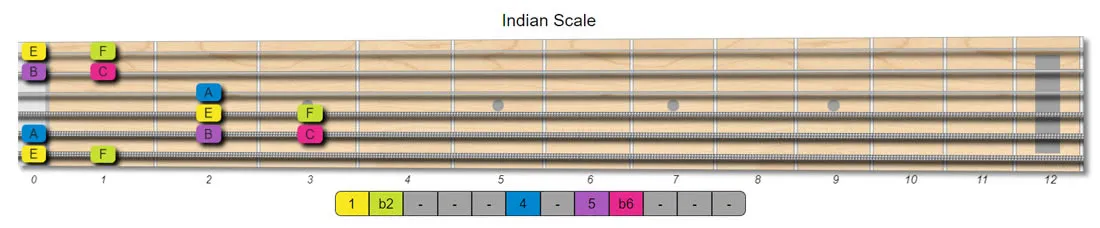
Scale Formula :
Scale Pattern:
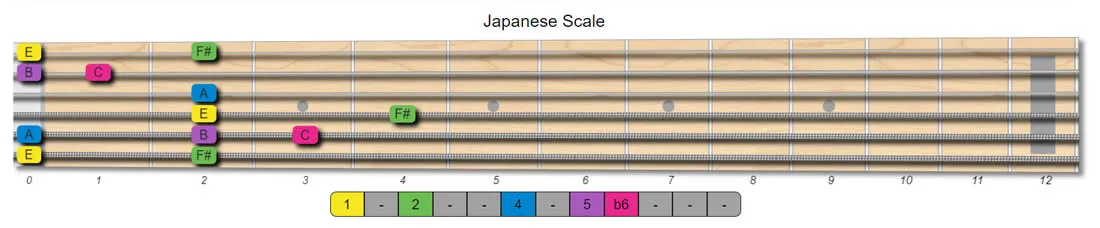
Scale Formula :
Scale Pattern:

Scale Formula :
Scale Pattern:
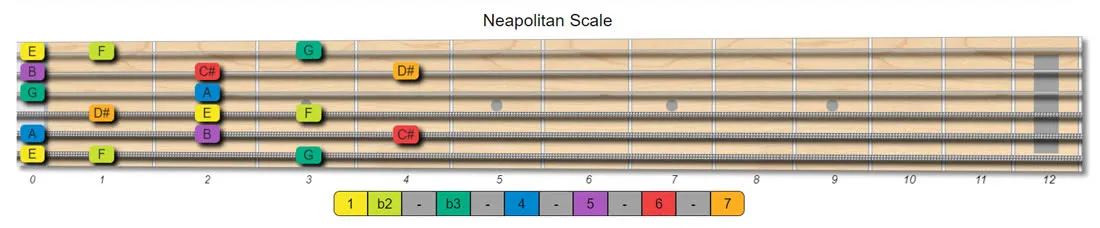
To learn more about this scale, check out our neapolitan scales tutorial .
Scale Formula
Scale Pattern:
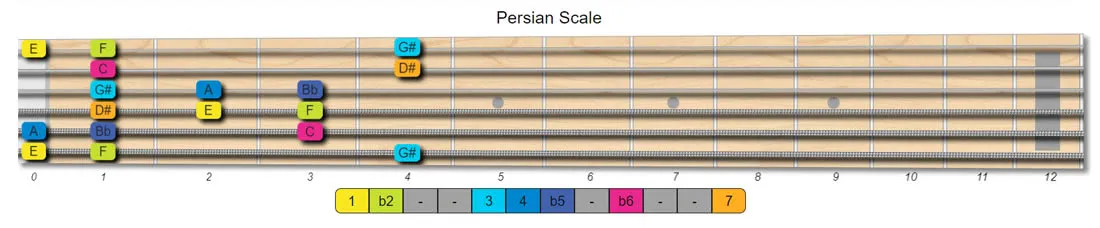
Scale Formula :
Scale Pattern:

Scale Formula :
Scale Pattern:

Scale Formula :
Scale Pattern:
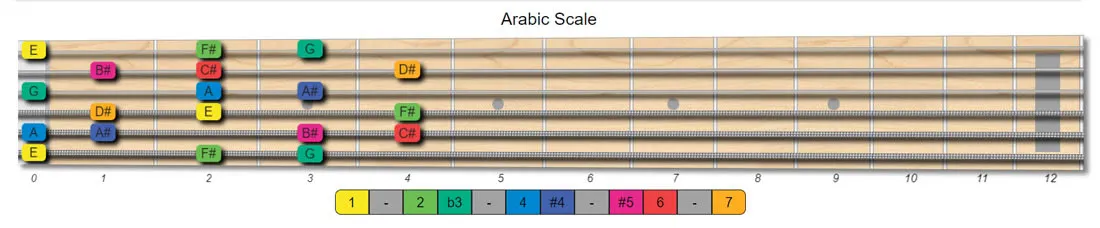
Scale Finder Tool
The scale patterns shwon on this page have been created with our guitar scale finder interactive learning tool. It's a free tool that shows you the fretboard pattern for hundreds of different scales and arpeggios. The tool runs online in the browser, you don't need to install anything. Try the scale finder now !
Free Exotic Guitar Scales Ebook :

We've also create a free pdf ebook contains 40 guitar scales patterns of the most tasty exotic scales . Add new flavours to your guitar sound with indian scales , japanese scales, arabian scales , bizantine, jewish, neapolitan and other strange and uncommon guitar scales. Download the ebook here for free
I've shot personally the photo cover of the book. I was in the nearby of the Charminar, Hyderabad, India , what amazing place!

Created by
Giancarlo is a musician (teaching guitar since 2000), software engineer, AI consultant and published researcher
FAQ
What defines an 'exotic' guitar scale compared to more common scales?
Exotic guitar scales are distinguished by their unique and often unfamiliar sonic qualities, setting them apart from the major and minor scales commonly used in Western music. They frequently incorporate unusual interval patterns that create a 'mystical flavor' and add variety and originality to a guitarist's sound. Many have origins in Eastern musical traditions, where different harmonic and melodic concepts prevail.
How can learning exotic scales improve my guitar improvisation?
Learning exotic scales significantly boosts your improvisation skills by expanding your melodic vocabulary beyond standard major and minor tonalities. These scales provide fresh sonic textures and moods, allowing you to inject 'spice,' 'variety,' and 'originality' into your solos and compositions, making your playing more engaging and expressive.
What do the scale formulas like '1 b2 4 5 b6' mean when describing an exotic scale?
A scale formula indicates the intervals of the scale relative to its root note (represented as '1'). The numbers correspond to scale degrees (e.g., 2 for a second, 3 for a third), while 'b' (flat) or '#' (sharp) denote a half-step alteration from the natural major scale degree. For example, 'b2' means a minor second (a half step above the root), and 'b6' means a minor sixth (a half step below a major sixth).
Are all the exotic scales presented derived from Eastern music?
While many exotic scales, such as the Indian, Japanese, Arabic, and Persian scales, indeed come from Eastern traditions, not all of them do. The collection also includes scales like the Gipsy Hungarian, Neapolitan, Jewish, and Bizantine scales, which have distinct cultural or geographical origins that contribute to their unique 'mystical flavor' but are not exclusively 'Eastern' in the common understanding.
When the content mentions that 'the concept of minor mode and major mode is less evident' in some Eastern scales, what does that imply for guitarists?
This implies that some exotic scales, particularly those from Eastern traditions, don't strictly adhere to the clear major/minor distinctions familiar in Western music. They often feature intervals that create ambiguous tonalities or blend qualities, allowing for unique harmonic and melodic interpretations that aren't easily categorized as simply 'happy' or 'sad.' This opens up new avenues for emotional expression and sonic landscapes in your guitar playing.
