i bVII bIII bVI: A Minor Loop That Falls by Fifths
Familiar chords in a slightly unfamiliar order: that's i-bVII-bIII-bVI. In E minor it's Em D G C, and in A minor it's Am G C F. Written in Nashville numbers, you get 1m b7 b3 b6.
That order stays in normal territory, but with a darker minor colour for pop rock tunes. Have a listen to the audio in five keys, then look at what the roots are doing.
Fifths Hiding Inside Natural Minor
After the opening chord, each root falls a fifth: from bVII to bIII to bVI. That's the motion of the circle of fifths, but it runs on the major chords of the Aeolian scale, and it gives the loop a stately, cinematic drive.
You can see it on the neck. In A minor, the roots are:
- G: sixth string, fret 3
- C: fifth string, fret 3
- F: fourth string, fret 3
Same fret, one string over each time. Going up a fourth lands on the same note name as falling a fifth, so your finger stays at fret 3 while the harmony keeps moving. Play those three notes, then the open A string to restart, and you have the whole bass line.
It's a Rotation, Heard From the Minor Side
Why does it sound familiar? In the key of C these four chords are vi-V-I-IV. Start the loop on C and you get C F Am G, the I-IV-vi-V. Same loop of chords, but stepping on at Am puts the minor chord first.
There's a closer twin. i-bIII-bVII-bVI uses the same four chords and swaps the two in the middle: Am C G F. Play four bars of each. In that order the roots no longer fall by fifths, and G steps down to F.
Six Songs, Mostly in the Chorus
Four of the six use it in the chorus. Shake the Disease and I Want to Know What Love Is keep it for the verse. Die Young and Cute Without the E share C#m B E A: with a capo on fret 4 that's Am G C F. Fresh Eyes needs no capo at all, since it's listed in E minor with the open shapes from the top.
| Song | Artist | Section | Chords | Key |
|---|---|---|---|---|
| All the Right Moves | OneRepublic | chorus | Am G C F | A minor |
| Die Young | Kesha | chorus | C#m B E A | C# minor |
| Shake the Disease | Depeche Mode | verse | Dm C F Bb | D minor |
| I Want to Know What Love Is | Foreigner | verse | D#m C# F# B | D# minor |
| Cute Without the E | Taking Back Sunday | chorus | C#m B E A | C# minor |
| Fresh Eyes | Andy Grammer | chorus | Em D G C | E minor |
i bVII bIII bVI Chord Progression: Chords and Audio in C, G, D, A and E
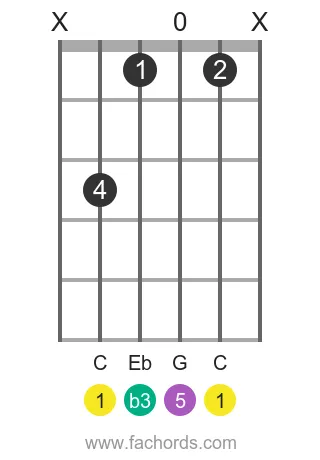
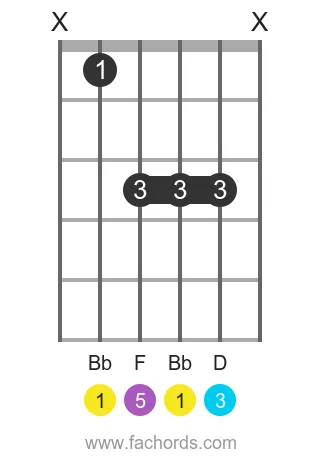
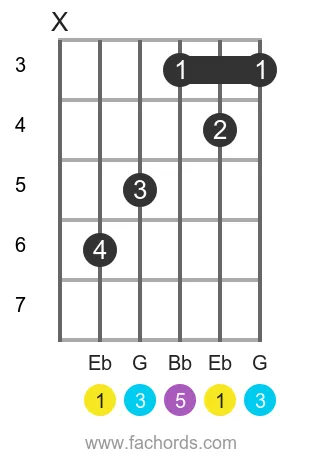
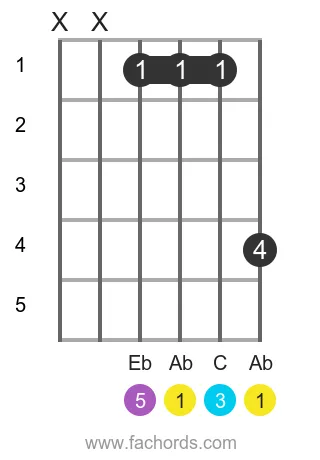
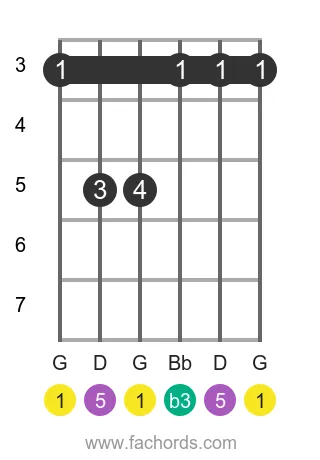
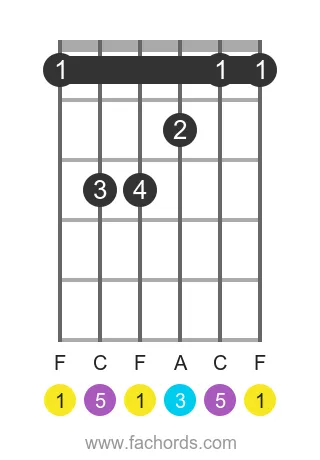
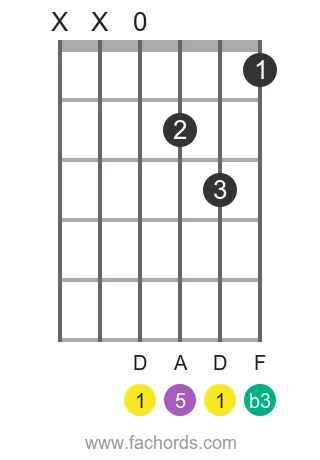
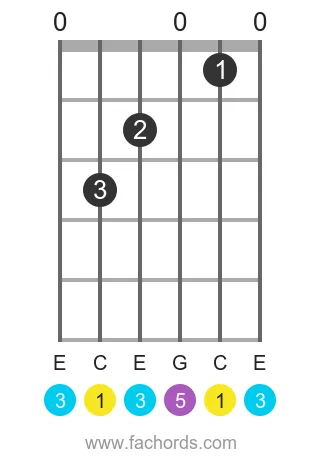
Press play to hear each key. The diagrams show the shapes used in the audio, and every chord links to its full page.
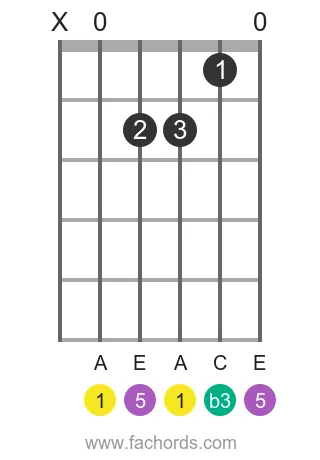
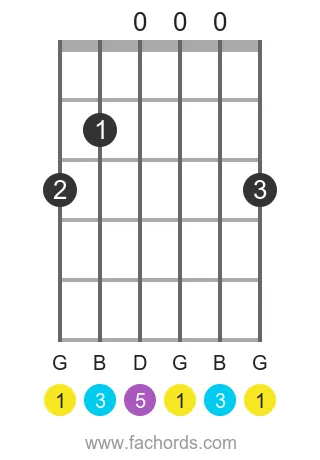
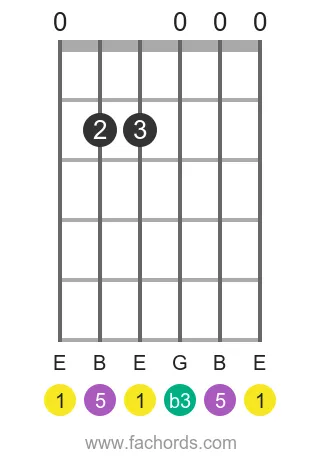
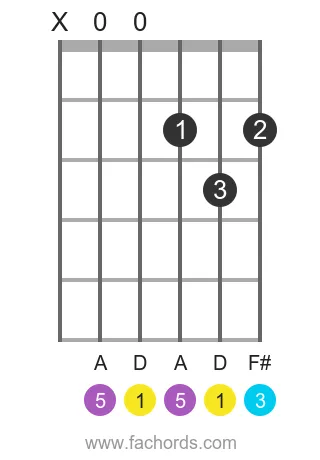
More progressions like this one
- i-bVI shuttle: Cm Ab
- Minor i-iv-V: Cm Fm G
- Minor i-iv-i-V shuttle: Cm Fm Cm G
- Minor i-bVI-V: Cm Ab G

Created by
Giancarlo is a musician (teaching guitar since 2000), software engineer, AI consultant and published researcher
FAQ
How do you play i bVII bIII bVI in different keys?
In C minor: Cm Bb Eb Ab. In G minor: Gm F Bb Eb. In D minor: Dm C F Bb. In A minor: Am G C F. In E minor: Em D G C.
Where are the falling fifths in Am G C F?
From the second chord on. G falls a fifth to C, and C falls a fifth to F. These are the major chords of the natural minor scale, moving like the circle of fifths.
Is Am G C F a rotation of another progression?
Yes. Starting the same cycle on C gives C F Am G, or I-IV-vi-V. Stepping on at Am puts the minor chord first, and in the key of C it reads vi-V-I-IV.
What is the difference between Am G C F and Am C G F?
They use the same four chords with the middle two swapped. Am G C F has roots falling by fifths from G. Am C G F jumps to G, then steps down to F.
