I-bVII-IV: Two Plagal Steps From Good Times Bad Times to Hey Jude
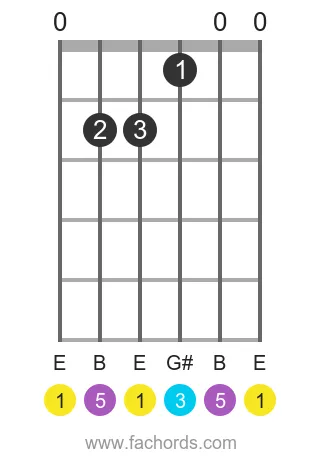
Three open chords, E D A, and you're playing I-bVII-IV, the loop under Good Times Bad Times and Don't Stop. Move it to the key of C and it reads C Bb F, where Bb is the outsider: C major has a B natural.
Think of it as a plain I-IV with a bVII added in. That flat seventh is a huge part of the blues, which heavily influenced early rock, and a large number of classic rock tunes use it. In Nashville numbers it's 1 b7 4, and the audio and diagrams for all five keys are ready when you are.
Each Chord Is the IV of the Next
Start reading from the bVII. In E, D is the IV of A, and A is the IV of E. So the roots fall by fourths and reach home through two plagal steps in a row: the double plagal, or double plagal cadence, a term from the musicologist Walter Everett. Written this way the chords are bVII-IV-I, or I-bVII-IV-I with the first tonic spelled out.
Put one more fourth in front and you get the triple plagal. Drop the IV and you're left with the two-chord subtonic shuttle.
Trade the V for a Whole Step
The bVII comes from the Mixolydian mode, or you can see it as borrowed from the parallel minor. Either way it replaces V, and that removes the leading tone. Try it in D: play D A D, then D C D. The A chord holds a C#, a half step under home. The C chord holds C natural. Which version sounds looser to you?
The Key column shows both labels: Good Times Bad Times is marked E Mixolydian and Don't Stop E major, on the same E D A.
From the Hey Jude Coda to Won't Get Fooled Again
Another name for this loop is the Hey Jude coda, after the na na na section, which goes F Eb Bb F in the key of F. Six of the nine songs start on the I. The other three enter on the bVII: D A E in the chorus of With a Little Help from My Friends, G D A in Won't Get Fooled Again, C G D in Can't You See.
| Song | Artist | Section | Chords | Key |
|---|---|---|---|---|
| Werewolves of London | Warren Zevon | verse and chorus | D C G | D Mixolydian |
| Born This Way | Lady Gaga | verse and chorus | E D A (shapes) | F# Mixolydian |
| Whip It | Devo | verse | E7sus D A | E Mixolydian |
| Good Times Bad Times | Led Zeppelin | verse | E D A | E Mixolydian |
| Don't Stop | Fleetwood Mac | verse and chorus | E D A | E major |
| Hey Jude | The Beatles | coda (na na na) | F Eb Bb F | F major |
| With a Little Help from My Friends | The Beatles | chorus | D A E | E major |
| Won't Get Fooled Again | The Who | intro and outro | G D A | A major |
| Can't You See | The Marshall Tucker Band | intro and verse | C G D | D major |
Born This Way is listed in shapes: E D A with a capo on the second fret gives the real key of F#. Now play E D A twice, then D A E twice, and listen for where home seems to be.
I bVII IV Chord Progression: Chords and Audio in C, G, D, A and E
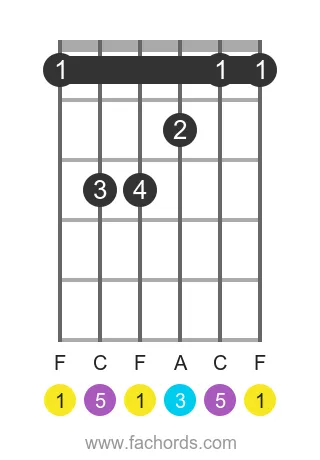
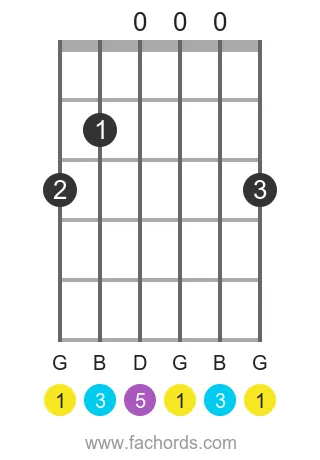
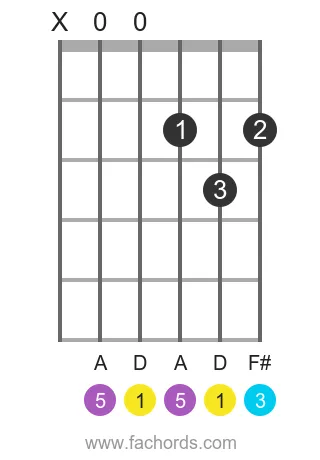
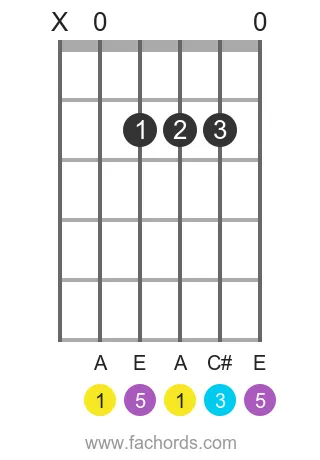
Press play to hear each key. The diagrams show the shapes used in the audio, and every chord links to its full page.


More progressions like this one
- I-II-IV-I: C D F C
- I-V-bVII-IV: C G Bb F
- I-bIII-bVII-IV: C Eb Bb F
- I-i: C Cm

Created by
Giancarlo is a musician (teaching guitar since 2000), software engineer, AI consultant and published researcher
FAQ
What are the chords of I bVII IV in each key?
In C major: C Bb F. In G major: G F C. In D major: D C G. In A major: A G D. In E major: E D A.
What is a double plagal cadence?
It is bVII-IV-I, where each chord is the IV of the next, so the roots fall by fourths and reach home through two plagal steps. The term comes from the musicologist Walter Everett.
Why is I bVII IV called the Hey Jude coda?
The na na na coda of Hey Jude by The Beatles plays this loop as F Eb Bb F in the key of F, so the progression is also known by that name.
Is E D A in E major or E Mixolydian?
The bVII chord comes from the Mixolydian mode, and D natural is the flat seventh of E. Good Times Bad Times is marked E Mixolydian here, while Don't Stop is marked E major with the same three chords.