I-II-IV-I: The Major II That Slides Back Down Into IV
What happens when the ii of a major key turns major? You get I-II-IV-I. In the key of D that's D E G D, and Eight Days a Week plays it in the verse with an E7. In the key of C the same loop is C D F C, and the D chord sits outside the key because of its F#.
Nashville players write it 1 2 4 1. It also goes by the name Lydian cadence, because the major II borrows the raised fourth of the Lydian mode. As a cadence you'll see it written II-IV-I, and as a loop I-II-IV. If you'd rather hear it first, go to the five keys and press play.
The Note That Gets Cancelled
Stay in D. The E chord contains G#, a note the key doesn't have. The next chord, G, contains G natural, so the raised fourth is cancelled straight away and you get a smooth chromatic line: G# down to G, one half step.
Your hand shows it. In an open E, the third string is held at the first fret. In an open G, that string rings open. Play the two chords slowly and listen to that string alone.
A Dominant That Changes Its Mind
The II can also be heard as a secondary dominant of V: E is the V of A. Compare D E A D with D E G D. The first follows that pull. The second turns aside to IV, then uses IV instead of V to get back to the root. That sidestep is the bright, floating lift typical of 60s and 70s pop rock.
Beatles Verses, Forget You and a Power Chord
This one appears in more than a few Beatles songs, and Open Music Theory calls II-IV-I the most popular progression using the major II. Compare how the songs dress it up:
- Sgt. Pepper's Lonely Hearts Club Band makes all of it dominant sevenths: G7 A7 C7 G7.
- Yesterday keeps it for a verse ending, G7 Bb F in the key of F.
- Forget You runs D7 F C through the whole song, starting straight on the II.
- The Boys Are Back in Town plays B5, a power chord with no third, so the raised fourth isn't in the chord. Its A B5 D A are shapes for a song in Ab.
| Song | Artist | Section | Chords | Key |
|---|---|---|---|---|
| Eight Days a Week | The Beatles | verse | D E7 G D | D major |
| The Boys Are Back in Town | Thin Lizzy | chorus | A B5 D A (shapes) | Ab major |
| Forget You | CeeLo Green | whole song | D7 F C | C major |
| Sgt. Pepper's Lonely Hearts Club Band | The Beatles | verse | G7 A7 C7 G7 | G major |
| All Around the World | Oasis | chorus | B C# E B | B major |
| Yesterday | The Beatles | verse ending | G7 Bb F | F major |
Want it stripped down to two chords? The Lydian shuttle only rocks between I and II. And I-II-ii takes the same major II somewhere else, turning it minor.
I II IV I Chord Progression: Chords and Audio in C, G, D, A and E
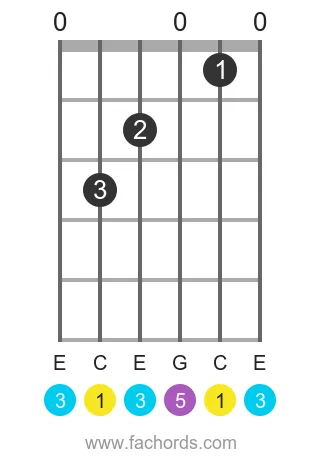
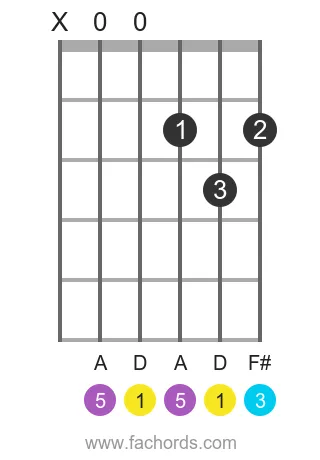
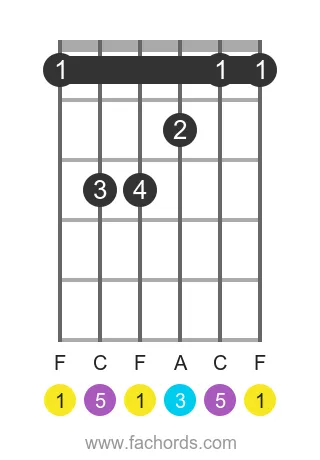
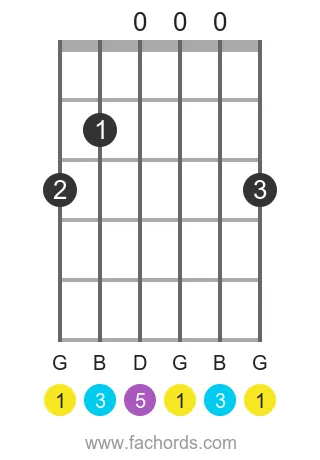
Press play to hear each key. The diagrams show the shapes used in the audio, and every chord links to its full page.
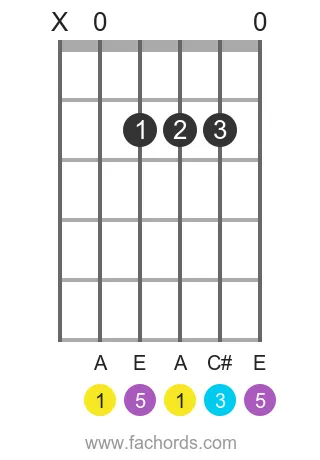
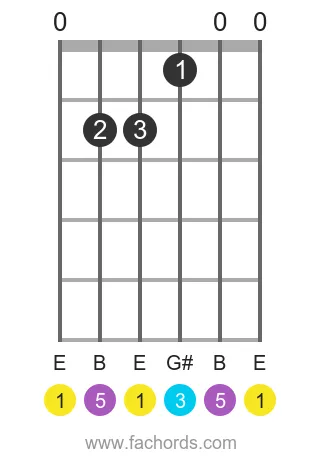
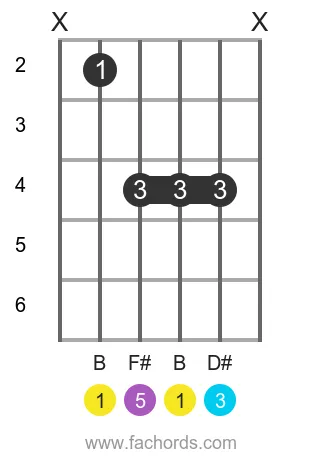

More progressions like this one
- I-V-bVII-IV: C G Bb F
- I-bIII-bVII-IV: C Eb Bb F
- I-i: C Cm
- I-III-vi-IV: C E Am F

Created by
Giancarlo is a musician (teaching guitar since 2000), software engineer, AI consultant and published researcher
FAQ
How does D E G D transpose to other keys?
In C major: C D F C. In G major: G A C G. In D major: D E G D. In A major: A B D A. In E major: E F# A E.
Why is I II IV I called a Lydian cadence?
The major II contains the raised fourth of the key, the note that defines the Lydian mode. In C that note is F#, carried by the D chord, and the F chord cancels it right after.
Is the II chord in I II IV I a secondary dominant?
It can be heard as a secondary dominant of V, since D is the V of G in the key of C. Here it never resolves there, and moves to IV instead, so F# slides down to F.
Which Beatles songs use the II IV I move?
Eight Days a Week plays D E7 G D in the verse, Sgt. Pepper's Lonely Hearts Club Band plays G7 A7 C7 G7, and Yesterday closes a verse with G7 Bb F.
