I-i: The Parallel Major and Minor Side by Side on One Root
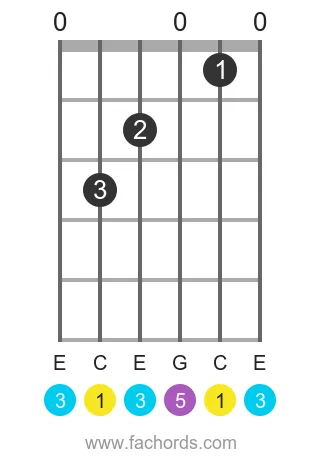
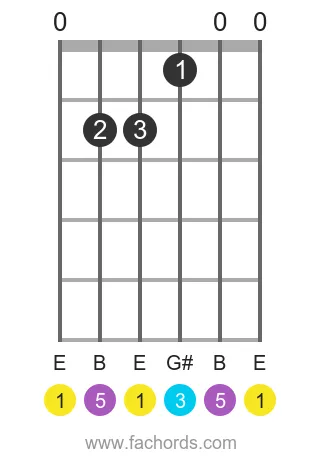
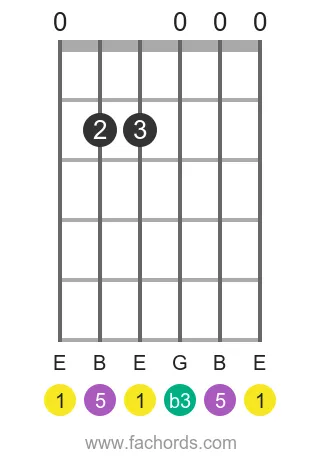
Play an open E, lift your first finger off the third string, and you have Em. That's the whole I-i chord progression: E Em, major to minor on one root. In Nashville numbers it's 1 1m. Starting from C the chords are C and Cm, and if you read them in C minor, the C major chord is the one outside the key, because that scale has Eb and no E natural.
It sits with I-IV and I-V as one of the easiest chord progressions out there. Try both chords in five keys and hear how far one note goes.
The Third Drops, Everything Else Stays
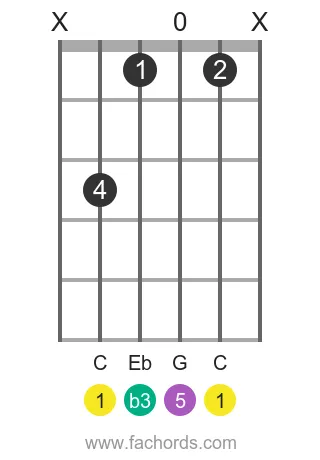
C major is C E G. C minor is C Eb G. The root and fifth hold still and the third of the tonic drops a half step, E to Eb. So the mood turns from major to minor with no change of root. This is modal mixture in its simplest form: the parallel major and minor set side by side. You'll see it called the parallel minor or the parallel major, depending on which way you're moving.
Where It Sits Under Your Fingers
Three keys give you this change in open shapes:
- E to Em: the third string goes from fret 1 to open, G# to G.
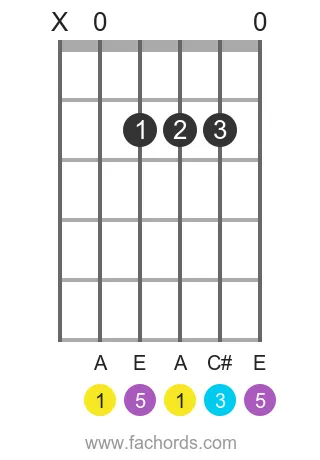
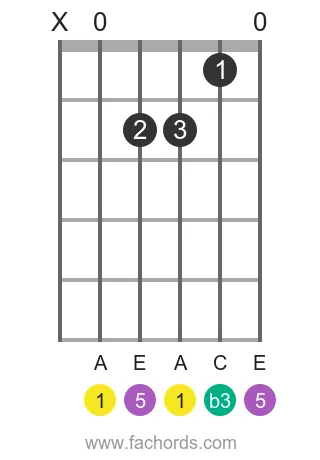
- A to Am: the second string goes from fret 2 to fret 1, C# to C.
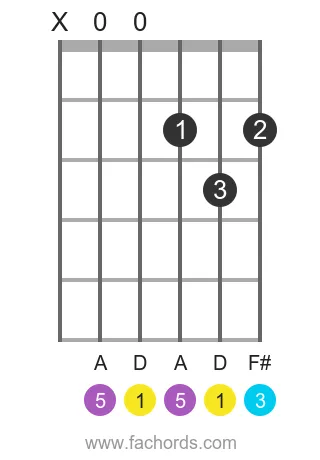
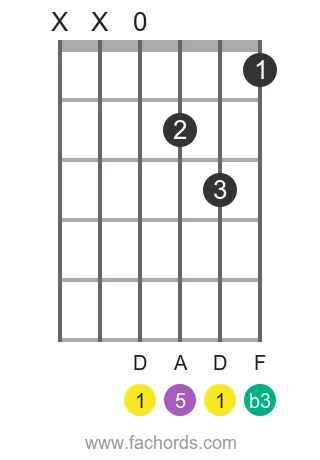
- D to Dm: the first string goes from fret 2 to fret 1, F# to F.
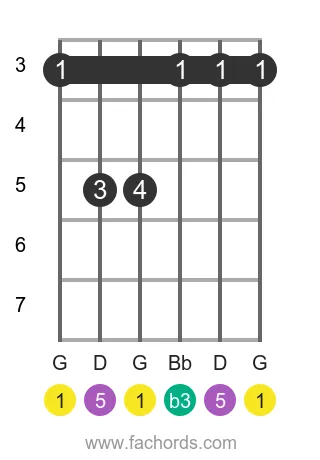
C and G are harder, since their minor chords are barre shapes. Here's an exercise I suggest: strum four bars of A, then four bars of Am, and pick out only the second string at each change. That one fret is the entire progression.
Inside a Line, or Between Two Sections
Only four songs here, and they use the move differently. Sometimes the two chords sit side by side. Sometimes one part starts in the major and the next in the minor.
| Song | Artist | Section | Chords | Key |
|---|---|---|---|---|
| Synchronicity II | The Police | verse to chorus | verse A C#m G, chorus Am F G | A major |
| Talk | Two Door Cinema Club | verse | F# F#m9 | F# major |
| Nice To Meet Ya | Niall Horan | intro and verse | E Em/G C A | E major |
| Liar Liar | The Castaways | verse | C Cm7 Gm F | C major |
Talk sets F# against F#m9, so the minor side comes with extra colour. Nice To Meet Ya plays Em/G right after E, which puts the lowered note in the bass, and then moves on to C and A. Liar Liar turns C into Cm7 and carries on to Gm and F. Synchronicity II does it on a large scale: the verse is built on A, and the chorus changes to Am.
The same mixture can happen on other degrees. I-II-ii does it on the second degree, and I-IV-iv on the fourth.
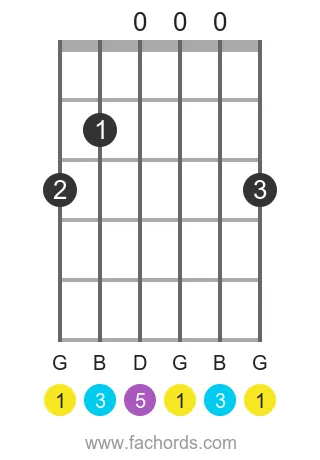
I i Chord Progression: Chords and Audio in C, G, D, A and E
Press play to hear each key. The diagrams show the shapes used in the audio, and every chord links to its full page.
More progressions like this one
- I-III-vi-IV: C E Am F
- Subtonic shuttle: C Bb
- I-IV-iv: C F Fm
- I-II-ii: C D Dm

Created by
Giancarlo is a musician (teaching guitar since 2000), software engineer, AI consultant and published researcher
FAQ
Which chord pairs make I i in each key?
In C minor: C Cm. In G minor: G Gm. In D minor: D Dm. In A minor: A Am. In E minor: E Em.
What changes between a C and a Cm chord?
Only the third. C major is C E G and C minor is C Eb G, so E drops a half step while the root and the fifth stay where they are.
What does parallel major and minor mean?
They are the major and minor keys that share a root, such as C major and C minor. The I-i move sets the two tonic chords side by side, which is modal mixture in its simplest form.
Which song goes from an A verse to an Am chorus?
Synchronicity II by The Police has a verse on A C#m G and a chorus on Am F G, so the change from major to minor happens between the two sections.
