Minor i-bIII-bVII-bVI: The Loop of Counting Stars and Hello
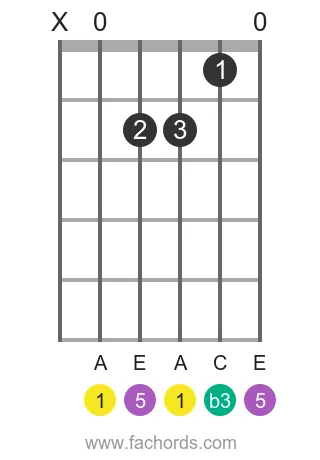
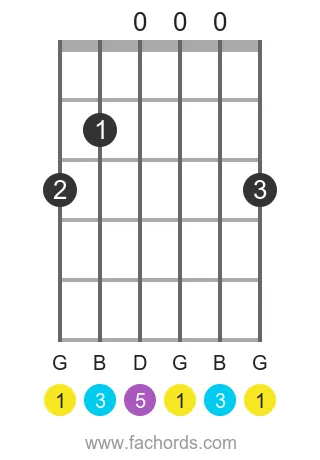
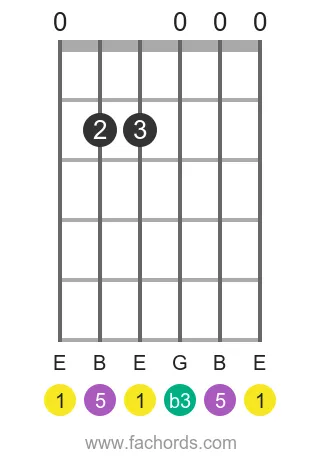
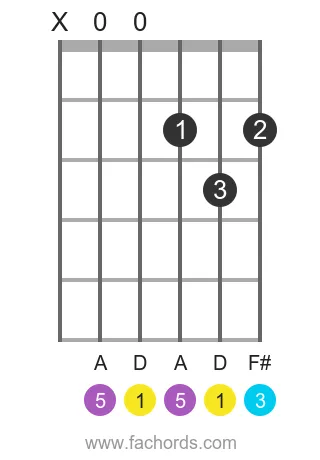
Four open shapes, no dominant anywhere: Em G D C is the minor i-bIII-bVII-bVI. In A minor it's Am C G F, and in the Nashville Number System it's 1m b3 b7 b6.
Counting Stars, Hello, Levels and Timber all run on this loop. Try it in five keys and hear whether it ever says "the end" to you.
Up, Jump, Step Down, Back
All four chords come from natural minor, and the line has a shape you can follow with your ear. In A minor:
- Am to C: a rise. The chords share C and E, so the change is soft.
- C to G: the jump. The note G carries over.
- G to F: a step down, with no shared notes at all.
- F to Am: the way back. A and C stay, and F falls a half step to E.
Say that with your strumming hand. Dig in on the jump and the step down, then ease off on the return to Am.
What Happens Without a V
The F leads back to the i without any dominant. There's no G# in this loop, so nothing pushes hard towards A. That's why it feels open and driving instead of resolved, and why it suits anthems and dance tracks.
Want to test that? Play Am C G F three times, then add one bar of E after the last F. That single chord brings in the leading tone, so ask yourself if the loop now has a door to close. Take it out again and you're back to rolling.
Same Four Chords as the Axis, Different Home
Am, C, G and F are the four chords of the axis progression in the key of C, I-V-vi-IV, in another order. So what points to Am as home? It opens on Am and comes back to it each time round, and all four songs here are listed in a minor key.
Its closest twin is i-bVII-bIII-bVI, Am G C F. The two middle chords swap places, and the roots start falling by fifths. Loop one, then the other. The only change is the order, so whatever difference you hear comes from the line of the roots.
One Capo Trick, Four Songs
The keys in the table look unfriendly. They aren't, with a capo:
- Hello is Fm Ab Eb Db. Capo on fret 1, shapes Em G D C.
- Timber is G#m B F# E. Capo on fret 4, shapes Em G D C.
- Counting Stars and Levels are C#m E B A. Capo on fret 4, shapes Am C G F.
| Song | Artist | Section | Chords | Key |
|---|---|---|---|---|
| Counting Stars | OneRepublic | verse and chorus | C#m E B A | C# minor |
| Hello | Adele | verse | Fm Ab Eb Db | F minor |
| Levels | Avicii | verse | C#m E B A | C# minor |
| Timber | Pitbull ft. Ke$ha | chorus | G#m B F# E | G# minor |
Note where each song puts it: Hello and Levels in the verse, Timber in the chorus, and Counting Stars in both. Pick a pattern from these strumming patterns and use a lighter version for your verse, then open it up for the chorus.
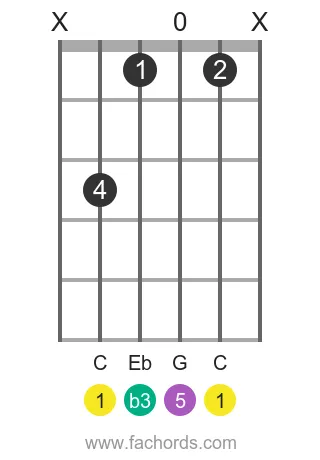
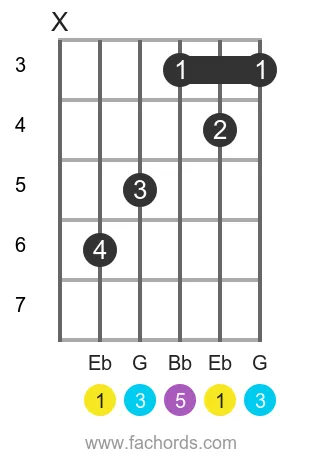
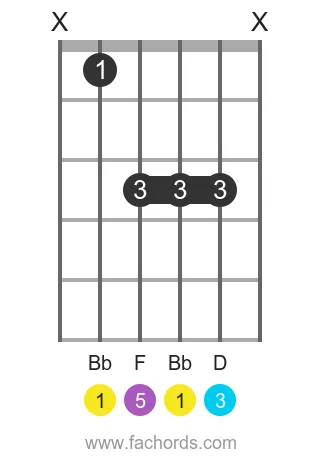
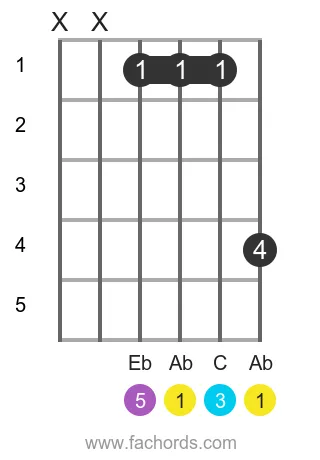
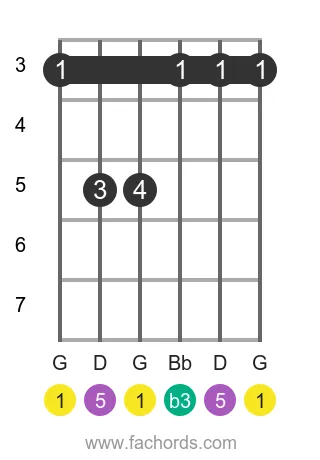
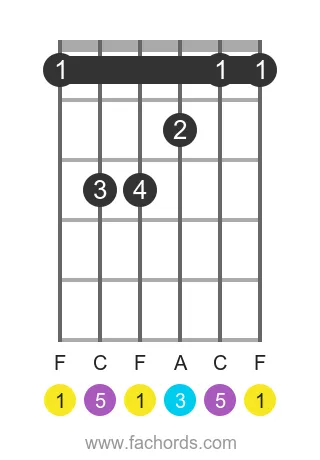
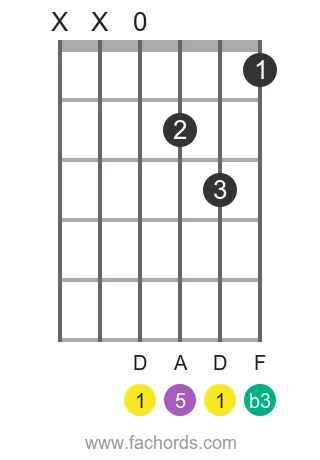
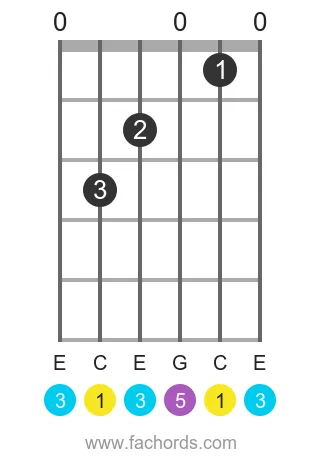
Minor i-bIII-bVII-bVI Chord Progression: Chords and Audio in C, G, D, A and E
Press play to hear each key. The diagrams show the shapes used in the audio, and every chord links to its full page.
More progressions like this one
- Aeolian shuttle: Cm Bb Ab Bb
- Minor i-bVII-iv: Cm Bb Fm
- Minor circle-of-fifths loop: Cm Fm Bb Eb
- Minor i-iv-bVI-V: Cm Fm Ab G

Created by
Giancarlo is a musician (teaching guitar since 2000), software engineer, AI consultant and published researcher
FAQ
Which chords does i-bIII-bVII-bVI use in each key?
In C minor: Cm Eb Bb Ab. In G minor: Gm Bb F Eb. In D minor: Dm F C Bb. In A minor: Am C G F. In E minor: Em G D C.
Why doesn't i-bIII-bVII-bVI feel resolved?
It has no dominant V and no leading tone. The bVI leads back to the i without that pull, so the loop stays open and driving, which suits anthems and dance tracks.
How can I play Counting Stars and Hello with a capo?
Counting Stars is C#m E B A, which is Am C G F with a capo on fret 4. Hello is Fm Ab Eb Db, which is Em G D C with a capo on fret 1.
Is Am C G F the same as the axis progression?
It uses the same four chords as I-V-vi-IV in the key of C, in another order. It opens on Am and returns there, and the songs listed here are in minor keys.
