Quadruple Plagal: Four Falling Fourths From Hey Joe to Hush
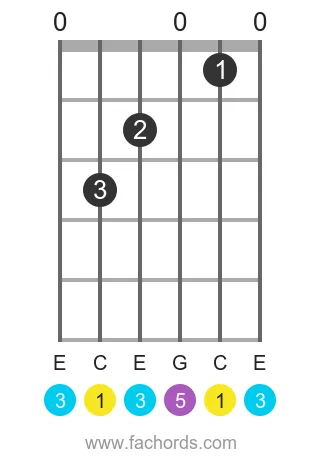
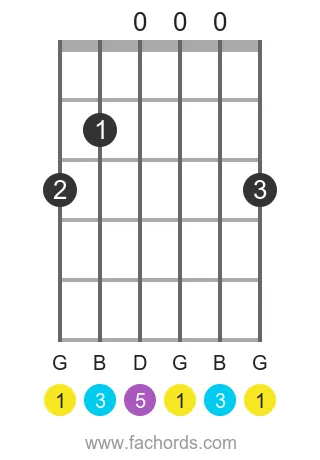
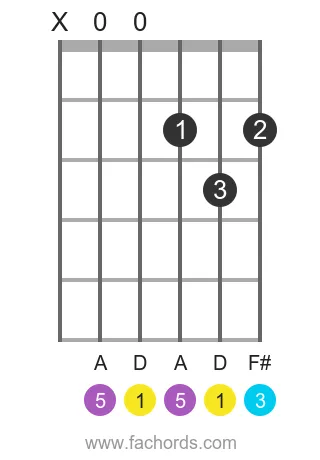
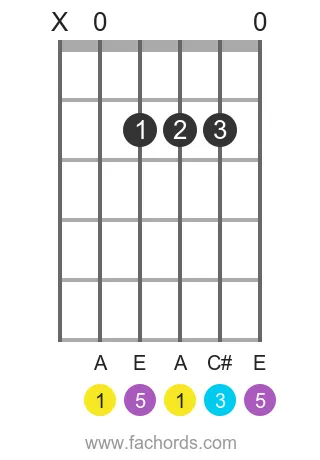
C G D A E. Five open shapes, and you've got the verse of Hey Joe by Jimi Hendrix. In numerals it's bVI-bIII-bVII-IV-I in the key of E, and it also goes by the name Hey Joe progression.
Open Music Theory calls it extended plagal, while Ethan Hein uses the name quadruple plagal. In the Nashville Number System you write it b6 b3 b7 4 1, and in the key of C the chords are Ab Eb Bb F C. Have a listen to the chain in all five keys, then come back for what's going on inside it.
Each Chord Is the IV of the Next
A plagal cadence is IV going to I. Now chain it. C is the IV of G, G is the IV of D, D is the IV of A, and A is the IV of E. That's four plagal moves in a row, four falling fourths, and the longest plagal chain in common use.
You can also see it as the circle of fifths played backwards. Every step moves one place toward the sharp side, and the trip ends when it lands on a major tonic.
Three Drops and One Jump Up
"Falling fourths" is the theory. With open shapes, your lowest root doesn't fall every time, so here's what your hand really does:
- C to G: fret 3 of string 5 down to fret 3 of string 6, a real drop of a fourth.
- G to D: up to the open fourth string. That's a jump up a fifth, which lands on the same note name as falling a fourth.
- D to A: open string 4 down to open string 5.
- A to E: open string 5 down to open string 6.
Play only those five roots first, one bar each, at 60 bpm. Then put the full chords back on top.
Three Outsiders, Then Home
Only the last two chords belong to the key. In C, the Ab, Eb and Bb all sit outside C major, while F and C are at home. In E the outsiders are C, G and D. The bVI and bIII are borrowed chords, and they can make each step sound like a door opening.
Here's a test. Loop C G D a few times and stop there. Now carry on through A to E. That final E chord brings a G#, a note that appears in none of the four chords before it, while C and G both had a G natural. Listen for that note when you arrive.
Three Songs in E, Two in A
The same chain turns up as a verse, a hook, a chorus and even a vocal interlude.
| Song | Artist | Section | Chords | Key |
|---|---|---|---|---|
| Hey Joe | Jimi Hendrix | verse | C G D A E | E major |
| A Day in the Life | The Beatles | interlude (the ahh vocal section) | C G D A E | E major |
| Take Me to the River | Al Green | pre-chorus into chorus | C G D A E7 | E major |
| The Time Warp (The Rocky Horror Show) | Richard O'Brien | chorus (Let's do the time warp again) | F C G D A | A major |
| Hush | Deep Purple | na na na hook | F C G D A | A major |
Hey Joe and A Day in the Life both play C G D A E, the second one in the "ahh" vocal section. Take Me to the River by Al Green uses it from the pre-chorus into the chorus, and closes on E7 instead of E.
Hush and The Time Warp (The Rocky Horror Show) sit in A, as F C G D A. No need to learn a new set of grips for that: put a capo on the fifth fret and the C G D A E shapes sound exactly those chords. Hush has a second idea too: its chorus runs on the I-IV-bVII-IV loop.
Quadruple Plagal Chord Progression: Chords and Audio in C, G, D, A and E
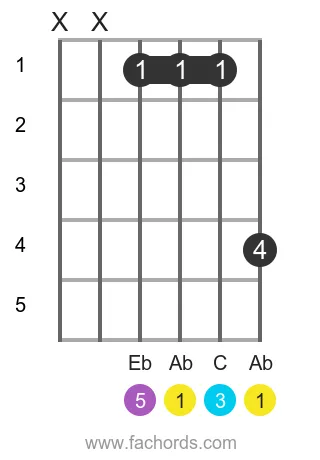
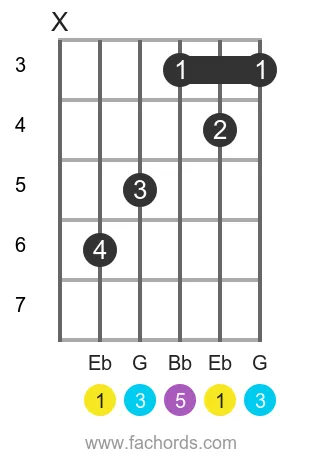
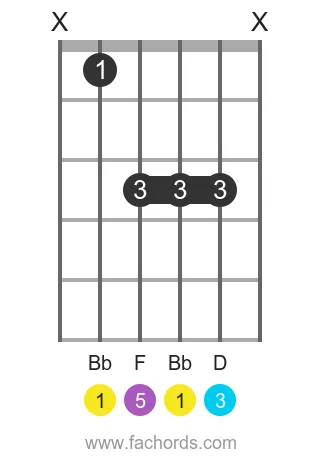
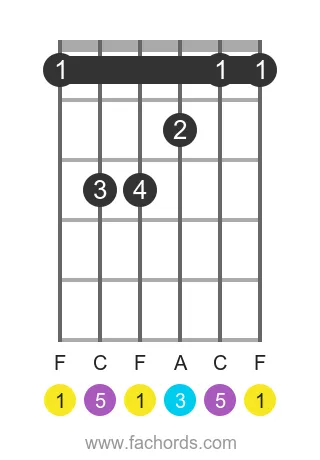
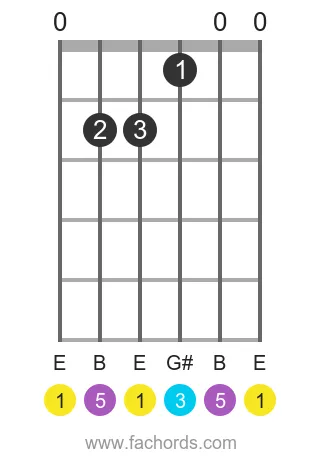
Press play to hear each key. The diagrams show the shapes used in the audio, and every chord links to its full page.
More progressions like this one
- I-IV-bVII-IV: C F Bb F
- Mario cadence: Ab Bb C
- bVII-V7 cadence: Bb G7
- I-v-bVII-IV: C Gm Bb F

Created by
Giancarlo is a musician (teaching guitar since 2000), software engineer, AI consultant and published researcher
FAQ
How does the quadruple plagal look in each key?
In C major: Ab Eb Bb F C. In G major: Eb Bb F C G. In D major: Bb F C G D. In A major: F C G D A. In E major: C G D A E.
What does quadruple plagal mean?
A plagal cadence is IV going to I. Here four of those moves are chained: in E, C is the IV of G, G the IV of D, D the IV of A and A the IV of E.
Is the Hey Joe progression the same as extended plagal?
Yes, they are names for the same chain, bVI-bIII-bVII-IV-I. Open Music Theory calls it extended plagal, Ethan Hein uses quadruple plagal, and it is also known as the Hey Joe progression.
Is C G D A E the circle of fifths?
It is the circle of fifths played backwards. The roots fall by fourths, so each step moves toward the sharp side until the chain lands on a major tonic, E in this case.
Where else can I hear the Hey Joe chords?
A Day in the Life by The Beatles plays C G D A E in the vocal interlude. Take Me to the River by Al Green uses it into the chorus, and The Time Warp plays F C G D A.
