Stepwise Descent to I: IV-iii-ii-I, Down the Scale With No V
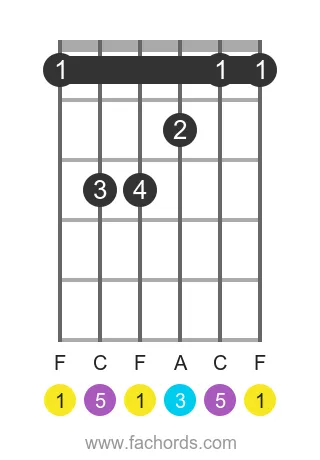
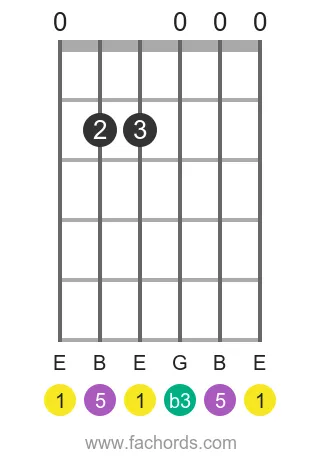
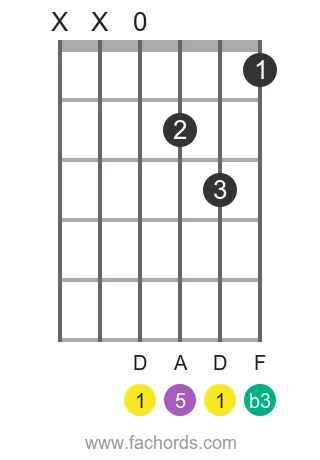
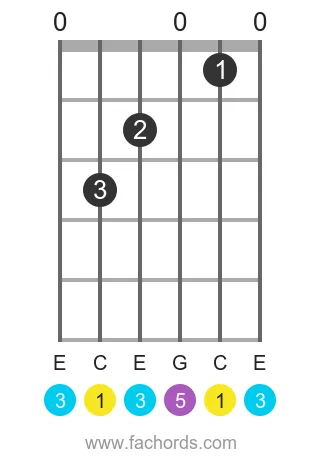
Think of IV-iii-ii-I as a major scale walking downstairs with a chord on every step. In the key of C it's F Em Dm C, and Lean on Me plays exactly those chords in its intro and verse.
In the Nashville Number System you write it 4 3m 2m 1. It also goes by diatonic walk-down, a plain name, since every chord comes from the major scale and the walk ends on the tonic. If you'd like to hear it first, go to the audio in five keys.
Half Step, Whole Step, Whole Step
Put the roots on the fifth string: F at fret 8, E at fret 7, D at fret 5, C at fret 3. The first move is a half step, the other two are whole steps.
Now look at the chords. Going down, F to Em, Em to Dm and Dm to C share no notes at all. Every voice moves in parallel with the bass. So each chord has to be a clean change. Take it slowly at first and keep the changes even.
Only the trip back, C up to F, keeps a note: C.
Landing Without a V
This is a phrase ending that gets to I with no V. To hear what that means, play F Em Dm C, then F Em Dm G C. The second version adds a V before the end. Compare the two landings, and pick the one that suits your song. The first is the gentle one.
Prinner Bass, and the Melody It's Missing
You may see the name Prinner bass for this. The bass 4-3-2-1 is the bass of the galant Prinner, but the real Prinner also needs the melody 6-5-4-3 above it. So this root-position form is only a pop relative of the Prinner.
You can play both lines on two strings. In C the melody is A G F E over the bass F E D C, and those notes move together in tenths:
- Fifth string: frets 8, 7, 5, 3
- Second string: frets 10, 8, 6, 5
Pluck the two strings together with your thumb and a finger. It's a nice way to make the walk sound like a line instead of a row of chords.
Adding Sevenths
You'll also see it written IVmaj7-iii7-ii7-Imaj7, the same walk with a seventh on each chord. Try the plain triads first, then add the sevenths and compare.
From Lean on Me to Stand by Your Man
Two of these sit right in the key of C.
| Song | Artist | Section | Chords | Key |
|---|---|---|---|---|
| Lean on Me | Bill Withers | intro and verse | F Em Dm C | C major |
| Let It Be | The Beatles | bridge | F Em Dm C | C major |
| Stand by Your Man | Tammy Wynette | chorus | D C#m Bm A | A major |
Lean on Me and the bridge of Let It Be are both in C. Stand by Your Man uses it for the chorus in A, as D C#m Bm A, and a capo on the second fret gives you the C Bm Am G shapes.
Want to go back upstairs? I-ii-iii-IV is the same four chords walking the other way, C Dm Em F.
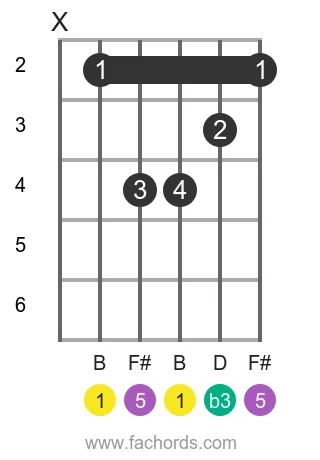
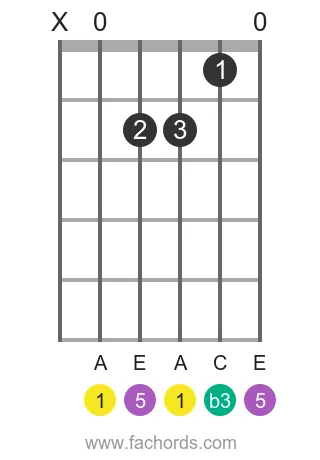
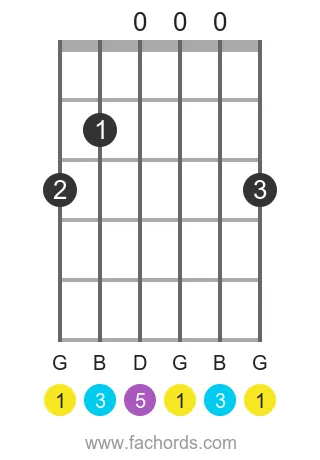
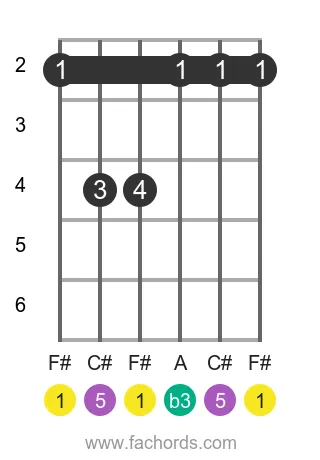
IV-iii-ii-I Chord Progression: Chords and Audio in C, G, D, A and E
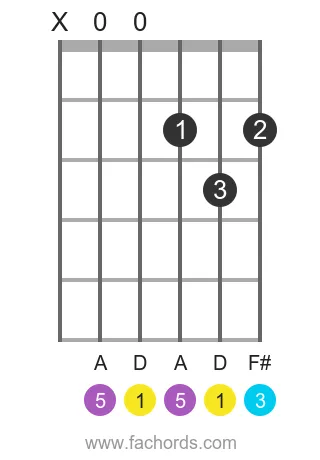
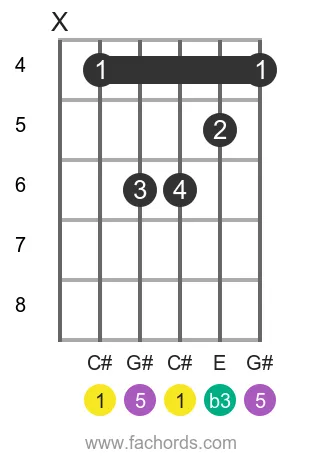
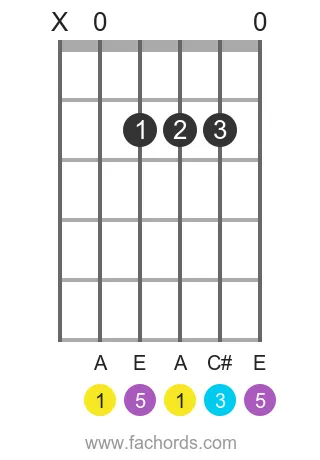
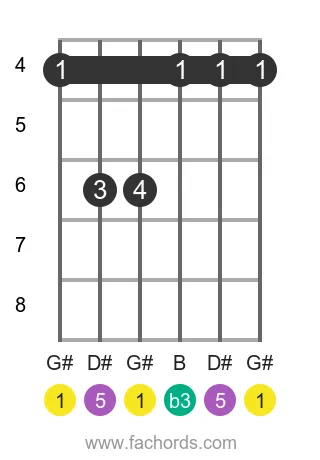
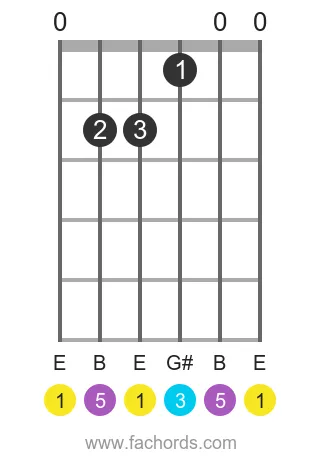
Press play to hear each key. The diagrams show the shapes used in the audio, and every chord links to its full page.
More progressions like this one

Created by
Giancarlo is a musician (teaching guitar since 2000), software engineer, AI consultant and published researcher
FAQ
What is the stepwise descent to I?
It is IV-iii-ii-I, or F Em Dm C in C: parallel diatonic chords walking down the scale from IV to I. It is also called a diatonic walk-down, and it closes a phrase without V.
Is F Em Dm C a real Prinner?
Not quite. The bass 4-3-2-1 is the bass of the galant Prinner, but the real Prinner also needs the melody 6-5-4-3 on top of it. This root-position form is only a pop relative.
Does the walk-down share notes between chords?
No. F to Em, Em to Dm and Dm to C have no notes in common, because the chords move in parallel. Only the return from C to F keeps a note, the C.
What are the walk-down chords in G, D, A and E?
In G major: C Bm Am G. In D major: G F#m Em D. In A major: D C#m Bm A. In E major: A G#m F#m E.
Can you add sevenths to IV iii ii I?
Yes, it is also written IVmaj7-iii7-ii7-Imaj7, the same walk with a seventh on every chord. Try the plain triads first, then compare.
