16-Bar Blues in the Watermelon Man Form, Bar by Bar
Here's a 16-bar blues that takes its name from Watermelon Man by Herbie Hancock. It starts just like a 12-bar blues, but when you expect the ending it keeps bouncing between V and IV for four more bars. Those extra bars are the whole idea of the Watermelon Man form.
In the key of C, one chord per bar, it looks like this. You can hear it and see the diagrams in the five keys further down.
- Bars 1 to 4: C C C C (I I I I)
- Bars 5 to 8: F F C C (IV IV I I)
- Bars 9 to 12: G F G F (V IV V IV)
- Bars 13 to 16: G F C C (V IV I I)
In the Nashville Number System those last eight bars are 5 4 5 4 and 5 4 1 1.
Where the Four Extra Bars Go
Put it next to the 12-bar blues and the trick is easy to spot. The first eight bars are identical. A 12-bar then plays V IV I I and it's over. This form plays V IV V IV first, and only then V IV I I.
So the extra bars go near the end, and they stretch the tension at that point. Instead of resolving, the V to IV move comes round again, and the ending turns into a riff that holds off the release. When the tonic finally comes back in bar 15, you really feel it.
There's more than one way to get from 12 bars to 16. The other 16-bar form does the opposite, doubling bars 1 to 4 and putting all the waiting at the start.
How Watermelon Man Plays It
Herbie Hancock's tune is in F, with dominant seventh chords, for the head and for the solos. That's the one song to learn here, and a great one for this form.
| Song | Artist | Section | Chords | Key |
|---|---|---|---|---|
| Watermelon Man | Herbie Hancock | head and solos | F7 x4 | Bb7 x2 | F7 x2 | C7 Bb7 C7 Bb7 | C7 Bb7 F7 F7 | F major |
In F, then, bars 9 to 12 are C7 Bb7 C7 Bb7, and that's the riff to get under your fingers. Practice it on its own, with one chord per bar. Try to make every repeat feel like it's about to end, and doesn't.
When you solo, don't play through those bars as if nothing is happening. Build your phrase across the repeated V IV and save your release for the return of F7. These blues chord tone exercises will help you hear each change.
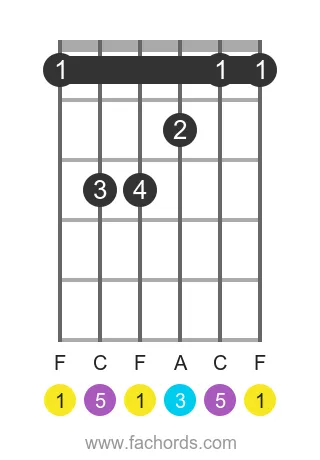
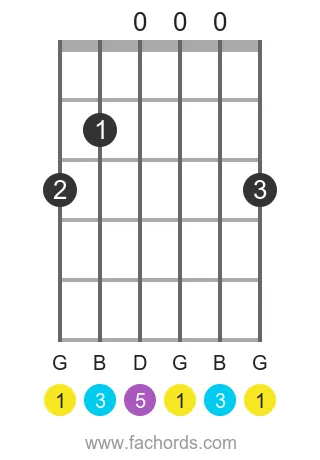
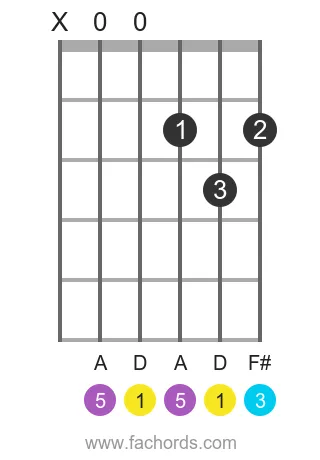
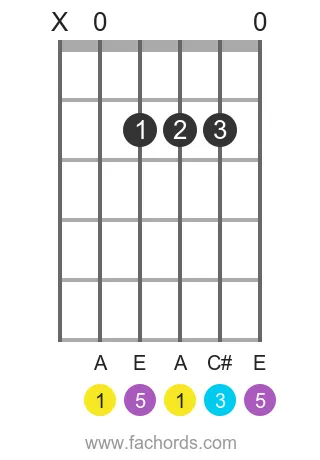
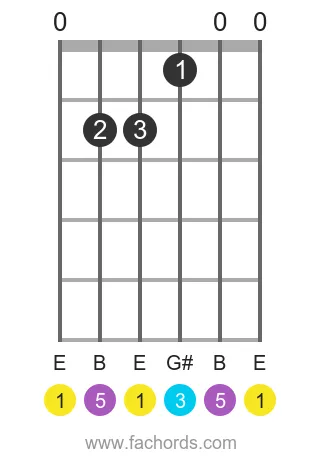
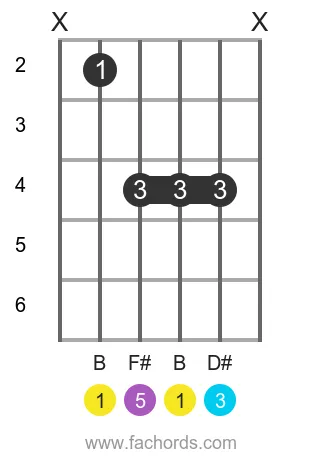
16-Bar Blues (Watermelon Man Form): Chords and Audio in C, G, D, A and E
Press play to hear each key. The diagrams show the shapes used in the audio, and every chord links to its full page.

More progressions like this one
- Bebop blues: C7 / F7 / C7 / Gm7 C7 / F7 / F#dim7 / C7 / Em7 A7 / Dm7 / G7 / C7 A7 / Dm7 G7
- I-IV-I-V-I: C F C G C
- 12-bar blues, slow change: C C C C / F F C C / G F C C
- 12-bar blues, quick change: C7 F7 C7 C7 / F7 F7 C7 C7 / G7 F7 C7 G7

Created by
Giancarlo is a musician (teaching guitar since 2000), software engineer, AI consultant and published researcher
FAQ
What is the Watermelon Man 16-bar blues form?
It is a 16-bar blues that follows a 12-bar for eight bars, then plays V IV V IV before the usual V IV I I ending. The name comes from Watermelon Man by Herbie Hancock.
How is a 16-bar blues different from a 12-bar blues?
It adds four bars. In this form the first eight bars match a 12-bar blues, and the extra bars repeat the V to IV move near the end to hold off the return to the tonic.
What are the chords of Watermelon Man?
The tune is in F. It plays F7 for four bars, Bb7 for two, F7 for two, then C7 Bb7 C7 Bb7, and it closes with C7 Bb7 F7 F7.