12-Bar Blues Chord Progression
Learn How To Play an Easy Guitar Blues in the Key of A
The video above shows you an easy 12-bar blues in the key of A, with the chords A, D and E. For a better sound, gently mute the strings with the palm of your right hand.
You can jump to the chords and audio in C, G, D, A and E.
The 12-Bar Song Structure
The 12-bar blues is one of the most common song structures. It isn't really a type of blues, but a format, or template, and it is exactly what it sounds like:
12 bars of music, divided into 3 sections of 4 bars each.
It is structured much like some poetry, with a set number of syllables in a set number of lines. The form is built around the chords I, IV and V. If those numbers are new to you, review this lesson on the Nashville Number System and this overview of chord progressions before going further.
This is the basic format, with one chord per bar:
I I I I
IV IV I I
V IV I I
It is called the slow change because it stays on the I chord for the first four bars. The quick change moves to the IV in bar 2.
Blues can be played in any key, but on guitar A and E are the favorites, because they leave so much room for open-string embellishments. The chords below are plain triads: most players turn them into 7th chords.
I could write pages of technical descriptions that would sound great and be very confusing, but the best way to get a feel for the 12-bar blues is to listen to it. Then you will recognize it at once, and if someone says "Let's play a 12-bar blues in A", you will know exactly what to do. Here are some great examples:
| Song | Artist | Section | Chords | Key |
|---|---|---|---|---|
| Hound Dog | Elvis Presley | solo and verse | C C C C | F F C C | G F C C | C major |
| Tutti Frutti | Little Richard | solo and chorus | F F F F | Bb Bb F F | C Bb F F | F major |
| Pride and Joy | Stevie Ray Vaughan | verse | E | A E | B7 A7 E | E major |
| Give Me One Reason | Tracy Chapman | verse | F# | B F# | C# B F# | F# major |
| Rock and Roll | Led Zeppelin | verse | A | D | A | E D A | A major |
The Origin of the Blues
Let's spend a few words on the roots of the blues. Its origins lie in the music of African Americans held in slavery in the 19th century, and it grew under the burden of racial inequality during the first two thirds of the 20th century.
Originally dominated by Black musicians, it was one of their few means of expressing the conditions they were forced to live in. The music is full of 7th chords, which help give it its feeling of desperation and melancholy.
Traditional blues (sometimes called acoustic blues) featured a solo guitar player who also sang the song. Good examples are:
- Statesboro Blues - Blind Willie McTell - 1928
- Hobo Blues - John Lee Hooker - 1948
- Rollin' Stone - Muddy Waters - 1950
In the Mississippi Delta, slide guitar licks became a signature of the style called Delta blues. Good examples of this early guitar blues are:
- Guitar Rag - Sylvester Weaver - 1923
- Dark Was the Night - Blind Willie Johnson - 1927
- Cross Road Blues - Robert Johnson - 1936
- Boogie Chillen' - John Lee Hooker - 1948
From Blues to Swing
During the 1940s, the blues moved to the cities and met swing and big band music, and local scenes grew in places like Chicago and St. Louis.
Brass and saxophones made this a very distinctive sound, but the guitar was still the main instrument. Examples include:
- Dust My Broom - Elmore James - 1951
- Mannish Boy - Muddy Waters - 1955
- Texas Flood - Larry Davis - 1958
- How Blue Can You Get - B.B. King - 1964
- Born Under a Bad Sign - Albert King - 1967
This swinging blues is considered a precursor to rock and roll, which emerged in the 1950s. The 1940s and 50s also saw the rise of country blues, which combined elements of folk, bluegrass and country music with traditional blues. Examples are:
- Country Blues - Doc Watson
- Highway of Pain - Seldom Scene
- Workin' Man Blues - Merle Haggard
A more recent form is blues rock, which is very popular worldwide. Good examples are:
- Cocaine - Eric Clapton
- On the Road Again - Canned Heat
- Pride and Joy - Stevie Ray Vaughan
- A Cold Day in Hell - Gary Moore
As you can see, the blues has found its way into almost every type of modern music. Listen to these examples and get familiar with the different styles, so you can recognize them when you hear them.
Don't Limit Yourself With the 12-Bar Format
I can't stress this enough: what we are showing you here are basic guidelines, not rules written in stone.
Some songs stretch the form. Hoochie Coochie Man by Muddy Waters stays on the I chord for eight bars, which makes it a 16-bar blues.
The main thing to take from this lesson is that a 12-bar blues is 3 sections of 4 bars each. There are lots of possible chord variations within this format.
Blues, like jazz, is a free style of music, whose motto is (or should be) "Rules Are Made To Be Broken".
Don't be afraid to improvise when it feels right, and don't get too hung up on structure.
12-Bar Blues Slow Change: Chords and Audio in C, G, D, A and E
Press play to hear each key. The diagrams show the shapes used in the audio, and every chord links to its full page.

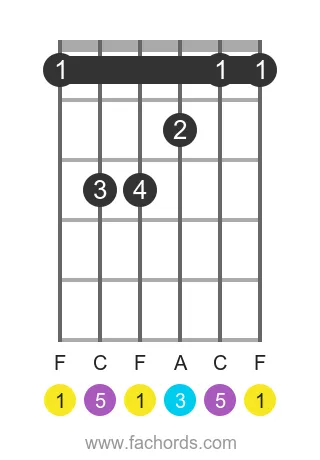
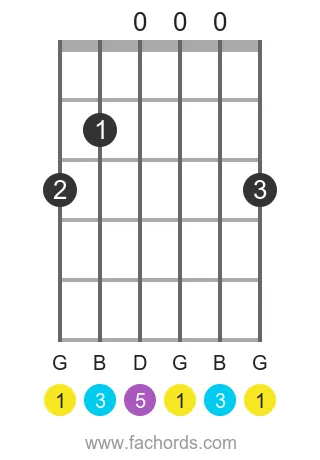
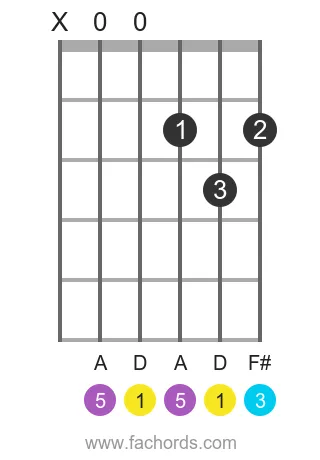
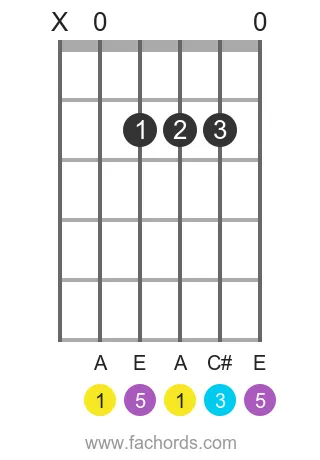
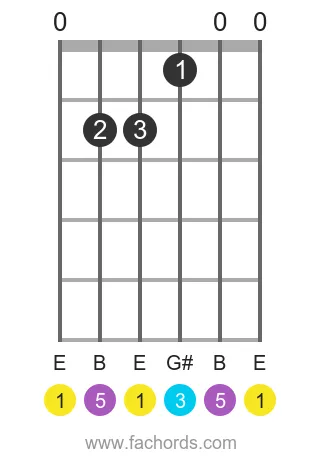
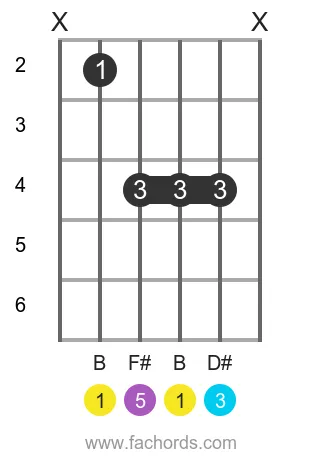
More progressions like this one
- 12-bar blues, quick change: C7 F7 C7 C7 / F7 F7 C7 C7 / G7 F7 C7 G7
- Jazz blues: C7 F7 C7 C7 / F7 F#dim7 C7 A7 / Dm7 G7 C7 G7
- 12-bar minor blues: Cm7 Cm7 Cm7 Cm7 / Fm7 Fm7 Cm7 Cm7 / Ab7 G7 Cm7 G7
- Bird blues: Cmaj7 Bm7b5 E7 / Am7 D7 / Gm7 C7 / F7 Fm7 Bb7 / Em7 A7 / Ebm7 Ab7 / Dm7 G7 / C A7 Dm7 G7
All guitar chord progressions →

Created by
Giancarlo is a musician (teaching guitar since 2000), software engineer, AI consultant and published researcher
FAQ
What is the fundamental structure of a 12-Bar Blues progression?
The 12-Bar Blues is a musical format, or template, consisting of exactly 12 measures (bars) of music. These 12 bars are typically divided into three sections, each four bars long. This structure primarily uses the I, IV, and V chords of a given key.
Why are the keys of A and E often favored for playing blues on guitar?
The keys of A and E are frequently used for blues guitar because they allow for a rich sound with many open-string embellishments, particularly with 7th chords. This makes them versatile and expressive keys for the guitar, providing easy access to characteristic blues voicings.
How did the Blues music genre originate, and what emotional elements are central to it?
The Blues originated from the struggles and hardships of African Americans during slavery and racial inequality in the 19th and 20th centuries. It often conveys feelings of desperation, depression, and melancholy, themes frequently expressed through the characteristic use of 7th chords.
What does it mean that 12-Bar Blues is a 'format' rather than a 'type' of Blues?
Calling 12-Bar Blues a 'format' means it's a structural blueprint or a specific chord progression template, not a distinct style or genre of blues. Many different types of blues, like Delta blues, Chicago blues, or blues rock, can use the 12-bar structure as their underlying foundation. It provides a common framework that various blues styles can build upon.
Can the standard 12-Bar Blues chord progression be modified or varied?
Yes, absolutely. While there's a standard template, the 12-Bar Blues is a guideline rather than a strict rule. Blues music embraces improvisation and variation; 'rules are made to be broken.' Guitarists can introduce many chord variations within the format, such as staying on the 'I' chord for longer or altering chord placements to create different feels.