The Hopscotch Progression: F G Am C From Bad Romance to Heaven
Bad Romance and Heaven play the same four chords, F G Am C, and one is listed in A minor, the other in C major. That's the hopscotch progression, IV-V-vi-I, and that double life is what I find interesting about it.
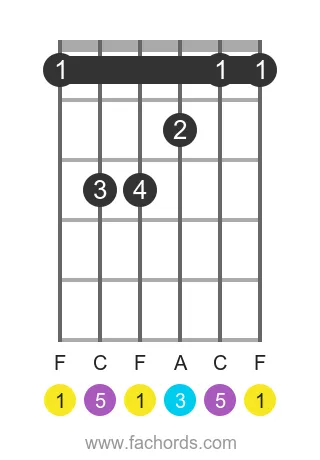
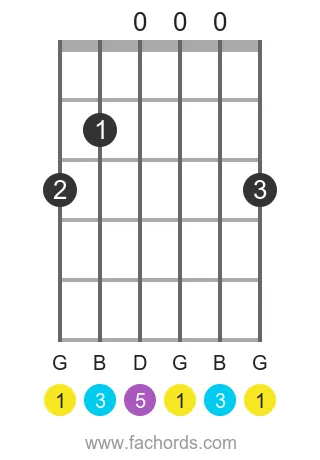
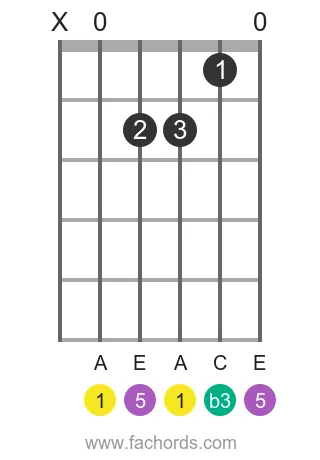
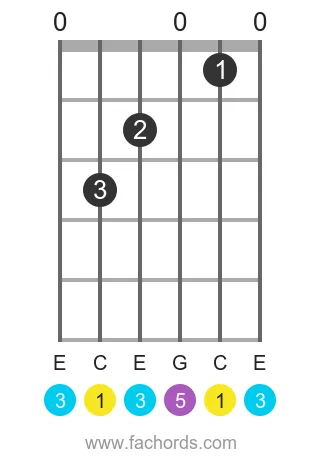
You'll also see it called the hopscotch schema, and in the Nashville Number System it's 4 5 6m 1. It has grown common in pop since about 2010. If you want to start from the sound, go to the audio and chord diagrams in five keys.
Two Steps and a Skip on One String
The bass tells the whole story. It takes two rising steps from IV to vi, then a skip up to I. To feel it under your fingers, use the key of G, where the chords are C D Em G, and play the roots on string 5:
- C: fret 3
- D: fret 5
- Em: fret 7
- G: fret 10
Two frets, two frets, three frets. Play that a few times, then add the chords on top.
The chords change in an uneven way too. C to D and D to Em have no notes in common, so all three voices move. Then Em to G keeps G and B, and the last change, G back to C, keeps only G. So the climb is the busy part, and the skip is the soft one.
So Is Home on vi or on I?
There's no V to I here. The V goes to vi, and the I arrives by a leap instead of a cadence, so either vi or I can feel like home. The chords fit the major scale, and they also fit its relative natural minor. That's why you can also write it as VI-VII-i-III in the relative minor. In A minor, F is the VI, G the VII, Am the i and C the III.
Test it with your own ear. Loop F G Am C four times and stop on Am. Then do it again and stop on C. Which ending sounds finished to you? There isn't a wrong answer, and the song list shows both readings.
Swap the Last Two Chords
The near twin is the rotated doo-wop, F G C Am. Same four chords, and the first two match. The difference is what follows G: there it goes straight to C, a V to I move, and Am comes last. Here Am comes before C, so C has to wait.
Play four bars of each. And if you drop the last chord here, you get the shorter IV-V-vi, which stops on the minor chord.
Four Songs, One Set of Open Shapes
When You Were Young uses it in the verse and the chorus, Love Story keeps it for the pre-chorus, and the other two put it in the chorus.
| Song | Artist | Section | Chords | Key |
|---|---|---|---|---|
| Bad Romance | Lady Gaga | chorus | F G Am C | A minor |
| When You Were Young | The Killers | verse and chorus | E F# G#m B | B major |
| Love Story | Taylor Swift | pre-chorus | G A Bm D | D major |
| Heaven | Bryan Adams | chorus | F G Am C | C major |
You can reach all four with the open shapes C D Em G and a capo. Fret 4 gives you E F# G#m B for When You Were Young. Fret 5 gives you F G Am C, and fret 7 gives you G A Bm D for Love Story.
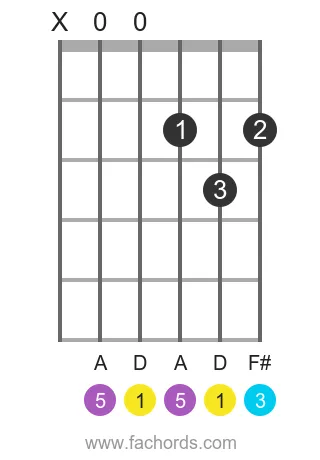
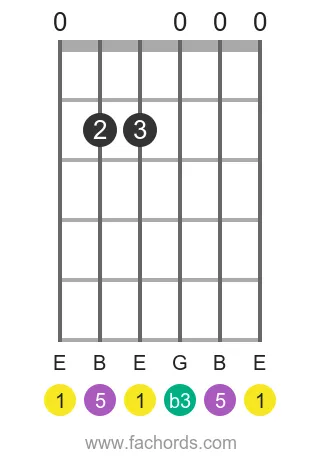
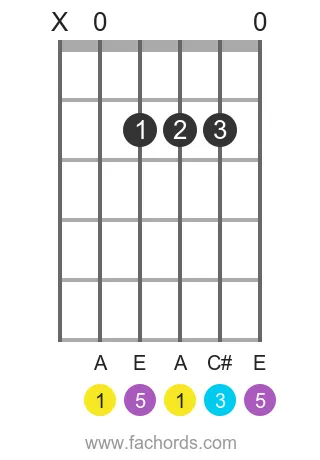
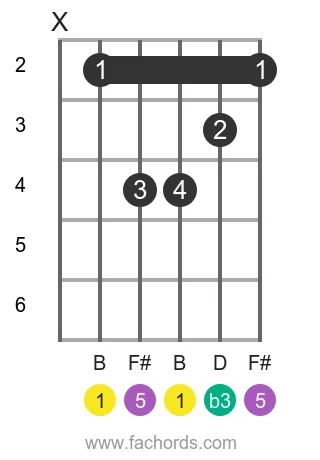
Hopscotch Chord Progression: Chords and Audio in C, G, D, A and E
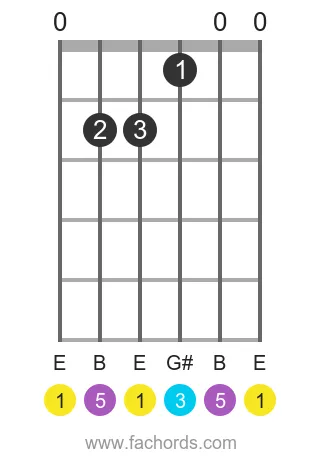
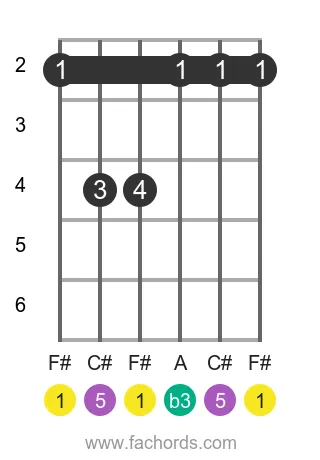
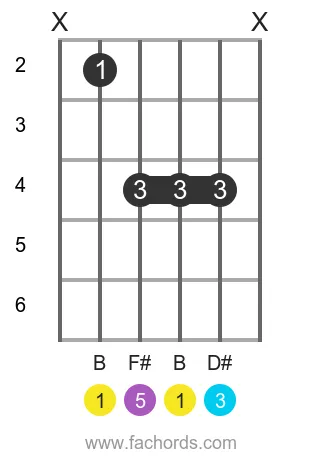
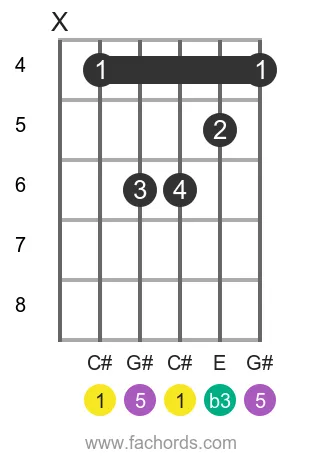
Press play to hear each key. The diagrams show the shapes used in the audio, and every chord links to its full page.
Shorter progressions inside it
- IV-V-vi: F G Am
More progressions like this one
- Rotated doo-wop: F G C Am
- I-V-ii: C G Dm
- Wild Thing loop: C F G F
- Louie Louie progression: C F Gm F

Created by
Giancarlo is a musician (teaching guitar since 2000), software engineer, AI consultant and published researcher
FAQ
What is the hopscotch progression?
It is the chord progression IV-V-vi-I, or F G Am C in the key of C. It takes two rising steps from IV to vi, then a skip up to I, and it has grown common in pop since about 2010.
Can you give the hopscotch chords for every guitar key?
In C major: F G Am C. In G major: C D Em G. In D major: G A Bm D. In A major: D E F#m A. In E major: A B C#m E.
Is F G Am C in A minor or C major?
It can be read either way. The I arrives by a leap instead of a cadence, so vi or I can feel like home. Bad Romance is listed in A minor and Heaven in C major.
What is the difference between hopscotch and the rotated doo-wop?
Both use the same four chords and open with IV-V. The hopscotch goes on to vi and then I, while the rotated doo-wop goes to I and then vi, so its V moves straight to the tonic.
Which songs use IV-V-vi-I?
Bad Romance by Lady Gaga and Heaven by Bryan Adams use it in the chorus, When You Were Young by The Killers in the verse and chorus, and Love Story by Taylor Swift in the pre-chorus.
