i bIII bVI V: The Half-Step Ending of Crazy and Dance, Dance
Crazy by Gnarls Barkley is played with a capo on fret 3 as Am Cmaj7 F Esus4 E. Strip off the extras and you have i-bIII-bVI-V, in A minor Am C F E.
In the Nashville Number System that's 1m b3 b6 5. It's a normal progression with a few changes: the tonic chord is minor, and the sixth chord is a major chord on a flattened root. The tension that comes out of those changes makes for interesting rock and pop tunes. Check the sound in the five keys further down.
A Leading Tone That Waits Until the End
The first three chords are pure natural minor. Only the last one breaks the rule: natural minor would give you Em, but E major comes from harmonic minor and carries G#, the leading tone. In C minor the chords are Cm Eb Ab G, and that G sits outside the key because of its B natural.
Now follow the bass from F to E. It falls a half step, one fret on the low E string. That's the same strong gesture that ends the Andalusian cadence, and the two chords share no notes.
Swap E for G and Compare
Keep the first three chords and change only the last: i-bIII-bVI-bVII plays Am C F G. Loop that for a while, then go back to Am C F E. The G chord stays inside natural minor, the E chord doesn't. Which one pulls you back to Am harder? Let your ear decide.
The Sus4 Trick From Crazy
Here's the thing to steal from Crazy. Play Esus4 with your finger on the third string, fret 2: that note is A, the tonic. Then drop to fret 1 for the E chord, and A falls to G#. When you go back to Am, that string returns to fret 2. So one note goes A, G#, A, on one string.
Capo Shapes for All Five Songs
All five songs use it in a chorus, and only Crazy sits in C minor. A capo helps with the keys. Dance, Dance in B minor is Am C F E on fret 2. Potential Breakup Song and Snakes on a Plane (Bring It) share F#m A D C#, which is Em G C B on fret 2. Nightmare takes those same shapes up to fret 4.
| Song | Artist | Section | Chords | Key |
|---|---|---|---|---|
| Dance, Dance | Fall Out Boy | chorus | Bm D G F# | B minor |
| Crazy | Gnarls Barkley | verse and chorus | Am Cmaj7 F Esus4 E with capo 3, sounding Cm Ebmaj7 Ab Gsus4 G | C minor |
| Potential Breakup Song | Aly & AJ | pre-chorus and chorus | F#m A D C# (i III VI V) | F# minor |
| Snakes on a Plane (Bring It) | Cobra Starship | chorus | F#m A D C# (i III VI V) | F# minor |
| Nightmare | Set It Off | chorus | G#m B E D# (i III VI V) | G# minor |
Soloing? A harmonic minor doesn't fit the C chord, because C contains G natural. Use natural minor, and raise G to G# when E arrives.
i bIII bVI V Chord Progression: Chords and Audio in C, G, D, A and E
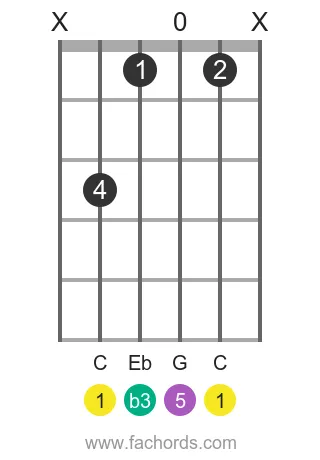
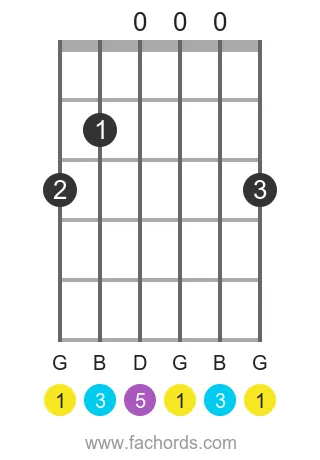
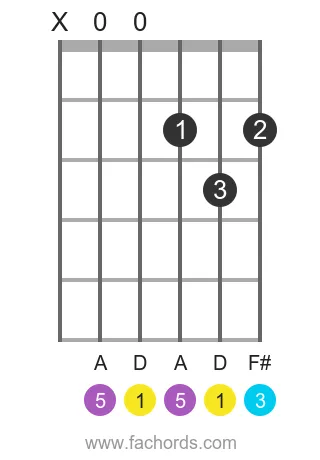
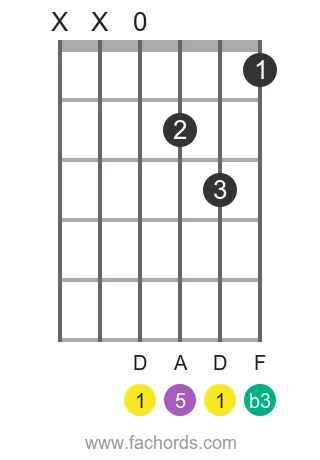
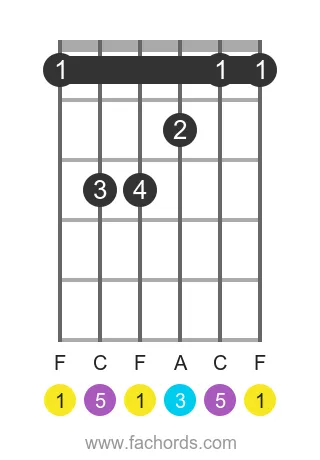
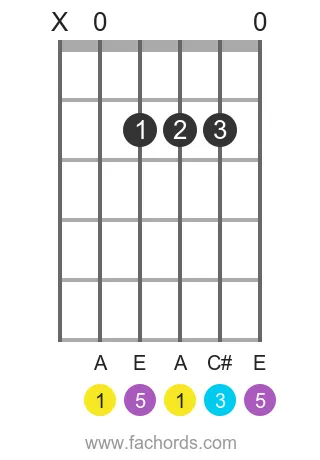
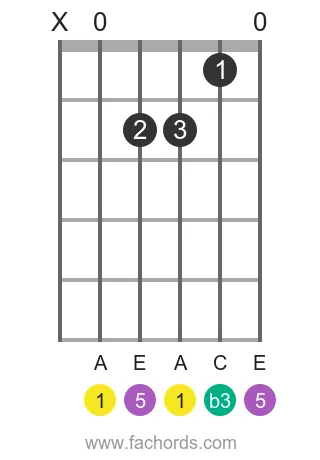
Press play to hear each key. The diagrams show the shapes used in the audio, and every chord links to its full page.





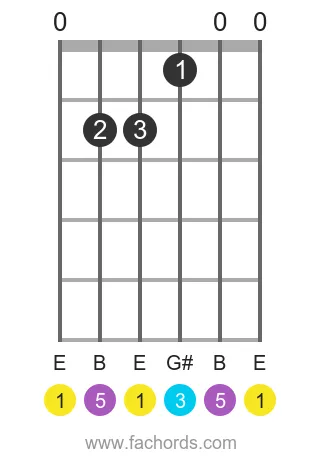
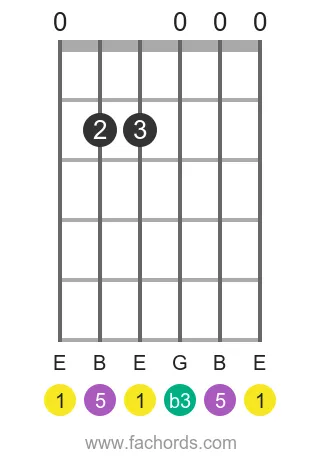
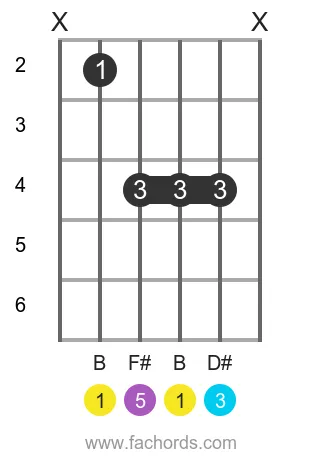
More progressions like this one
- i-bVI-bVII: Cm Ab Bb
- i-bVII-bIII-bVI: Cm Bb Eb Ab
- i-bVI shuttle: Cm Ab
- Minor i-iv-V: Cm Fm G

Created by
Giancarlo is a musician (teaching guitar since 2000), software engineer, AI consultant and published researcher
FAQ
What does i bIII bVI V look like in each key?
In C minor: Cm Eb Ab G. In G minor: Gm Bb Eb D. In D minor: Dm F Bb A. In A minor: Am C F E. In E minor: Em G C B.
Why is the last chord of i bIII bVI V major?
Natural minor would give a minor v. Here the chord comes from harmonic minor, so it carries the leading tone, G# in A minor, which pulls up to the tonic. It appears only in the last chord.
How does Crazy by Gnarls Barkley use this progression?
It sits in C minor. With a capo on fret 3 the shapes are Am Cmaj7 F Esus4 E, sounding Cm Ebmaj7 Ab Gsus4 G, and it runs through the verse and chorus.
Which scale works over Am C F E?
Natural minor fits Am, C and F. When E arrives, raise G to G#. A harmonic minor alone clashes with the C chord, because C contains G natural.