I-III-vi-IV: The Four Chord Loop With a Secondary Dominant
Trouble by Cage the Elephant plays C E Am F, and that's I-III-vi-IV in the key of C. Happier Than Ever plays the same line with an E7. In Nashville numbers it's 1 3 6m 4, and the one chord from outside the key is the E, whose G# isn't in C major.
You can build it yourself. Take a basic I-V-vi-IV and replace the V with a major III, and a whole new sound comes out of the same frame. The five versions with audio let you compare keys.
The E Chord Belongs to Am
The E is the V of Am. That makes it a secondary dominant, written V/vi, and for a moment the song leans towards a minor key before F takes you back. Open Music Theory reads this loop as a variation on the singer/songwriter schema, with V/vi replacing V, and it keeps the name puff for I-iii-IV and its variants, such as the I-III7-IV.
One Fret Decides It
Play C G Am F, the plain four chord loop, and then C E Am F. Listen to the second chord going into Am. E holds G#, and it rises one half step to A.
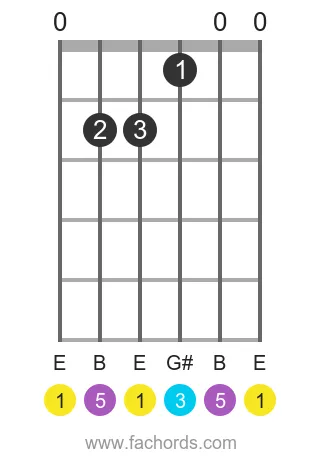
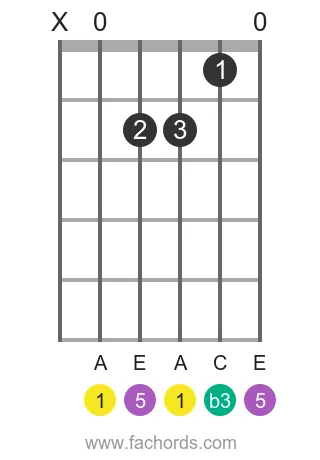
You can see this in the grip. E and Am are the same shape, moved across by one string. In E the third string is at fret 1, in Am it's at fret 2: that's G# climbing to A. Play only that string, then the full chords.
Sevenths, Slash Chords and a Capo
The songs dress the III in different ways:
| Song | Artist | Section | Chords | Key |
|---|---|---|---|---|
| Bad Reputation | Shawn Mendes | verse | C E Am F with capo 2, sounding D F# Bm G | D major |
| If We Ever Meet Again | Timbaland feat. Katy Perry | chorus | Ab C Fm Db | Ab major |
| Golden Days | Panic! At the Disco | chorus | G B7 Em C | G major |
| abcdefu | Gayle | verse and chorus | E G# C#m A (I V/vi vi IV) | E major |
| L'Amour Toujours | Gigi D'Agostino | verse and chorus | D F#/A# Bm G/B (I V6/vi vi IV6) | D major |
| Happier Than Ever | Billie Eilish | verse | C E7 Am F (I V7/vi vi IV) | C major |
| Trouble | Cage the Elephant | intro and chorus | C E Am F (I V/vi vi IV) | C major |
- Golden Days plays G B7 Em C, and all four of those are open shapes.
- L'Amour Toujours uses D F#/A# Bm G/B. The bass goes A# to B, so the half step moves down to your bass notes.
- Bad Reputation is a capo song: the shapes are C E Am F with a capo on the second fret, and the real chords are D F# Bm G.
Want to play If We Ever Meet Again? Ab C Fm Db looks tough, but a capo on the first fret gives you G B Em C.
Now listen for where the E goes. Here it lands on vi. In the Creep progression the same chord moves up to IV instead.
I III vi IV Chord Progression: Chords and Audio in C, G, D, A and E
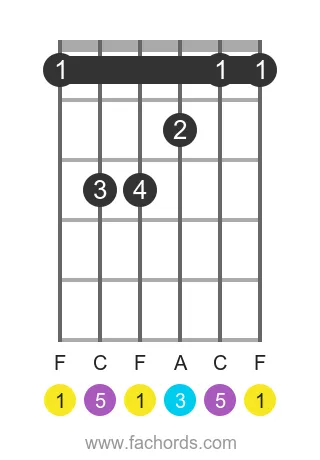
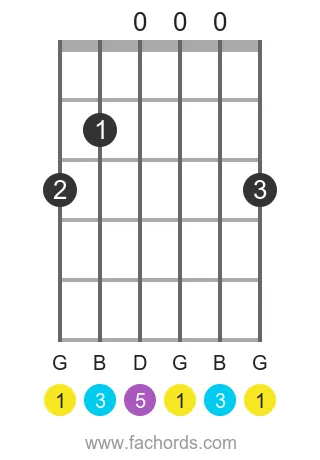
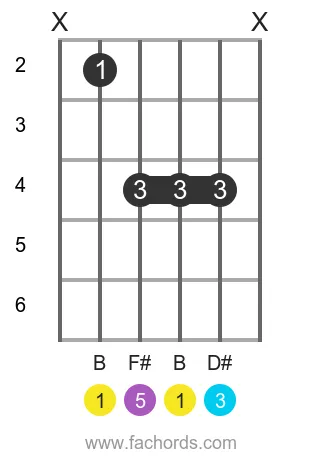
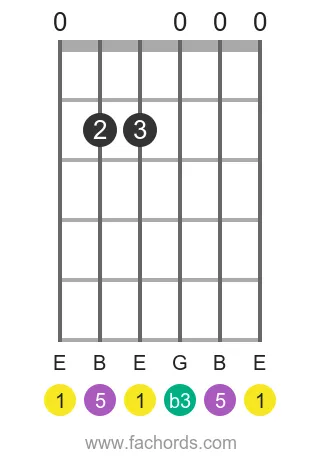
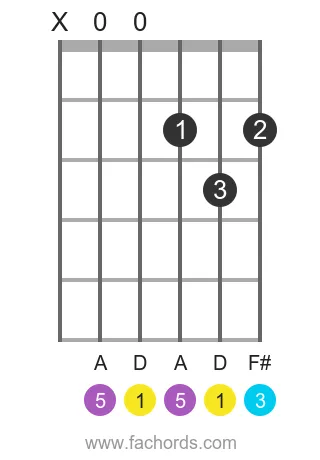
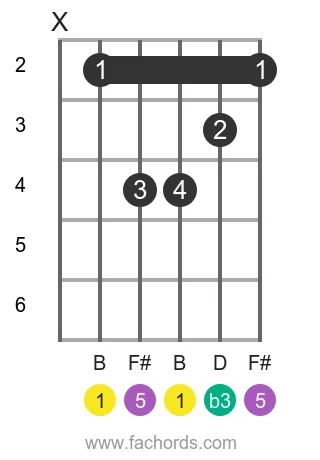
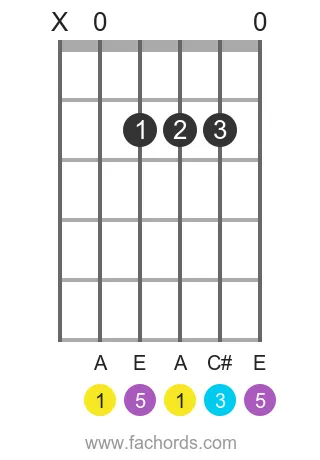
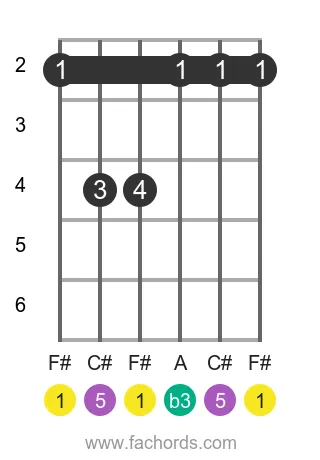
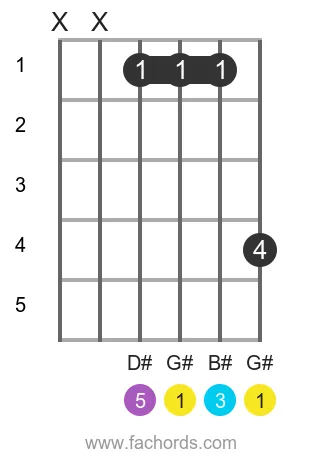
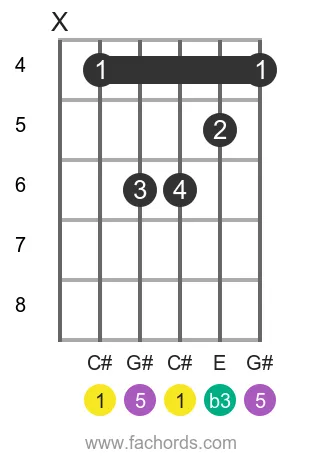
Press play to hear each key. The diagrams show the shapes used in the audio, and every chord links to its full page.



More progressions like this one
- Subtonic shuttle: C Bb
- I-IV-iv: C F Fm
- I-II-ii: C D Dm
- I-v-ii: C Gm Dm

Created by
Giancarlo is a musician (teaching guitar since 2000), software engineer, AI consultant and published researcher
FAQ
How do you spell I III vi IV in five keys?
In C major: C E Am F. In G major: G B Em C. In D major: D F# Bm G. In A major: A C# F#m D. In E major: E G# C#m A.
Why is there a major III chord in a major key?
It works as V of vi, a secondary dominant. In C the E chord holds a G#, which is out of key and rises a half step to the A of the Am chord.
How is I III vi IV related to I V vi IV?
The V is replaced by a major III. Open Music Theory reads C E Am F as a variation on the singer/songwriter schema, with V/vi replacing V.
Which songs play C E Am F?
Trouble by Cage the Elephant plays C E Am F in the intro and chorus, and Happier Than Ever by Billie Eilish plays C E7 Am F in the verse. Bad Reputation by Shawn Mendes uses those shapes with a capo on the second fret.