I-IV-iv: The Plagal Sigh Walking Down the High E String
Your first string goes fret 2, fret 1, open, and that little walk is the whole secret of I-IV-iv. In the key of A the chords are A D Dm, and the D to Dm to A move is what You Won't See Me plays in its verse.
In the key of C the same thing is C F Fm, or 1 4 4m in Nashville numbers, and Fm is the chord from outside the key. You'll meet three names for it: the plagal sigh, the Beatles cadence and the minor plagal cadence with IV. As a cadence it's written IV-iv-I. Listen to it in five keys, then come back to the walk.
Fret 2, Fret 1, Open
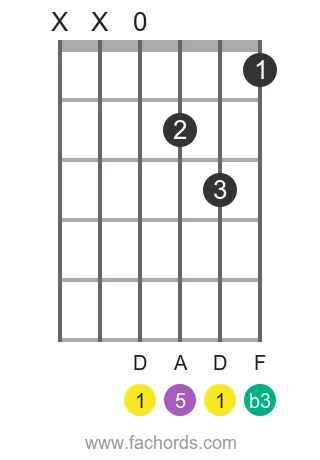
Play D, Dm and A slowly, and pick only the first string each time:
- D: fret 2, the note F#
- Dm: fret 1, the note F
- A: open, the note E
That's 6 to b6 to 5 in the key of A. A major IV turns minor, so the sixth degree slides down a half step, then down again to the fifth, while the harmony settles on I. In C it's A to Ab to G.
The Dm comes from the parallel minor, the kind of borrowed chord that gives a nostalgic, sentimental ache. Try one test: play A D A, then A D Dm A. Same start, same end. What does that extra chord do to the ending, to your ear?
A Short Stop, Rarely a Whole Section
This progression tends to appear briefly. The Beatles were big fans of it, and two of their songs are in the list. You Won't See Me plays A A7 D Dm A in the verse, and In My Life is the other.
Nobody Home also passes through a seventh, C C7 F Fm C. For that fuller line, see I-I7-IV-iv.
Oasis Repeats It, Green Day Shortens It
Sometimes you'll see it repeated. Don't Look Back in Anger plays F Fm6 C twice in a row in the pre-chorus. The 6 adds a D on top of the minor chord, and the slide is still there. Wake Me Up When September Ends takes the shortest route, C Cm G, in the key of G.
| Song | Artist | Section | Chords | Key |
|---|---|---|---|---|
| Don't Look Back in Anger | Oasis | pre-chorus | F Fm6 C F Fm6 C | C major |
| How to Love | Lil Wayne | chorus | G Gmaj7 Cmaj7 Cm with capo 4, sounding B Bmaj7 Emaj7 Em | B major |
| Wake Me Up When September Ends | Green Day | verse | C Cm G | G major |
| You Won't See Me | The Beatles | verse | A A7 D Dm A | A major |
| In My Life | The Beatles | verse | G7/F C Cm G with capo 2, sounding A7 D Dm A | A major |
| Nobody Home | Pink Floyd | bridge | C C7 F Fm C | C major |
The minor plagal cadence keeps only iv-I, and the Creep progression loops IV-iv after a major III.
I IV iv Chord Progression: Chords and Audio in C, G, D, A and E
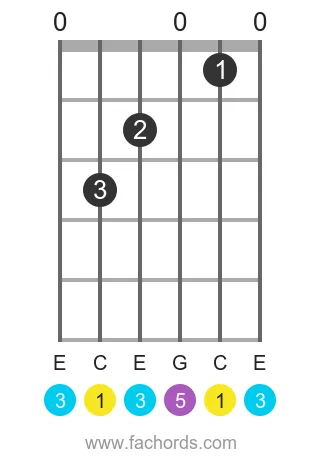
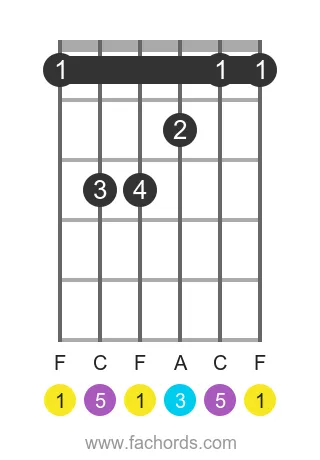
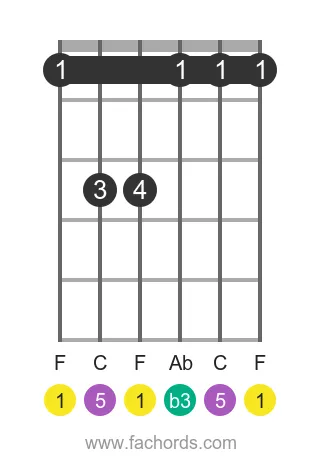
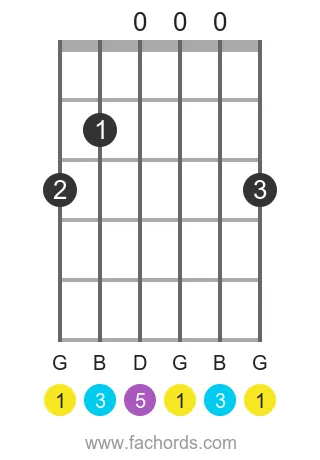
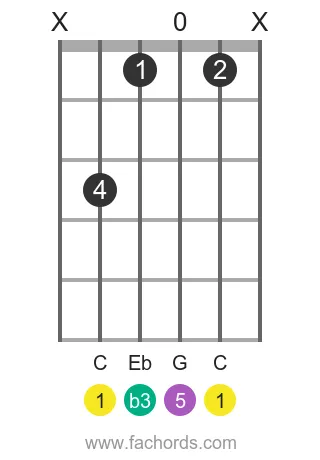
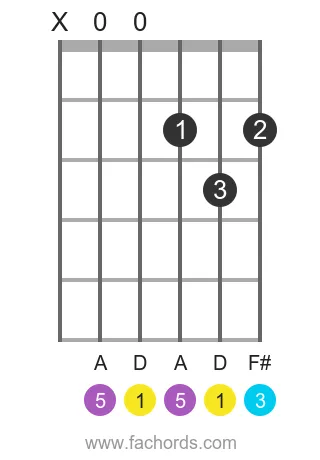
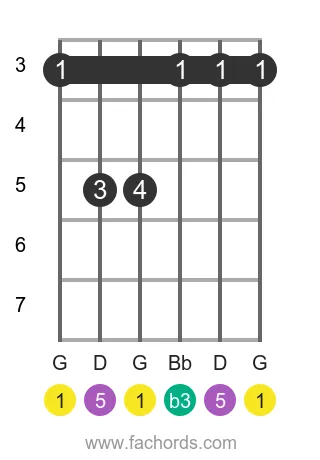
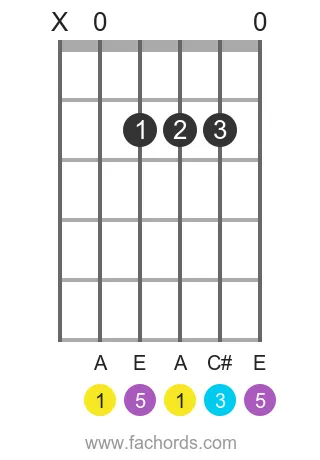
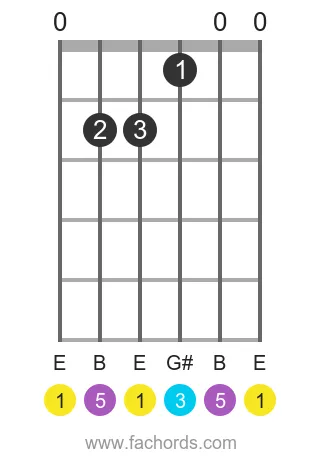
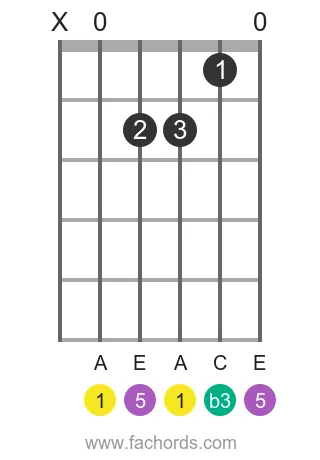
Press play to hear each key. The diagrams show the shapes used in the audio, and every chord links to its full page.
Longer progressions that contain it
- I-I7-IV-iv minor plagal: C C7 F Fm
More progressions like this one
- I-II-ii: C D Dm
- I-v-ii: C Gm Dm
- Creep progression: C E F Fm
- I-bIII-IV: C Eb F

Created by
Giancarlo is a musician (teaching guitar since 2000), software engineer, AI consultant and published researcher
FAQ
What are the chords of I IV iv in each key?
In C major: C F Fm. In G major: G C Cm. In D major: D G Gm. In A major: A D Dm. In E major: E A Am.
Why is IV iv I called the Beatles cadence?
The Beatles were big fans of this move, and it is known by that name. You Won't See Me plays D Dm A in the verse.
What note moves in the plagal sigh?
The sixth degree slides down a half step when the IV turns minor, then down again to the fifth on the I. In A major that is F# to F to E.
Which Oasis song uses F Fm C?
Don't Look Back in Anger plays F Fm6 C twice in the pre-chorus, in the key of C. That is IV-iv-I with an added sixth on the minor chord.
