iii vi ii V: The Falling-Fifths Chain on Your Lowest Strings
Pluck your four lowest open strings: E, A, D, G. Those are the roots of iii-vi-ii-V in the key of C, Em Am Dm G, and the tuning of the guitar gives them to you for free. All four are open shapes too, and five keys of diagrams and audio are ready when you want them.
In the Nashville Number System it's 3m 6m 2m 5, and when the chain finishes its trip it's written iii-vi-ii-V-I.
Two More Links on the ii-V
Start from the ii-V, Dm G. Add the chord a fifth above Dm and you get Am. Add one more and you get Em. That's a falling-fifths chain, E-A-D-G, and every chord comes from the key of C. It's the standard extended turnaround.
On the strings each step goes up a fourth, and that lands on the same note as dropping a fifth. So the open strings really do spell the chain. Try this: play the four roots slowly, then the four chords, then add C at the end. Em Am Dm G C. That last chord is where the chain has been heading.
Now take the C away and go back to Em. G and Em share G and B, so that's a small change. Compare the two endings and pick the one your song needs.
From the Supremes to The 1975
Four of these five use it in the chorus. Don't Stop Me Now brings it in for the verse.
| Song | Artist | Section | Chords | Key |
|---|---|---|---|---|
| You Can't Hurry Love | The Supremes | chorus | Bb Eb Bb Dm Gm Cm F | Bb major |
| Don't Stop Me Now | Queen | verse | F Am Dm Gm C | F major |
| Greatest Love of All | Whitney Houston | chorus | C#m7 F#m7 Bm7 E7 | A major |
| Guys | The 1975 | chorus | A#m7 D#m7 G#m7 C# | F# major |
| I Miss You | Beyoncé | chorus | A#m D#m7 G#m7 C# | F# major |
You Can't Hurry Love and Don't Stop Me Now both reach it from the tonic: look for Dm Gm Cm F in the first and Am Dm Gm C in the second. Those are the same four degrees in Bb and in F.
The chorus of Greatest Love of All shows the sevenths you'll often see here: C#m7 F#m7 Bm7 E7. Guys and I Miss You sit in F#, with the same chain.
Turn the vi Into a Dominant
Dominant, major and minor sevenths are all common on this chain, so try the seventh of each chord once it feels easy. And if you make the vi a dominant, you get a more chromatic sound: that's the iii-VI-ii-V turnaround. There's more of this in the guide to jazz chord progressions.
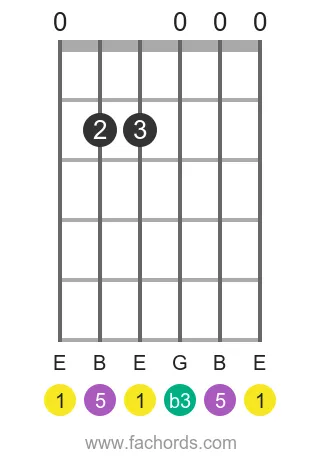
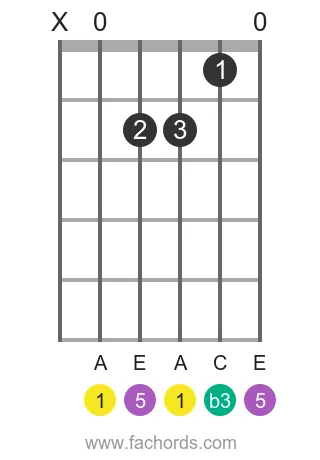
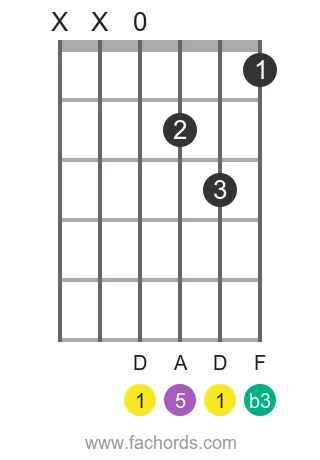
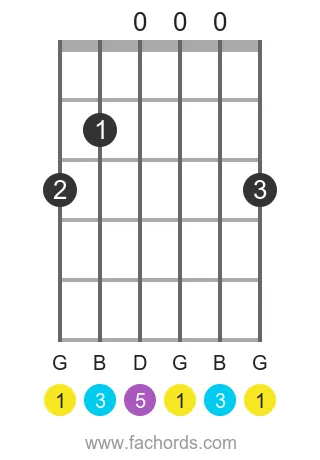
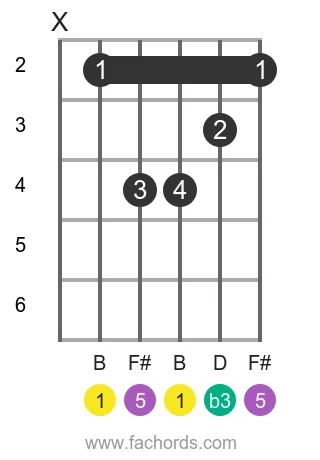
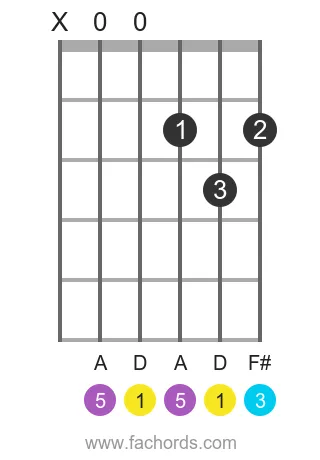
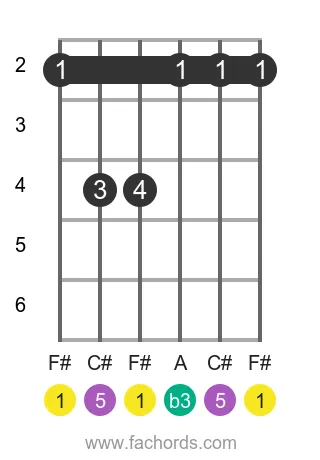
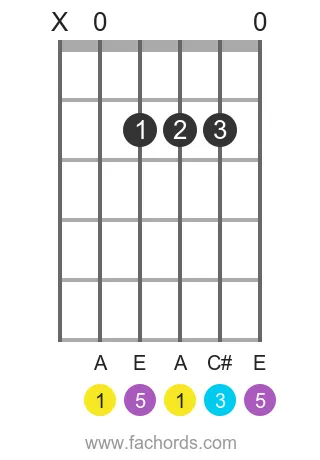
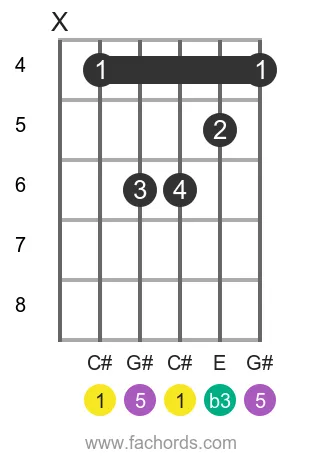
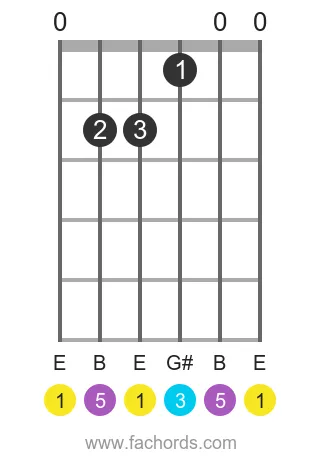
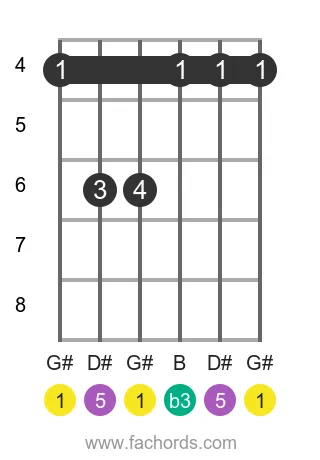
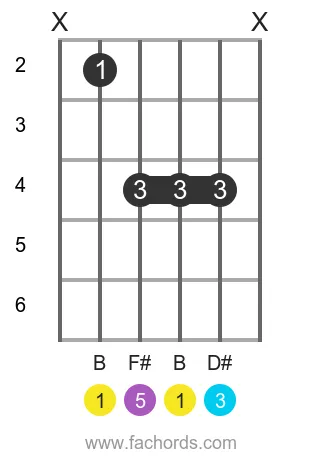
iii vi ii V Chord Progression: Chords and Audio in C, G, D, A and E
Press play to hear each key. The diagrams show the shapes used in the audio, and every chord links to its full page.
Longer progressions that contain it
- Diatonic circle of fifths: C F Bdim Em Am Dm G C
More progressions like this one
- I-VI-ii-V: C A Dm G
- ii-V vamp: Dm7 G7
- Minor ii-V-i: Dm7b5 G7 Cm
- Diatonic circle of fifths: C F Bdim Em Am Dm G C

Created by
Giancarlo is a musician (teaching guitar since 2000), software engineer, AI consultant and published researcher
FAQ
Could you give iii vi ii V in five keys?
In C major: Em Am Dm G. In G major: Bm Em Am D. In D major: F#m Bm Em A. In A major: C#m F#m Bm E. In E major: G#m C#m F#m B.
Where does the iii vi ii V progression resolve?
It resolves to I, which is why it is also written iii-vi-ii-V-I. The roots fall by fifths, E A D G, and the next fall lands on C.
Is iii vi ii V a jazz turnaround?
Yes, it is the standard extended turnaround. It takes the ii-V and adds two more links to the chain, and all four chords belong to the key.
Which songs use the iii vi ii V progression?
Don't Stop Me Now by Queen plays Am Dm Gm C in the verse, and You Can't Hurry Love by The Supremes plays Dm Gm Cm F in the chorus.
