Neapolitan in a Major Key: One Fret Above Home, Then V
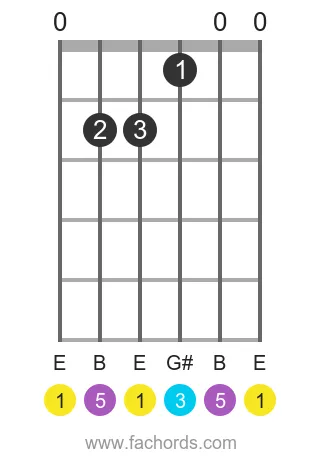
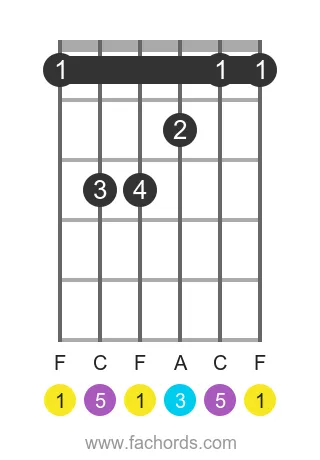
Take your open E chord and move it up one fret, with a barre behind it. That's F, and in the key of E it's the bII chord. Play E F B E and you have I-bII-V-I, the Neapolitan in major, written 1 b2 5 1 in the Nashville Number System.
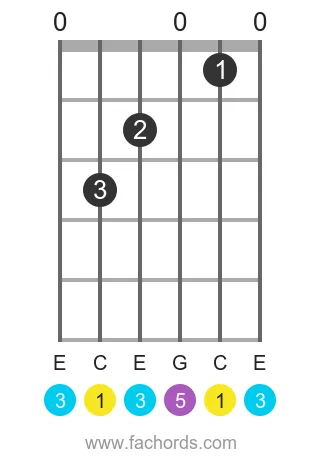
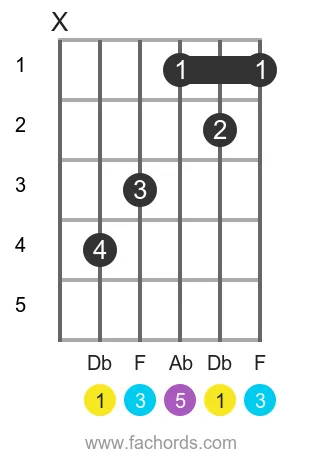
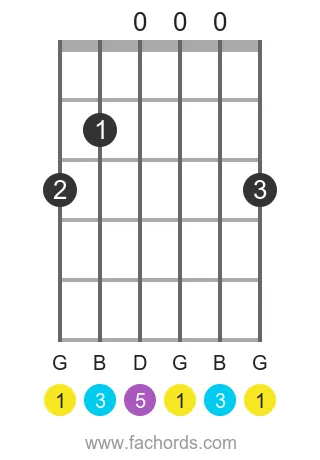
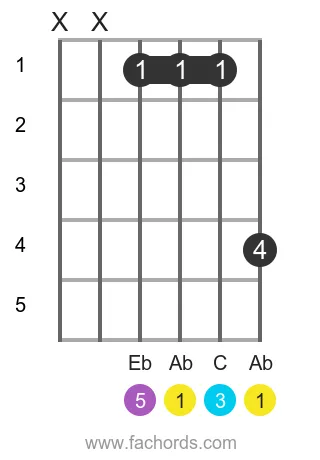
In the key of C the chords are C Db G C, with Db from outside the major key: neither Db nor Ab belongs to C major. You can compare the five keys and their audio.
A Half Step Above Home
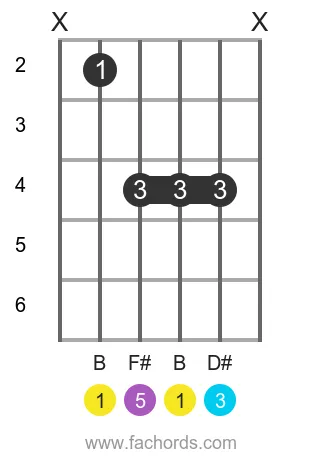
In this version the chord leans on the tonic from a half step above, and then falls to V. So it works as a surprise pre-dominant. Look at how little it shares with its neighbours. E and F have no notes in common, and neither do F and B. The bass jumps a tritone from F to B: first fret of the sixth string, second fret of the fifth string.
Here's a comparison to try: play E A B E, then E F B E. Only the second chord changes, and it's the one that doesn't belong. Does that F feel far away to you?
What Changes From the Minor Version
The Neapolitan sixth lives in minor keys, with the third of the chord in the bass. Here the same bII chord is dropped into a major key, usually in root position, where it sounds even more foreign. Rock and pop use it without classical voice leading, as a sudden side step, so there's nothing to prepare: you just go there.
The Beatles Step Into E
One song here, and it's in the same key as our example.
| Song | Artist | Section | Chords | Key |
|---|---|---|---|---|
| Do You Want to Know a Secret | The Beatles | intro into the verse | G F B7 E | E major |
Do You Want to Know a Secret by The Beatles plays G F B7 E as the intro moves into the verse. So the F comes after a G, not after the tonic, and then it does its job, going to V and on to E. Use B7 here in its open shape, and the F is the only barre in the line.
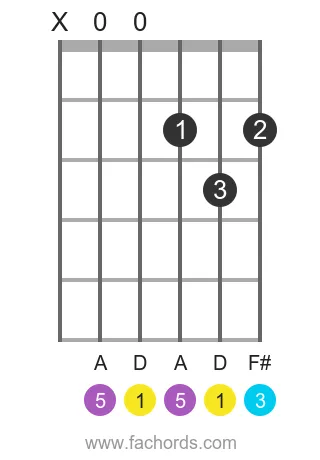
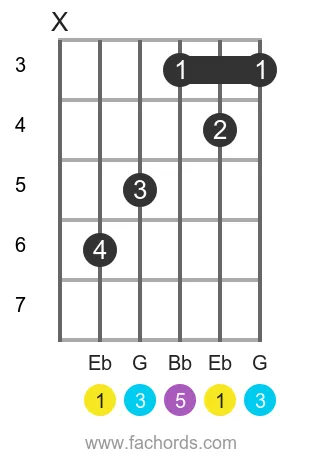
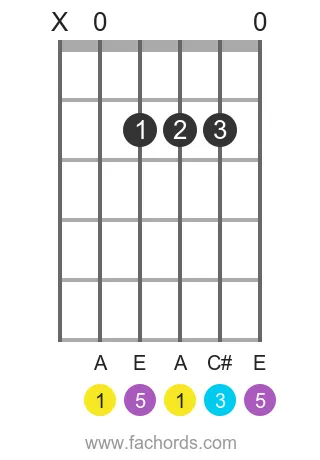
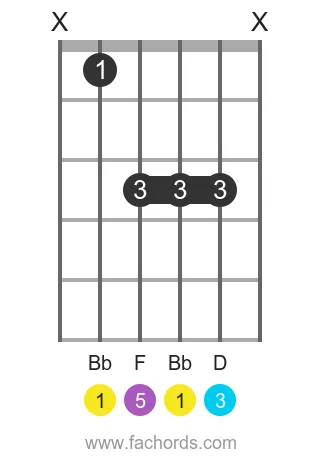
Neapolitan Chord in a Major Key: Chords and Audio in C, G, D, A and E
Press play to hear each key. The diagrams show the shapes used in the audio, and every chord links to its full page.
More progressions like this one
- German sixth approach: Ab7 G7 Cm
- Omnibus progression: G7 Bb7/Ab Dm/A Bb7 G7/B C
- Stomp progression: F7 F#dim7 / C7/G C7 / F7 F#dim7 / C7/G C7 / F7 F#dim7 / C7/G A7 / D7 / G7 C7
- Half cadence: F G

Created by
Giancarlo is a musician (teaching guitar since 2000), software engineer, AI consultant and published researcher
FAQ
What are the chords of the Neapolitan progression in a major key?
In C major: C Db G C. In G major: G Ab D G. In D major: D Eb A D. In A major: A Bb E A. In E major: E F B E.
What is a bII chord in a major key?
It is a major chord built a half step higher than the tonic, such as F in the key of E. It leans on the tonic and then falls to V.
How is the Neapolitan in major different from the Neapolitan sixth?
The Neapolitan sixth sits in a minor key in first inversion. In a major key the same bII is usually in root position, where it sounds even more foreign.
Which Beatles song uses a bII chord?
Do You Want to Know a Secret plays G F B7 E as the intro moves into the verse, in E major. The F is the bII chord.
