Stomp Progression: Three Climbs and a Ragtime Exit
The Stomp progression is an eight-bar loop from the swing era, built on a chromatic bass line that climbs three times before a ragtime ending closes the door. It's a riff frame that builds excitement by repeating, and many bands wrote new heads on it. Here it is in the key of A, two bars per line, and the other keys have audio too.
- Bars 1 and 2: D7 D#dim7, A7/E A7
- Bars 3 and 4: D7 D#dim7, A7/E A7
- Bars 5 and 6: D7 D#dim7, A7/E F#7
- Bars 7 and 8: B7, E7 A7
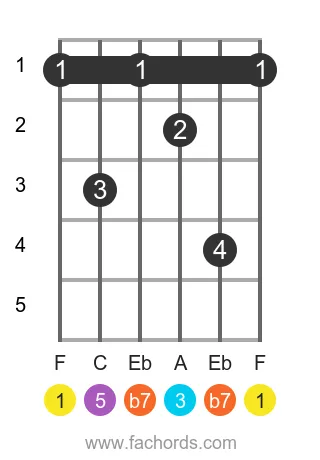
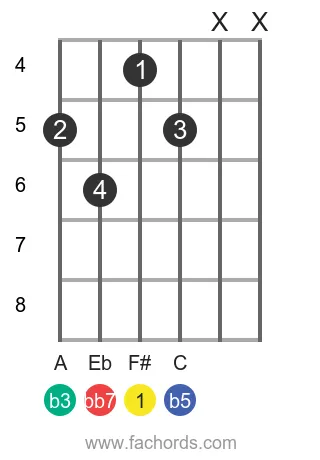
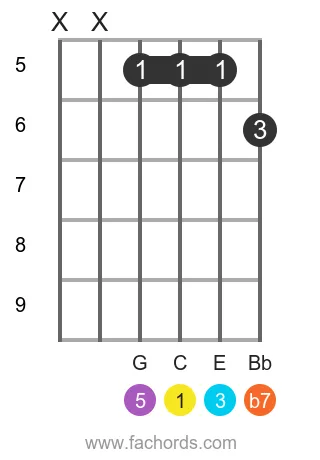
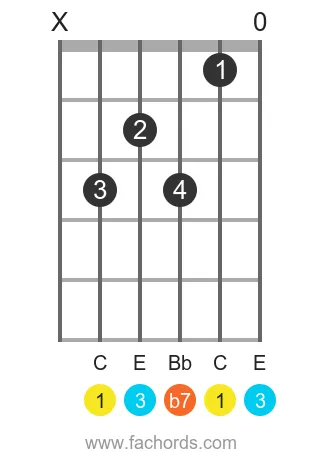
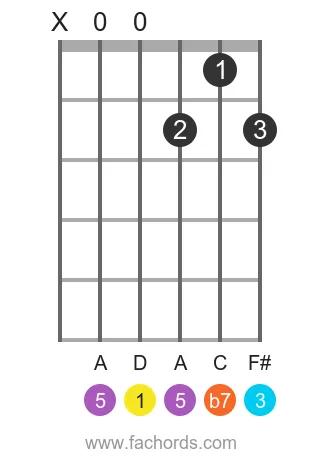
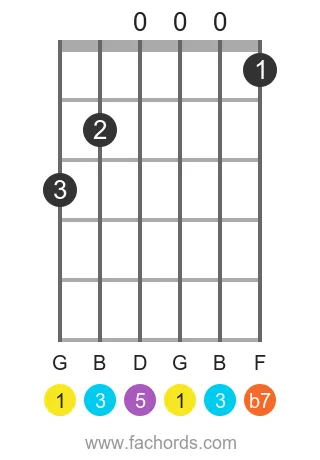
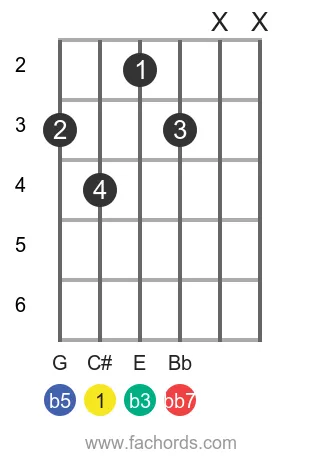
In numerals, the climb is IV7 #ivdim7 to I7/5 I7, and the ending is VI7, II7, V7, I7. In the Nashville Number System the climb reads 4(7) #4dim7, 1(7)/5 1(7). In the key of C it's F7 F#dim7, C7/G C7, and then C7/G A7, D7, G7 C7. Only that G7 belongs to C major. F7, F#dim7, C7/G, C7, A7 and D7 all carry a note from outside the key.
Three Frets, Three Chords
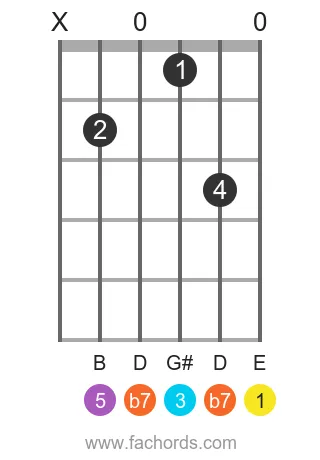
The whole riff lives in the bass: D, D#, E, on the fourth string, frets 0, 1, 2. You can keep it right there:
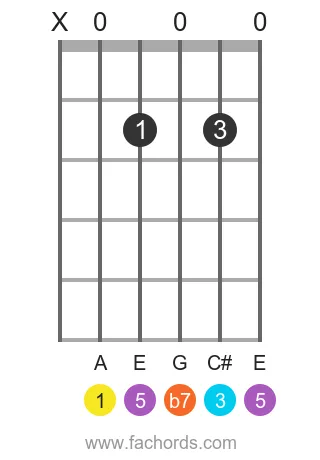
- D7: xx0212
- D#dim7: xx1212
- A7/E: xx2223
- A7: x02223
From D7 to D#dim7 only one finger moves: the top three strings don't change at all. Then A7/E puts the fifth of the chord in the bass, and the open A string turns it into plain A7. Loop those four shapes with short, punchy strums and you already have the riff.
The Third Climb Turns Off
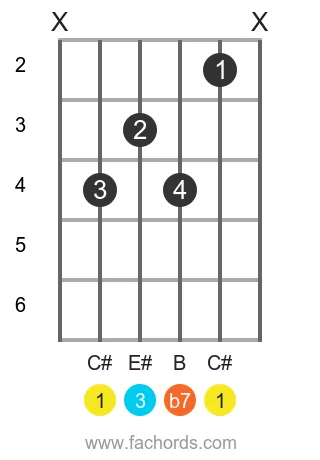
The first two climbs land on A7. The third one is a trick: at the end of bar 6 the A7 is replaced by F#7, and the ragtime chain takes over. F#7, B7, E7 and A7 have roots that each fall a fifth, and every chord is a dominant seventh. The same chain drives the ragtime progression. F#7 and B7 work as secondary dominants, each one leading to the next chord.
Practice bars 5 to 8 on their own. Stay on the riff, then listen for the moment the bass stops climbing.
King Porter Stomp in Db
King Porter Stomp by Jelly Roll Morton and Fletcher Henderson saves the frame for its last section, the stomp section.
| Song | Artist | Section | Chords | Key |
|---|---|---|---|---|
| King Porter Stomp | Jelly Roll Morton / Fletcher Henderson | stomp section, the last section of the piece | Gb7 Gdim7 | Db7/Ab Db7 | Gb7 Gdim7 | Db7/Ab Db7 | Gb7 Gdim7 | Db7/Ab Bb7 | Eb7 | Ab7 Db7 | Db major |
In Db the chords are Gb7 Gdim7, Db7/Ab Db7, closing with Db7/Ab Bb7, Eb7, Ab7 Db7. That key looks hard, but put a capo on the fourth fret and the A shapes you just learned sound in Db. So the riff needs no new fingerings.
Stomp Progression: Chords and Audio in C, G, D, A and E
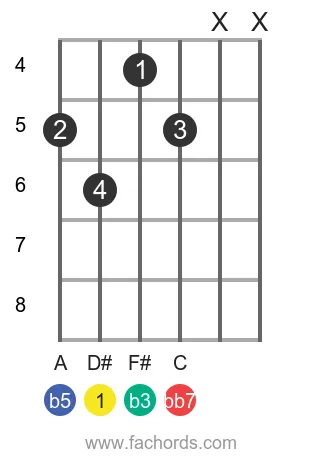
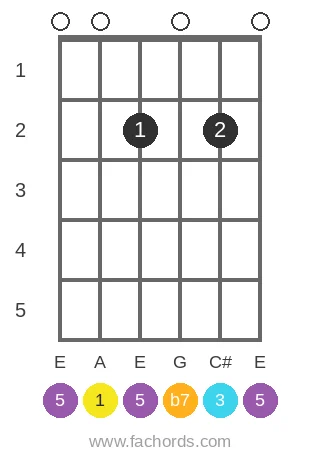
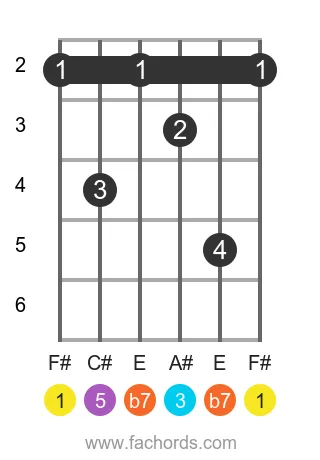
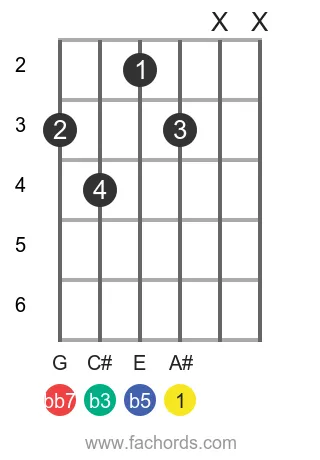
Press play to hear each key. The diagrams show the shapes used in the audio, and every chord links to its full page.
Key of C major
Key of G major
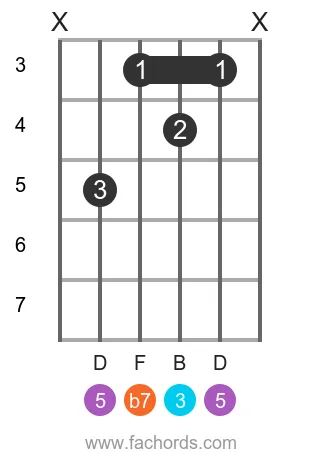
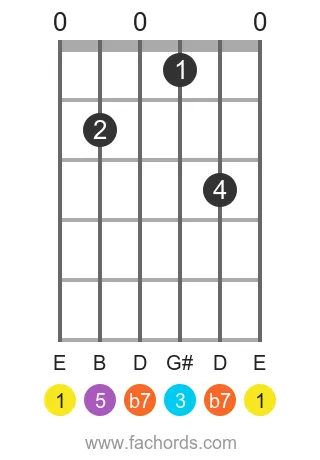
Key of D major
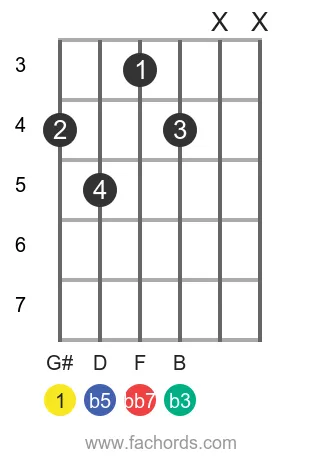
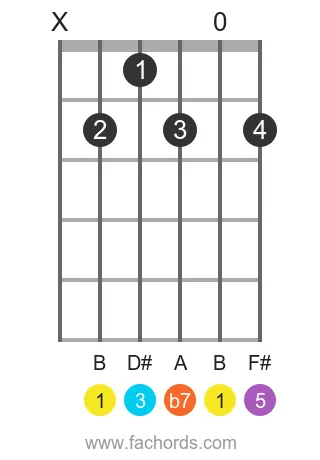
Key of A major
More progressions like this one
- Half cadence: F G
- La Folia: Cm G Cm Bb Eb Bb Cm G
- Pachelbel's Canon progression: C G Am Em F C F G
- Authentic cadence: G C

Created by
Giancarlo is a musician (teaching guitar since 2000), software engineer, AI consultant and published researcher
FAQ
What is the stomp progression?
It is an eight-bar swing-era loop. IV7 and #ivdim7 climb to I7 with the fifth in the bass, three times, then the ragtime chain VI7, II7, V7, I7 closes it.
How does the stomp progression go in the key of C?
It runs F7 F#dim7, C7/G C7, twice, then F7 F#dim7, C7/G A7, then D7, then G7 C7, with one pair of chords in most bars.
Which chords does King Porter Stomp use in its stomp section?
In Db the section plays Gb7 Gdim7, Db7/Ab Db7, twice, then Gb7 Gdim7, Db7/Ab Bb7, then Eb7, then Ab7 Db7. It is the last section of the piece.
How does the bass move in the stomp progression?
It climbs by half steps, from the root of IV7 to the raised fourth and then to the fifth of the key. In the key of A that is D, D#, E.
