bVI7-V7-i: The German Sixth Approach as a Half-Step Drop
Slide a chord down one fret and you've played a piece of classical harmony. bVI7-V7-i in A minor is F7 E7 Am, and it's the sound of the German augmented sixth, written Ger+6 in analysis. The Nashville form is b6(7) 5(7) 1m.
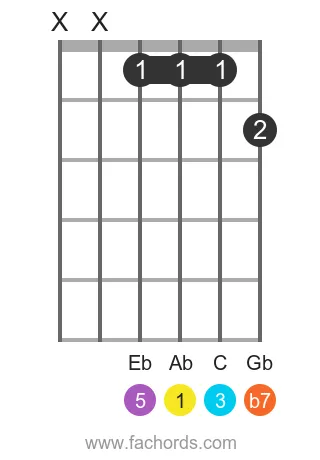
In C minor the same line is Ab7 G7 Cm. Both Ab7 and G7 are outside the key: Ab7 has a Gb, and G7 has a B natural. The five keys and audio are ready when you are.
Same Sound, Two Spellings
This chord sounds exactly like a dominant seventh on bVI, so jazz and blues players write it that way. The classical name comes from the other spelling. F7 has an Eb in it. Spell that note D# and the interval F to D# is an augmented sixth, and it opens outward onto the octave of V:
- F falls to E: sixth string, fret 1 to the open string.
- D# rises to E: fourth string, fret 1 to fret 2.
Play those two notes and then the octave E, and listen to two half steps moving apart.
A Heavy Drop on the Guitar
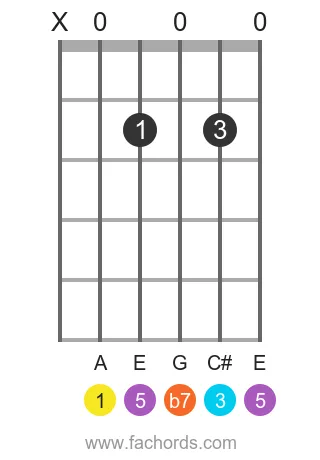
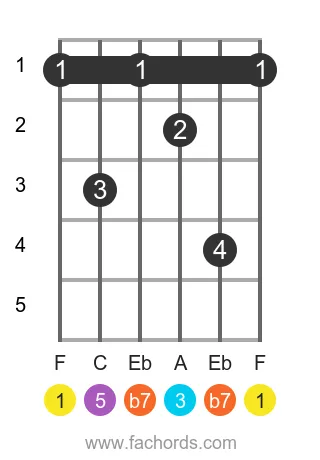
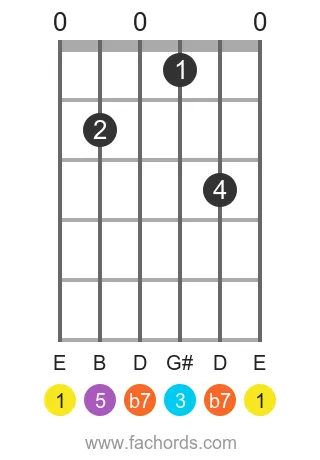
There's a second way to hear it, as written in jazz and blues. Play F7 as a barre, 131211, and slide the whole shape down a fret: lift the barre and you're on E7, 020100. The bass falls a half step from b6 to 5, and it's a heavy drop onto the dominant. Then go to Am.
Compare the two versions of the fall. In the barre slide the Eb falls to D, and in the first exercise the same fret spelled D# climbs to E. Same fret, two directions.
Coltrane, a Tango and Gary Moore
Three very different pieces use this move:
| Song | Artist | Section | Chords | Key |
|---|---|---|---|---|
| Equinox | John Coltrane | bars 9-11 | A7#11 G#7 C#m7 | C# minor |
| Remando (tango) | Ernesto Nazareth | cadence at 1:48 | Ger+6, cad. 6/4, V | |
| As the Years Go Passing By | Gary Moore | end of the verse and intro | Ab G Cm, intro G7 Ab7 G7 Cm | C minor |
- Equinox by John Coltrane plays A7#11 G#7 C#m7 in bars 9 to 11, in C# minor.
- As the Years Go Passing By by Gary Moore has it at the end of the verse and in the intro.
- Remando (tango) by Ernesto Nazareth writes it the classical way at 1:48, with the Ger+6 going through a cadential six-four to V.
With plain triads, the same drop from bVI to V sits inside i-bVI-V.
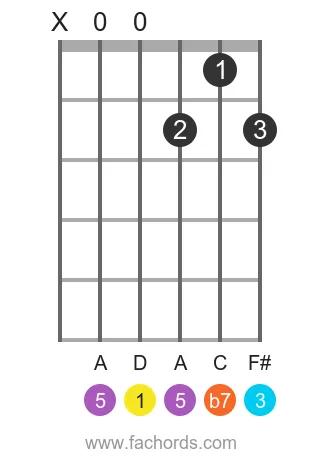
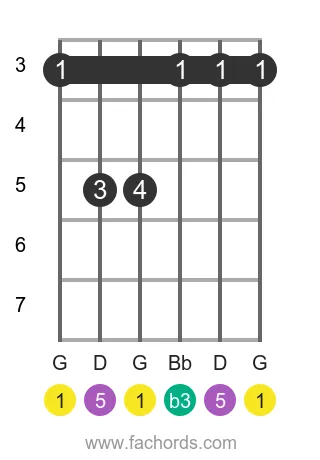
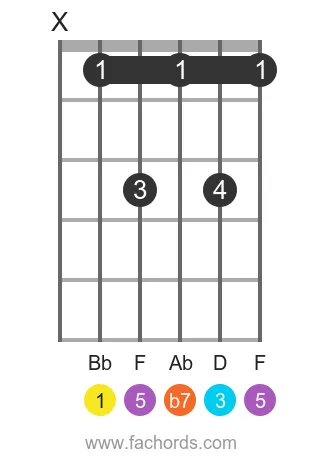
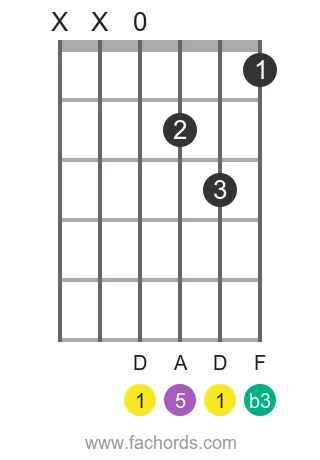
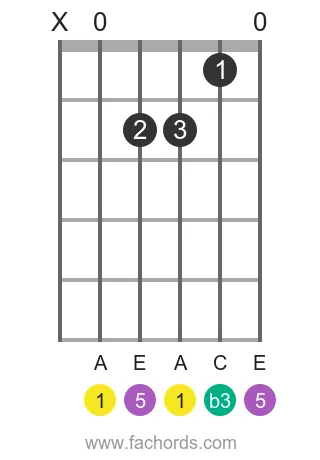
German Augmented Sixth Chord: Chords and Audio in C, G, D, A and E
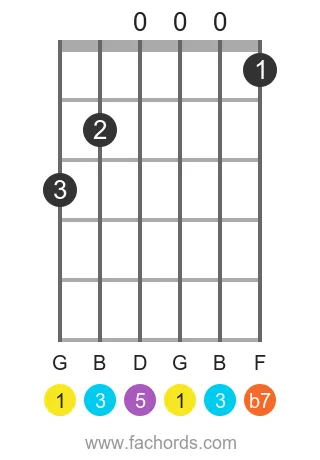
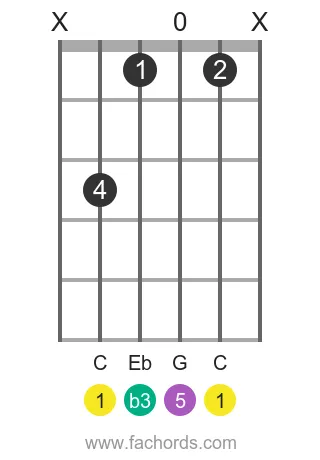
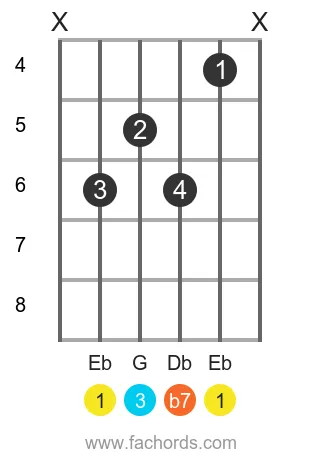
Press play to hear each key. The diagrams show the shapes used in the audio, and every chord links to its full page.
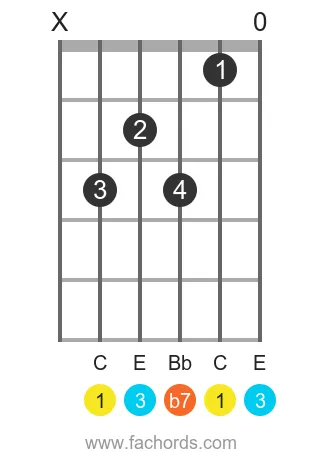
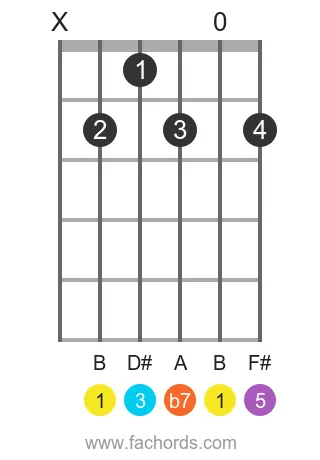
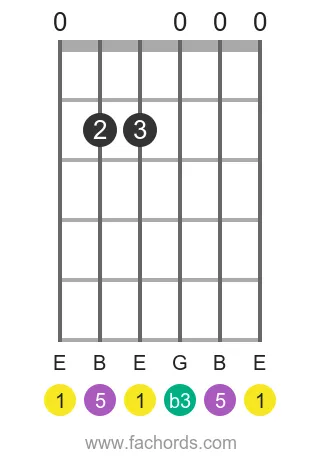
Same loop, different starting chord
- Minor i-bVI-V: Cm Ab G
More progressions like this one
- Omnibus progression: G7 Bb7/Ab Dm/A Bb7 G7/B C
- Stomp progression: F7 F#dim7 / C7/G C7 / F7 F#dim7 / C7/G C7 / F7 F#dim7 / C7/G A7 / D7 / G7 C7
- Half cadence: F G
- La Folia: Cm G Cm Bb Eb Bb Cm G

Created by
Giancarlo is a musician (teaching guitar since 2000), software engineer, AI consultant and published researcher
FAQ
What are the chords of the German sixth approach in each key?
In C minor: Ab7 G7 Cm. In G minor: Eb7 D7 Gm. In D minor: Bb7 A7 Dm. In A minor: F7 E7 Am. In E minor: C7 B7 Em.
Is a German sixth the same as a dominant seventh chord?
It sounds exactly the same. F7 and a German sixth in A minor share their sound, and the difference is the spelling, Eb or D#, and how that note moves.
What does Ger+6 mean?
It is short for German augmented sixth. Written that way the chord has an augmented sixth that opens outward onto the octave of V, while the bass falls a half step.
Which songs use bVI7 V7 i?
Equinox by John Coltrane plays A7#11 G#7 C#m7 in bars 9 to 11. Remando by Ernesto Nazareth and As the Years Go Passing By by Gary Moore have it too.
