La Folia: Eight Chords That Stop on V and Start Over
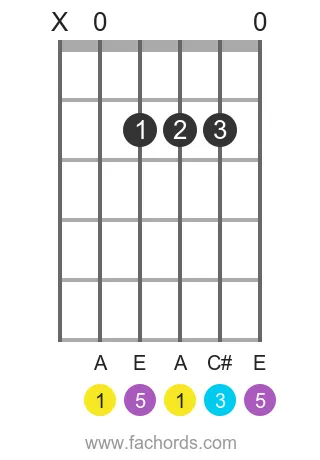
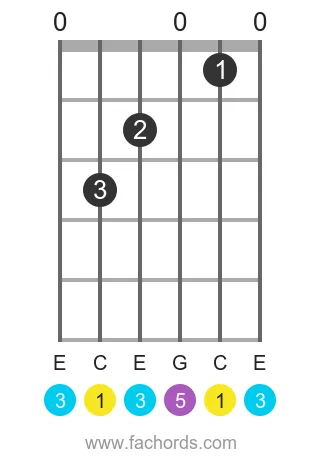
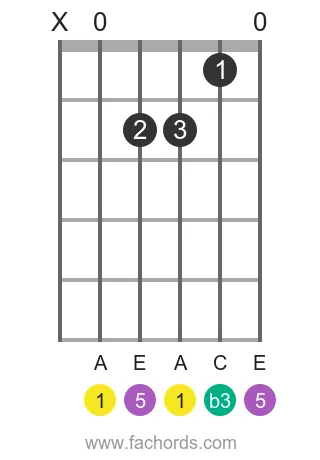
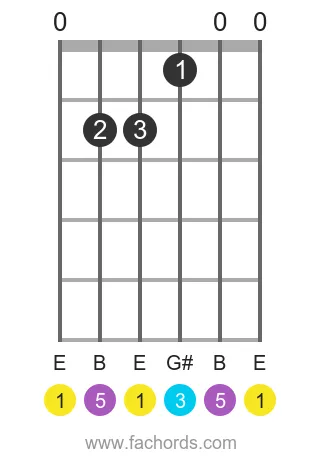
Play this slowly on your guitar: Am E Am G C G Am E. That's La Folia, the progression i-V-i-bVII-bIII-bVII-i-V in A minor, and one of the oldest chord progressions in Western music. I'm using A minor because all eight chords are open shapes there.
To me it has a very medieval feel. See if you agree: listen to the audio in five keys, then pick up the guitar and try the ideas that follow. In the Nashville Number System you write it 1m 5 1m b7 b3 b7 1m 5.
Two Halves With Two Moods
Cut the eight chords in the middle and you get two different journeys:
- Am E Am G: the minor tonic and its dominant go back and forth, then G opens the way out.
- C G Am E: for a moment you're in C, the relative major, and then G takes you back to Am and E leaves the door open.
So the trip to the relative major goes through bVII and bIII, G and C here. Only four chords are involved, and the same four make up the Romanesca, which puts them in a different order.
One Note Held Over at Almost Every Change
Look at what your fingers do. Am and E share the note E, and in the open shapes it stays put on the second fret of the D string. G and C share the note G, which is the open G string in both shapes. Every change in the progression keeps one note, with one exception: the step between Am and G, in either direction, shares nothing.
Now play only the bass: A, E, A, G, C, G, A, E. That's the open fifth string, the open sixth string, then frets 3 on the sixth and fifth strings for G and C. When the bass line feels natural, add the chords on top again.
The E Chord Comes From Outside
Natural A minor would give you Em on the fifth degree. La Folia plays a major E, and that brings in G#, a half step under A. The same thing happens if you write it in C minor, as Cm G Cm Bb Eb Bb Cm G: the G chord sits outside the key because of its B natural.
Ending on V Is the Whole Trick
The pattern stops on V, not on the tonic, so it can repeat for variation after variation. Try this: play the eight chords and stop on E. Let it ring and ask yourself if you'd like to go on. Then go round again, and this time add a final Am after the E. Compare the two endings.
La Folia can also be split up and given some variation, and that's a nice way to get new sequences out of it:
- Loop only Am E Am G, and let G go back to Am.
- Loop only C G Am E, so that you start on the major side.
- Keep all eight chords and change the right hand each time: strum them once, arpeggiate them the next time.
Vivaldi's Theme in D Minor
You can find endless examples of this progression in classical music, and Vivaldi is one of the many composers who used it. His La Follia (Op. 1 No. 12) states it as the theme, in D minor.
| Song | Artist | Section | Chords | Key |
|---|---|---|---|---|
| La Follia (Op. 1 No. 12) | Antonio Vivaldi | theme | Dm A Dm C F C Dm A | D minor |
Dm A Dm C F C Dm A has an F in it, which is a barre chord if you play it in the usual way. Here's the way around that: put a capo on the fifth fret and play the A minor shapes. They sound in D minor, so you can play along with the theme.
Want to use these moves in a song of your own? Here's how to write sad songs on guitar.
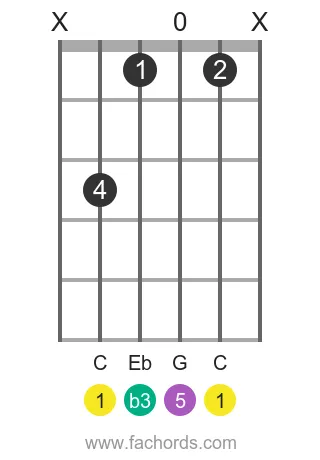
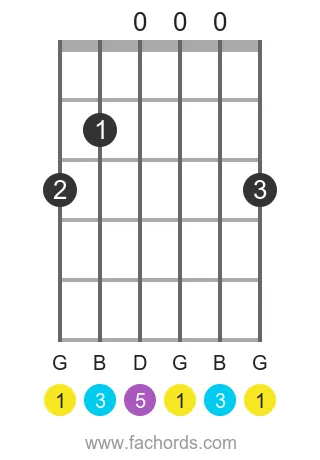
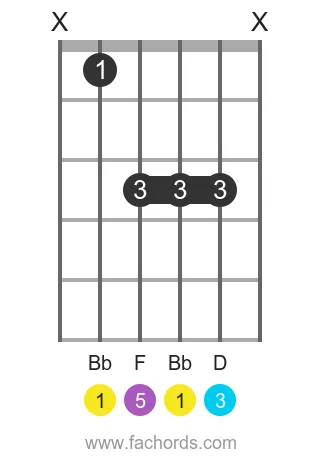
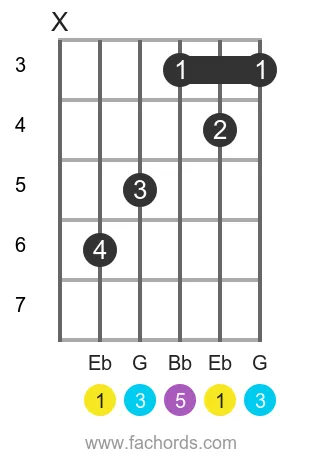
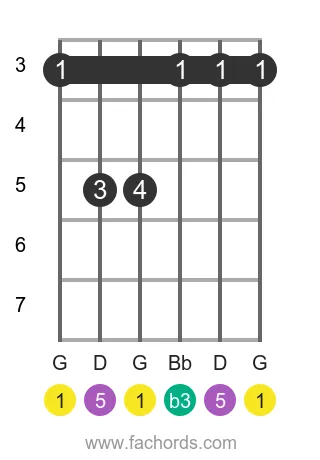
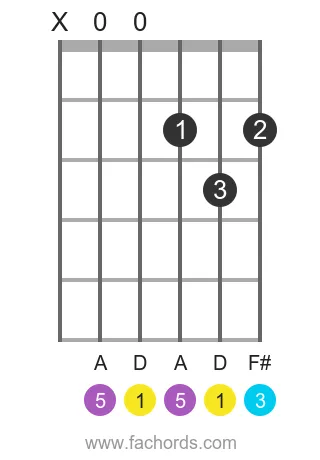
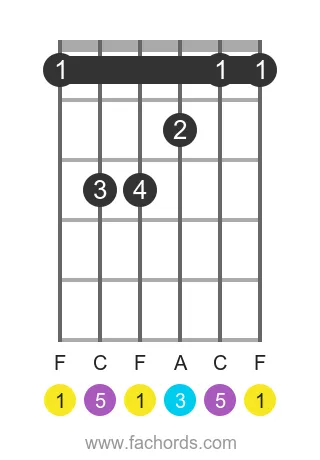
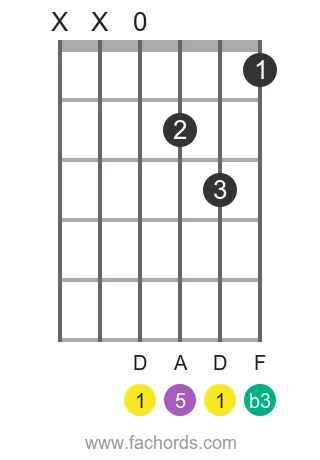
La Folia Chord Progression: Chords and Audio in C, G, D, A and E
Press play to hear each key. The diagrams show the shapes used in the audio, and every chord links to its full page.
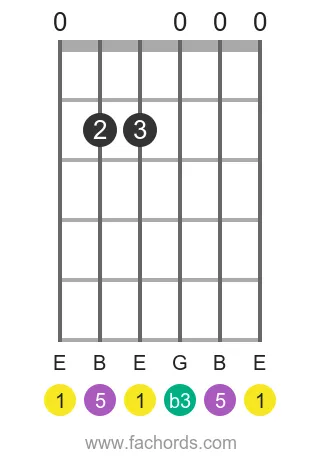
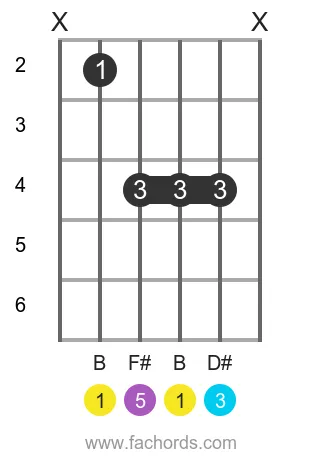
More progressions like this one
- Pachelbel's Canon progression: C G Am Em F C F G
- Authentic cadence: G C
- Plagal cadence: F C
- Deceptive cadence: G Am

Created by
Giancarlo is a musician (teaching guitar since 2000), software engineer, AI consultant and published researcher
FAQ
What chords does La Folia use in each key?
In C minor: Cm G Cm Bb Eb Bb Cm G. In G minor: Gm D Gm F Bb F Gm D. In D minor: Dm A Dm C F C Dm A. In A minor: Am E Am G C G Am E. In E minor: Em B Em D G D Em B.
Why does La Folia end on the V chord?
Stopping on V leaves the pattern open, so it can repeat for variation after variation. In A minor the last chord is E, and the next round starts again on Am.
Is La Folia in a minor or a major key?
It is in a minor key. It alternates the minor tonic and the dominant, then moves to the relative major through bVII and bIII before returning to i. In A minor that relative major chord is C.
Which piece by Vivaldi uses La Folia?
La Follia (Op. 1 No. 12) by Antonio Vivaldi uses it as the theme, in D minor, with the chords Dm A Dm C F C Dm A.
