Variations on the Blues Progression
How To Tweak The 12-Bar Blues Progressions
The framework for and structure on which blues music is constructed is the 12-bar blues progression.
It’s a progression that in its most basic form consists of three chords (I, IV, V) played at specific instances over 12 measures.
The basic 12-bar blues looks like this:
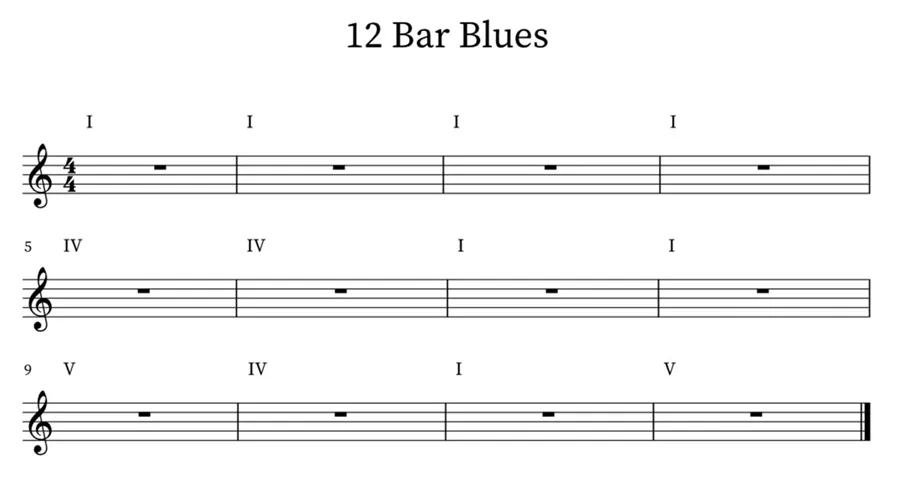
The Roman numeral analysis of this structure doesn’t effectively tell the whole story though.
Each of these chords is normally heard as a dominant 7th chord.
A series like this, of chords behaving as:
- Tonic chord
- Subdominant chord
- Dominant chord
Has no standing or precedence in Western classical theory which is precisely why it is such a unique formal contribution to music.
To our post-20th-century ears, this progression is a common occurrence in music outside the blues realm, including country, jazz, and rock and roll.
The chord progression as written above, without the dominant 7th designations, is most common in folk and pop music structures.
Mozart and Haydn would be flabbergasted by the prospect of a dominant chord not resolving to its tonic because the tension-release concept of a formal V7-I was the backbone of harmonic motion at that time.
These chords remain unresolved but still sound like a proper family of chords due to the familiar root movement of tonic, subdominant, and dominant.
As a dominant seventh chord then, each chord in a 12-bar blues contains a tritone, the interval that creates the tension so deserving of a tonic release.
Again, our modern ears hear that dissonance as a ‘blue’ note that doesn’t have to follow the old rules.
As the form moves forward into an ever-changing twentieth century it can’t help but undergo some changes based on the evolution of jazz music in particular.
Jazz is also breaking some old rules by incorporating more dissonance and even more chords.
It is always borrowing just enough from classical theory to keep harmonic motion from sounding too inaccessible.
Adding New Chords | Basic Rules
The 12-bar blues form traverses early jazz and swing with some small changes here and there but adds new harmony in the be-bop era when some curious minds are looking for more chords over which to improvise.
The mechanisms to add these chords follow three basic rules.
- 1) Since these are all dominant chords any pre-dominant chord can precede them.
- 2) The tritone substitution concept brings chromatic harmonized bass lines into play
- 3) Altered chords can bring new dissonances over existing bass lines adhering to the form
And so...
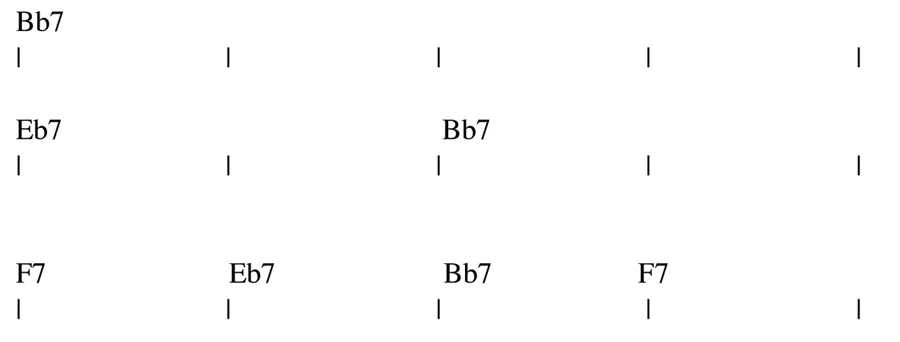
becomes…
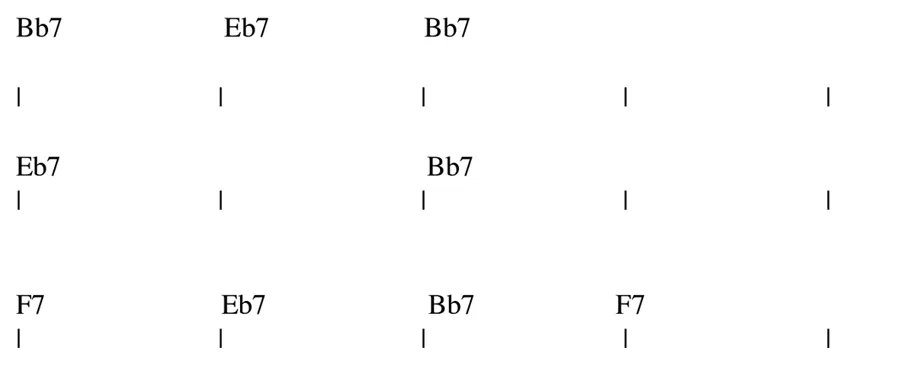
becomes…
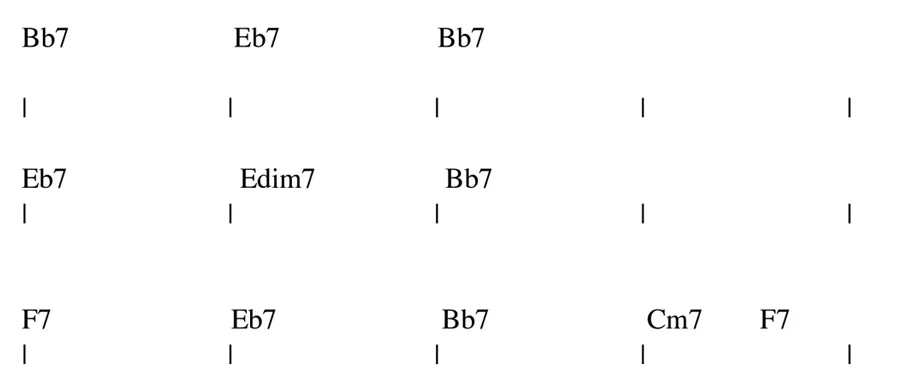
becomes…
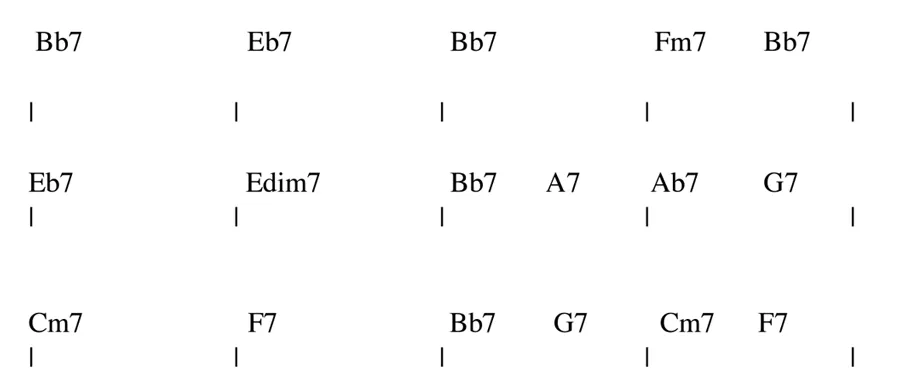
becomes…
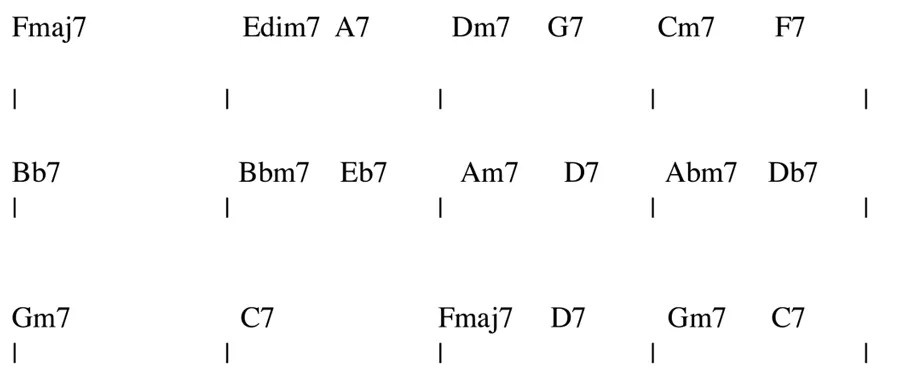
Quite a transformation!
So now you have new things to experiment with. To stay updated, subscribe here

Created by
Giancarlo is a musician (teaching guitar since 2000), software engineer, AI consultant and published researcher
FAQ
Why are the I, IV, and V chords typically dominant 7ths in a 12-bar blues, even though they don't resolve like classical V7-I chords?
In blues, these I7, IV7, and V7 chords don't strictly follow classical harmonic rules of tension and release. Instead, their dominant 7th quality, especially the embedded tritone, provides a characteristic 'bluesy' tension and color. This sound is familiar and acceptable to modern ears, and the strong root movement between the I, IV, and V chords provides sufficient harmonic direction without needing traditional V7-I resolutions.
What is the role of the tritone within dominant 7th chords in the context of the 12-bar blues?
The tritone (an augmented fourth or diminished fifth) found in every dominant 7th chord is fundamental to the blues sound. It creates a natural dissonance and tension that our ears perceive as 'blue.' Unlike classical music where the tritone usually demands a strong resolution, in blues, this tension often remains unresolved, contributing to the genre's distinctive harmonic flavor and unique 'blue note' quality.
How do 'pre-dominant chords' expand the basic 12-bar blues progression into more complex variations?
A pre-dominant chord is a chord that typically precedes a dominant chord. Since all primary chords (I, IV, V) in blues are treated as dominant 7ths, you can insert other chords (often minor 7ths, such as a ii-V progression before a dominant) directly before them. This adds harmonic richness, creates smoother voice leading, and provides more sophisticated movement between the main chords of the progression.
What is tritone substitution, and how does it introduce chromatic movement in blues variations?
Tritone substitution involves replacing a dominant 7th chord with another dominant 7th chord whose root is a tritone (three whole steps) away. For example, G7 can be substituted with Db7. This works because both chords share important guide tones (the 3rd and 7th). It introduces a strong descending chromatic bass line, adding a smooth, jazzy feel and expanded harmonic possibilities to the blues progression.
How are 'altered chords' used to introduce new dissonances and harmonic interest in blues variations?
Altered chords are dominant 7th chords where one or more of their tensions (9th, 11th, 13th) have been chromatically raised or lowered (e.g., b9, #9, #11, b13). These alterations create fresh, sometimes more intense, dissonances that add unique color and tension to the existing blues harmony. They are typically played over the same root as the original dominant chord, enriching the sound without changing the fundamental chord progression's structure.
What is the fundamental difference between a basic 12-bar blues progression and its jazz-influenced variations?
The fundamental difference lies in harmonic complexity and chord usage. A basic 12-bar blues uses simple dominant 7th chords (I7, IV7, V7) in a straightforward pattern. Jazz-influenced variations, particularly from the be-bop era, introduce significantly more chords. They incorporate techniques like pre-dominant chords, tritone substitutions, and altered dominant chords to create richer harmonies, increased tension, and more melodic options for improvisation, evolving beyond the traditional blues sound.
