I V: The Two-Chord Pull Behind Achy Breaky Heart and Iko Iko
Can a song live on two chords? Achy Breaky Heart says yes: A and E carry its verse and chorus. That's the I-V chord progression in the key of A, the most basic tension and release in tonal music.
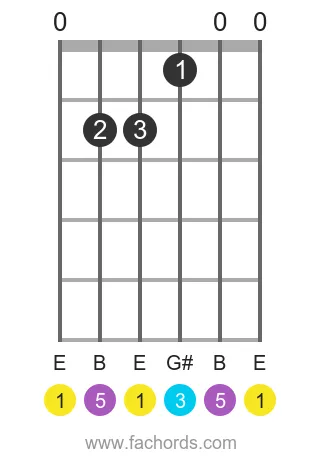
In the Nashville Number System you write it 1 5, and both chords are open shapes in A. The other four keys, with audio, are further down.
One Note Does the Pulling
Look inside the E chord: E, G# and B. That G# is the leading tone of A, and it wants to rise a half step to the tonic. You can see it on the guitar. In the open E shape the G string is at the first fret, and in the open A shape it's at the second. One fret is the whole distance from leading tone to tonic.
The two chords share just one note, E. The root and the fifth have a very strong bond, and that bond is the whole progression.
What a Seventh Adds
Swap E for E7 and you add a D. Now G# and D sit a tritone apart, and the pull gets stronger. In rock and pop it's normal to see the fifth chord as a V7, so this is a swap worth knowing. Play A E A a few times, then A E7 A, and listen to which one leans harder on the way home.
Two songs in the list do it. You Never Can Tell by Chuck Berry uses A and E7 as shapes for a song in C, which puts a capo on the third fret. Tom Dooley uses D and A7 shapes for a refrain in E, so there the capo goes on the second.
From Alouette to Summer of 69
Two chords are enough to carry a melody, which is why folk tunes and children's songs lean on this pair. Alouette is the proof, and here's a nice surprise: the verse of Summer of 69 uses the same two chords in the same key, D and A.
| Song | Artist | Section | Chords | Key |
|---|---|---|---|---|
| Summer of 69 | Bryan Adams | verse | D A | D major |
| Alouette | verse | D A | D major | |
| Achy Breaky Heart | Billy Ray Cyrus | verse and chorus | A E | A major |
| Tom Dooley | The Kingston Trio | refrain | D A7 (shapes) | E major |
| Iko Iko | The Dixie Cups | chorus | C G | C major |
| You Never Can Tell (with a V7) | Chuck Berry | verse | A E7 (shapes) | C major |
Here's a good ear exercise. Strum D and hum the melody of Alouette, and change to A when the note you're humming stops fitting the chord. Then do it with Iko Iko on C and G in the chorus.
The way back from V to I has its own name, the authentic cadence. When you want a third chord, the three-chord progression adds the IV.
I V Chord Progression: Chords and Audio in C, G, D, A and E
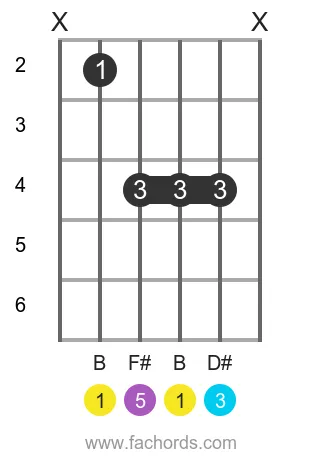
Press play to hear each key. The diagrams show the shapes used in the audio, and every chord links to its full page.
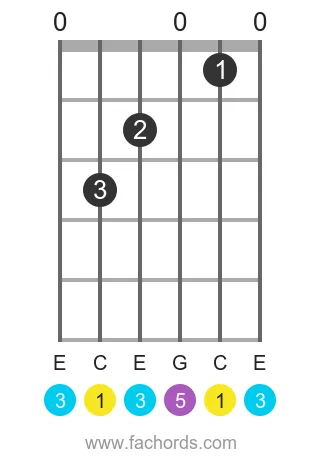
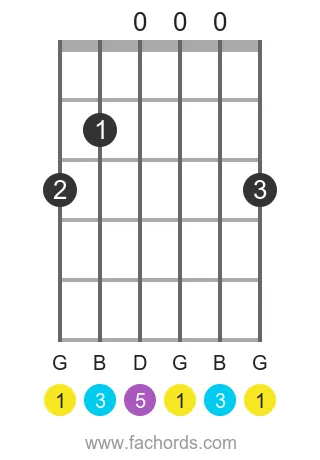
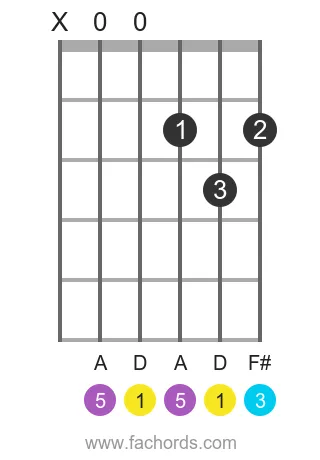
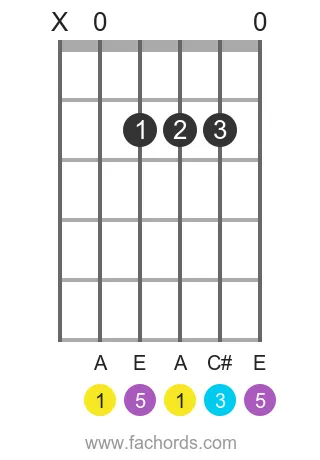
Same loop, different starting chord
- Authentic cadence: G C
More progressions like this one
- Three-chord progression: C F G
- 50s progression: C Am F G
- Axis progression: C G Am F
- Komuro progression: Am F G C

Created by
Giancarlo is a musician (teaching guitar since 2000), software engineer, AI consultant and published researcher
FAQ
Which note makes the V pull back to I?
The leading tone, the third of the V chord. In the key of A that is G#, inside the E chord, and it wants to rise a half step to A.
What changes when the V becomes a V7?
The seventh adds a tritone to the chord. In the key of A, E7 adds D, which sits a tritone from G#, and that makes the pull back to A stronger.
How is I V written in every key?
In C major: C G. In G major: G D. In D major: D A. In A major: A E. In E major: E B.
What song is just A and E?
Achy Breaky Heart by Billy Ray Cyrus plays A and E in the verse and chorus. Summer of 69 by Bryan Adams plays the I V move in D in its verse, as D and A.
