The Komuro Progression: From Am to a Real Arrival on C
The Komuro progression is vi-IV-V-I, which in the key of C gives you Am F G C. In the Nashville Number System that's 6m 4 5 1. In Japan this order of chords is known as the Komuro progression.
What makes it special is the trip it takes. It starts on the relative minor, climbs through IV and V, and then, unlike its close cousin vi-IV-I-V, it actually arrives. Grab your guitar and play it a few times, or skip to the chords and audio in C, G, D, A and E.
One Swap Changes the Ending
This is a close cousin of the singer-songwriter progression, vi-IV-I-V. Same four chords, same contemplative start on vi. The only difference is the order of the last two:
- Am F C G stops on G, so the loop stays open and keeps asking for more.
- Am F G C lets G fall straight into C, an authentic cadence, so every cycle ends with a feeling of arrival.
Try it right now: play four bars of one, four bars of the other. You keep the minor colour of the opening either way, but only the Komuro order gives you that sense of "we made it" at the end of the line.
What Each Chord Change Does
Four chords, and each move has its own character:
- Am to F: a soft change. The two chords share A and C, and the bass drops from A to F.
- F to G: the climb. No shared notes at all, and the bass rises a whole step, so this is where the energy builds.
- G to C: the arrival. The bass moves up a fourth and the note G carries over into the C chord.
- C to Am: the reset. C and E stay, so the loop slides back to the start without a bump.
Notice the shape: smooth, push, land, smooth. If you want to hear it clearly, strum softly on Am and F, dig in a little on G, and let C ring.
Thoughtful Verse or Big Chorus?
Honestly, both. The vi at the start suits sensitive pieces, and the clear ending gives it a place in pop and indie songs too. The chords don't change, so your playing has to make the difference. For a thoughtful verse, try fingerpicking at a slow tempo with one bar per chord. For a big chorus, keep the same bars and open up into full strumming.
From Go West to Tame Impala
King of Wishful Thinking by Go West plays it in the verse in the key of C, so you can play along with exactly the chords shown here. Another Place by Bastille uses it in G as Em C D G, in the intro and verse, while Let It Happen by Tame Impala saves it for the chorus.
| Song | Artist | Section | Chords | Key |
|---|---|---|---|---|
| King of Wishful Thinking | Go West | verse | Am F G C | C major |
| Let It Happen | Tame Impala | chorus | D#m B C# F# | F# major |
| Another Place | Bastille | intro and verse | Em C D G | G major |
That Tame Impala key looks scary, I know. But put a capo on the second fret and D#m B C# F# turns into the shapes C#m A B E, the same loop you'll see in the key of E.
Komuro Progression: Chords and Audio in C, G, D, A and E
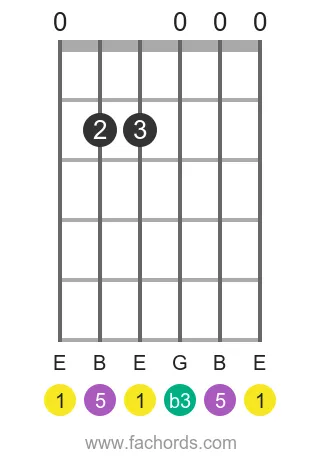
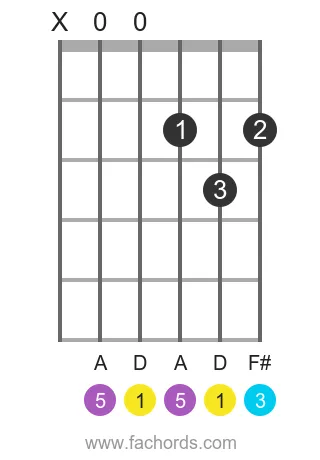
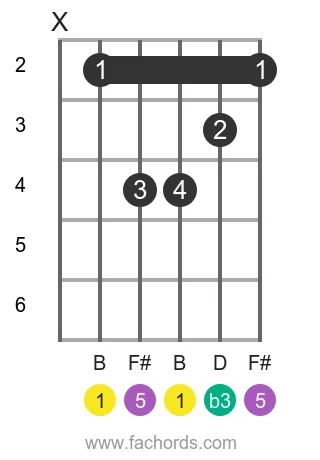
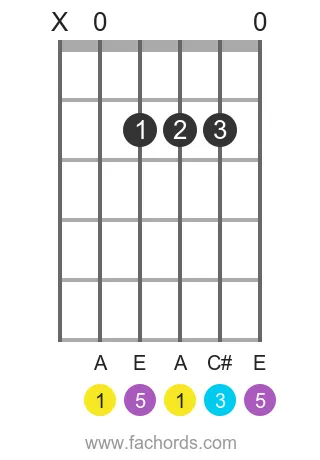
Press play to hear each key. The diagrams show the shapes used in the audio, and every chord links to its full page.
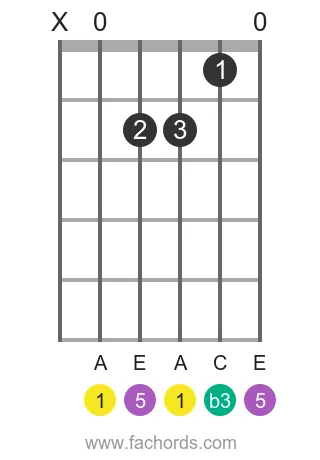
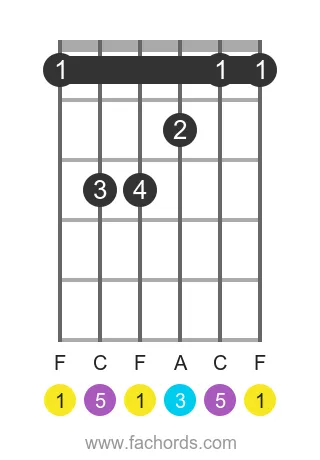
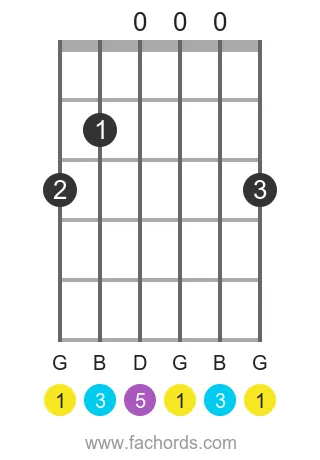
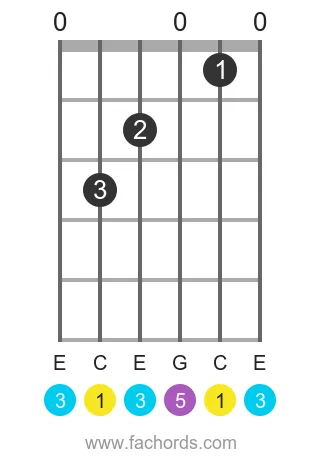
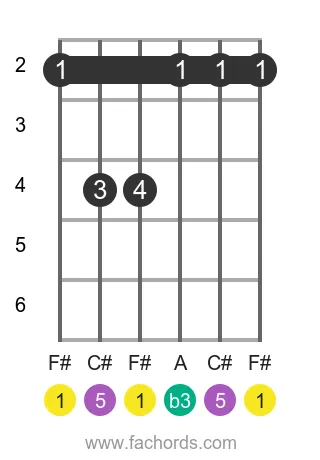
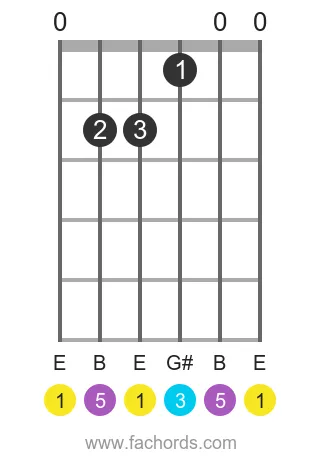
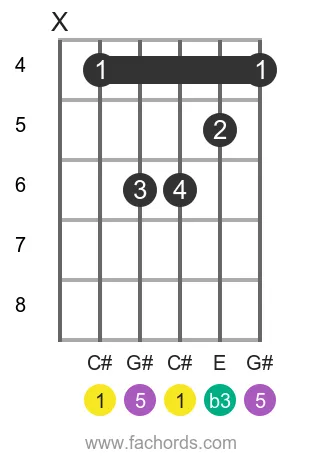
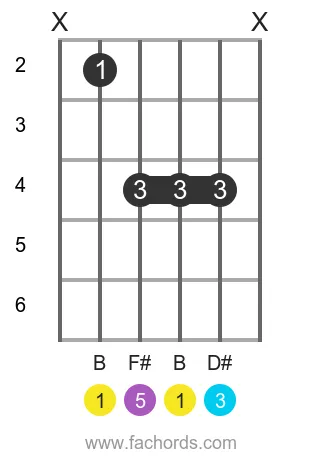
Same loop, different starting chord
- 50s progression: C Am F G
- Rotated doo-wop: F G C Am
More progressions like this one
- IV-I-V-vi: F C G Am
- I-IV-vi-V: C F Am G
- I-iii-IV-V: C Em F G
- I-vi-iii-V: C Am Em G

Created by
Giancarlo is a musician (teaching guitar since 2000), software engineer, AI consultant and published researcher
FAQ
What is the Komuro progression?
It is the chord progression vi-IV-V-I, or Am F G C in the key of C. It opens on the relative minor, climbs through IV and V and ends with an authentic cadence on I. In Japan this order is known as the Komuro progression.
What are the chords of the Komuro progression in each key?
In C major: Am F G C. In G major: Em C D G. In D major: Bm G A D. In A major: F#m D E A. In E major: C#m A B E.
What is the difference between vi-IV-V-I and vi-IV-I-V?
They use the same four chords, but the last two swap places. In vi-IV-V-I the V falls into the I, so each cycle arrives. In vi-IV-I-V the loop stops on V and stays open.
Which songs use the Komuro progression?
King of Wishful Thinking by Go West uses it in the verse, Another Place by Bastille in the intro and verse, and Let It Happen by Tame Impala in the chorus.
