The Four Chord Progression
The Most Famous Chords in Pop and Rock: 1 5 6 4
In this article we are going to look at one of the most common chord progressions in modern pop and rock, also known as the Axis progression.
There are so many songs with the same chord progression that I cannot possibly list them all here. You will find it in The Beatles, Journey, U2, Train and many more.
In the key of C this progression is:
C G Am F (1 5 6 4)
Go ahead and play it in open position, or jump to the chords and audio in C, G, D, A and E. Depending on the tempo and rhythm, you will find you can play hundreds of songs with just these four chords!
Most people who listen to music have no idea that so many songs are based on the same 4 chords. The more songs you learn, the more you will see this progression over and over. You can even impress your friends by playing as many different songs as possible with it.
Some songs only use it for a verse or chorus, and some use substitutions and other variations, but C-G-Am-F is a great place to start to understand how powerful chords can be when played in a particular order.
Axis of Awesome
In the video above, the Australian band The Axis of Awesome plays plenty of different songs with the same chords, which is where the name Axis progression comes from.
Songs That Use It
These are some of the songs that use the progression, with the chords as played in each song. You can find more on this Wikipedia page.
| Song | Artist | Section | Chords | Key |
|---|---|---|---|---|
| Hey Soul Sister | Train | intro and verse | C G Am F (shapes) | E major |
| Let It Be | The Beatles | verse | C G Am F | C major |
| No Woman No Cry | Bob Marley | verse and chorus | C G/B Am F | C major |
| Don't Stop Believin' | Journey | intro and verse | E B C#m A | E major |
| With or Without You | U2 | verse and chorus | D A Bm G | D major |
| I'm Yours | Jason Mraz | verse and chorus | B F# G#m E | B major |
| Angels | Robbie Williams | chorus | B C#m A E (plays V-vi-IV-I) | E major |
| Kids | OneRepublic | verse and chorus | A Bm G D (plays V-vi-IV-I) | D major |
| '39 | Queen | verse | Eb Fm Db Ab (plays V-vi-IV-I) | Ab major |
Turn your metronome on and see how many of these songs you can play with just C-G-Am-F.
This progression will not give you every aspect of a song, but you will start to hear the common thread between many popular songs. From there we can build on the concept and move beyond such a common progression. For fresh ideas, see these unusual chord progressions picked by guitar experts.
Ironically, many musicians make a fortune with these 4 chords in that exact order, but as guitarists we strive to keep advancing our musical knowledge.
The Four Chord Progression in Roman Numerals
Roman numerals are a way to write chord progressions that also includes chord quality: uppercase means a major chord and lowercase means a minor chord.
So the four chord progression in Roman numerals is:
I V vi IV
Like the Nashville Number System, this notation doesn't name specific chords, only their degrees: 1 (C), 5 (G), 6 (Am), 4 (F). The numbers stay the same in every key, and only the chord names change, as you can see in the five keys below.
Why These Chords Sound So Good Together
There are two main reasons why this chord sequence works so well.
First, it is strongly embedded in our ears: these chords are the foundation of so many popular songs that they sound familiar, and we like what is familiar, even at an unconscious level.
There is also a more theoretical explanation. The 1, 4 and 5 chords are built on the three most consonant intervals with respect to the tonic:
- I (1:1)
- IV (4:3)
- V (3:2)
But there's more: the IV and V chords are equally distant from the tonic in opposite directions, one fifth above in the case of V (G) and one fifth below in the case of IV (F).
I, IV and V are also the chords of another popular progression, the three chord progression.
The remaining chord, vi, or Am in the key of C, is the relative minor of the tonic, so it sounds very natural too. The move from V to vi also dodges the resolution we expect, so the loop can repeat forever without sounding finished.
You can easily see all of this on the Circle of Fifths:

Building on the Four Chord Progression
This progression is used and overused, so sometimes you'll want to add some variations to make it more interesting. Starting the loop from the vi chord, for example, gives you the vi-IV-I-V "sensitive female" chord progression.
Here are several other ways to improve things:
- Use seventh, ninth and other chord extensions for more harmonic richness.
- Apply chord substitution. The bVII borrowed chord trick changes C G Am F to C G Bb F (try it on your guitar!).
- Introduce secondary dominants. The dominant of this progression is the V chord (G in the key of C), so you could add the dominant of G, D7, to create nice effects.
All 12 Keys and 51 More Progressions

My ebook 52 Chord Progressions | Learn How To Connect Chords and Create Great Songs shows you 52 chord progressions that are the foundation of many genres and styles of Western music, this one included, in all keys.
Why 52? The idea is to use the ebook for one year, studying one chord progression each week in all keys and chord voicings. Before you know it you will be picking out progressions from songs on the radio!
That's all for today. Try to use these chords to create the next pop hit, and don't forget to subscribe to stay updated and download the free resources.
Axis Chord Progression: Chords and Audio in C, G, D, A and E
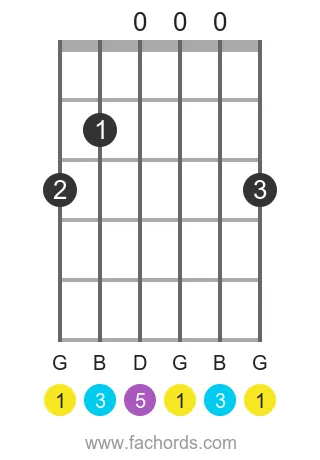
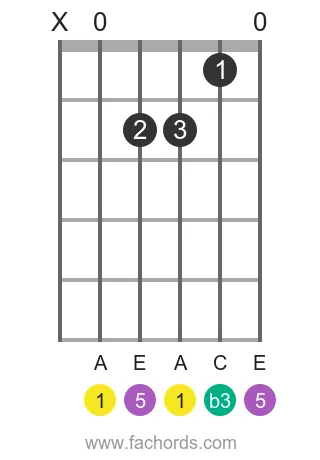
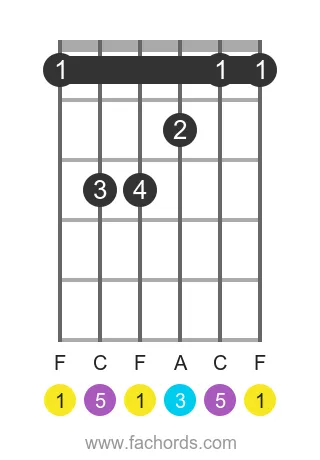
Press play to hear each key. The diagrams show the shapes used in the audio, and every chord links to its full page.

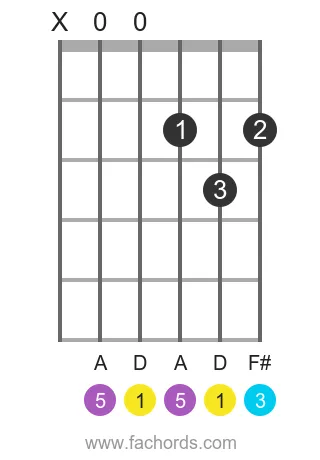
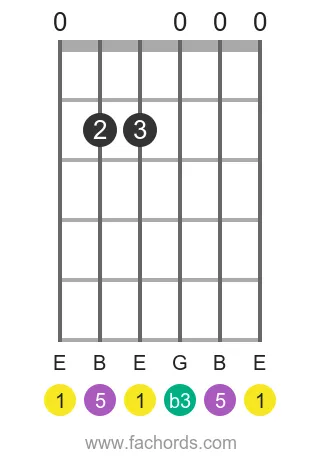
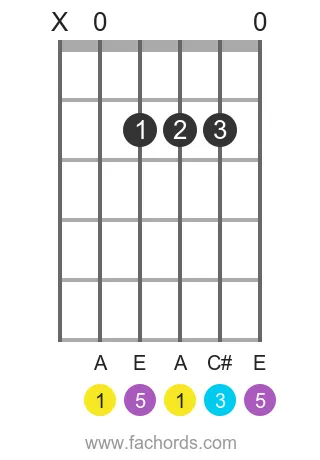
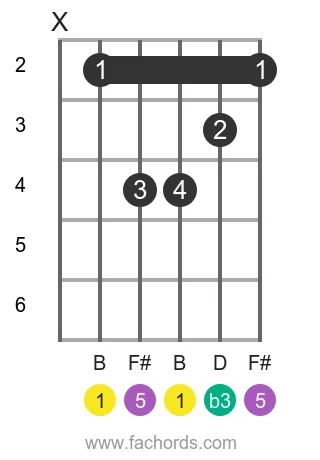
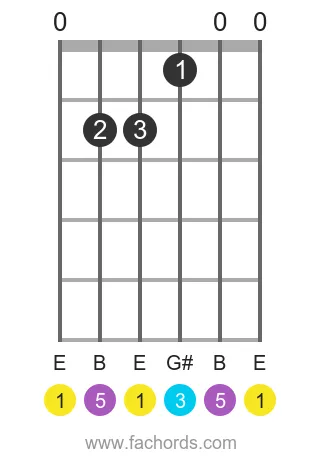
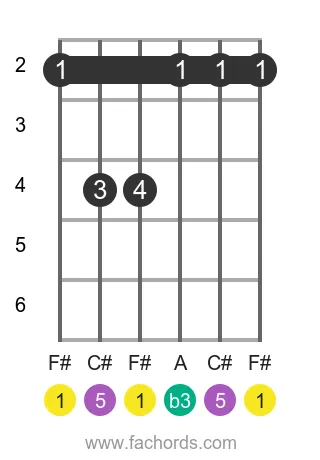
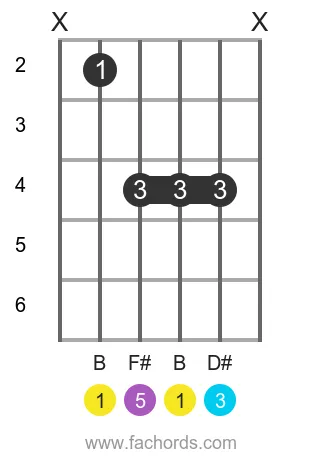
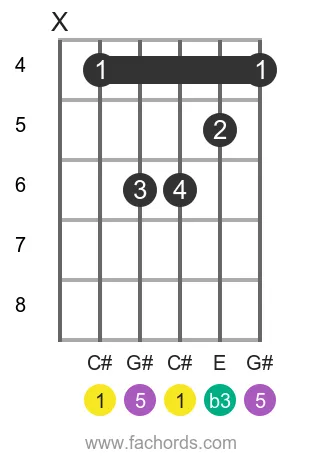
Same loop, different starting chord
- IV-I-V-vi: F C G Am
- Singer-songwriter progression: Am F C G
More progressions like this one
- Komuro progression: Am F G C
- IV-I-V-vi: F C G Am
- I-IV-vi-V: C F Am G
- I-iii-IV-V: C Em F G
All guitar chord progressions →

Created by
Giancarlo is a musician (teaching guitar since 2000), software engineer, AI consultant and published researcher
FAQ
Why is the 1-5-6-4 chord progression (I V vi IV) so widely used in popular music?
This progression is incredibly popular because it's deeply ingrained in our musical consciousness, sounding familiar and pleasing. Theoretically, the I, IV, and V chords are built from the most consonant intervals relative to the tonic, creating a strong harmonic foundation. The vi chord, being the relative minor, adds a complementary and pleasant contrast.
What is the difference between '1 5 6 4' and 'I V vi IV' when referring to this progression?
Both '1 5 6 4' and 'I V vi IV' refer to the same progression, but the Roman numeral notation provides more specific information. '1 5 6 4' uses numbers to indicate the scale degree of each chord's root, similar to the Nashville Number System. 'I V vi IV' uses Roman numerals where uppercase (I, V, IV) signifies major chords and lowercase (vi) signifies a minor chord, directly indicating the quality of each chord along with its scale degree.
How can I play the 1-5-6-4 progression in different keys on the guitar?
To play the 1-5-6-4 progression in any key, you need to identify the major scale for that key. The 1st, 4th, and 5th chords of that scale will be major, and the 6th chord will be minor. For example, in the key of G major, the 1st chord is G major, the 5th is D major, the 6th is E minor, and the 4th is C major, making the progression G D Em C.
What makes the I, IV, and V chords so fundamental and acoustically pleasing in this progression?
The I, IV, and V chords are fundamental because they are constructed using the most consonant intervals relative to the tonic (root) of the key. This inherent consonance creates a strong and stable harmonic sound. Additionally, the IV and V chords are positioned symmetrically around the tonic on the Circle of Fifths, contributing to their balanced and appealing relationship.
How can I add variety or make the 1-5-6-4 progression sound more advanced?
To enhance the progression, you can introduce chord extensions like 7th or 9th chords, which add harmonic richness. Another method is chord substitution, such as using a bVII borrowed chord. You can also incorporate secondary dominants, which are temporary dominant chords that lead strongly to a chord within the progression, like adding a D7 before a G chord in the key of C.
What is the significance of the 'vi' chord (e.g., A minor in the key of C) in this four-chord progression?
The 'vi' chord is significant because it is the relative minor of the tonic (I) chord. This close relationship means it sounds very pleasant and natural within the progression, often adding a touch of emotional depth or a slight change in mood without straying too far from the established key center.