The iii-VI-ii-V Turnaround: Em Stands In for I, A7 Drives On
Why start a turnaround on I when another chord can stand in for it? The iii-VI-ii-V turnaround does just that: iii-VI7-ii-V7, or Em A7 Dm G7 in the key of C. In the Nashville Number System it's 3m 6(7) 2m 5(7), and A7 is the only chord from outside the key, because of its C#. See the shapes and hear them in five keys.
Em Standing In for C
Here iii replaces I at the start, because the two chords share most of their notes. C is C, E, G. Em is E, G, B. So E and G stay, and the C drops to B.
Test it. Play C A7 Dm G7, which is the I VI ii V with sevenths, then play Em A7 Dm G7. The job doesn't change, but you're no longer sitting on the tonic when the turnaround begins. Listen for that: it can sound like the music is already moving before the phrase ends.
A7 Where You Expect Am
Compare it with the all-diatonic iii vi ii V, Em Am Dm G. Here Am turns into A7, the secondary dominant of ii, and its C# rises a half step to the D of Dm. G gets a seventh too, so its F is already there in Dm, and it stays put.
From A7 on, the rest falls by fifths back to I: A, D, G, then C. In fact the roots fall by fifths all the way from E, so the bass is identical in both.
Two Places to Hear It
The list is short, and it shows two very different speeds.
| Song | Artist | Section | Chords | Key |
|---|---|---|---|---|
| Oleo | Sonny Rollins | A section | Dm7 G7 | Cm7 F7 | Bb major |
| Fly Me to the Moon | Bart Howard | last eight bars | Em7 | A7 | Dm7 | G7 | Cmaj7 | C major |
Oleo plays it in Bb, inside the A section, as Dm7 G7 then Cm7 F7, two chords to a bar. Fly Me to the Moon has it in the last eight bars, one chord to a bar, Em7 A7 Dm7 G7, and then it finally arrives on Cmaj7.
That second one is a nice exercise. Play those five chords at 60 bpm, one bar each. Then squeeze them to two chords a bar, the way Oleo does. Same idea, with the chords closer together.
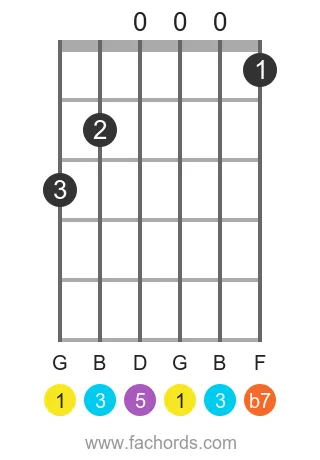
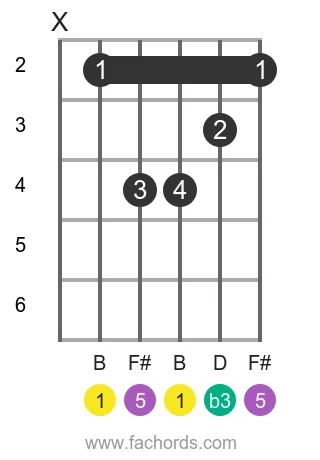
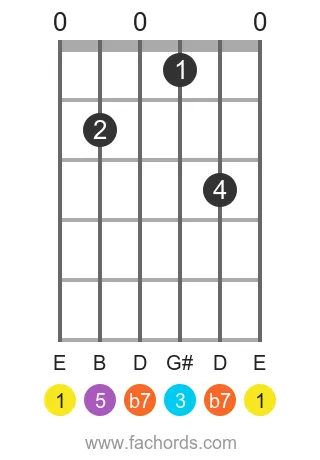
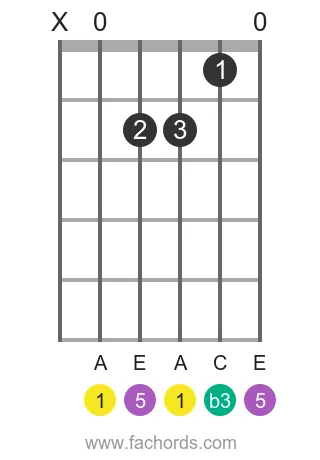
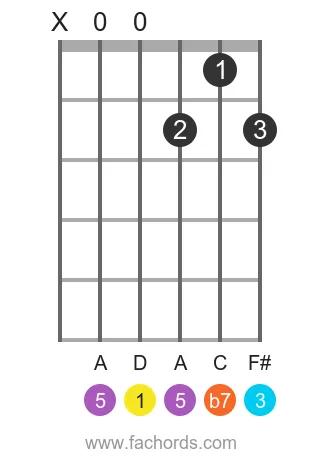
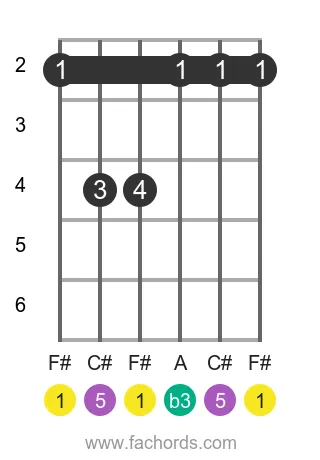
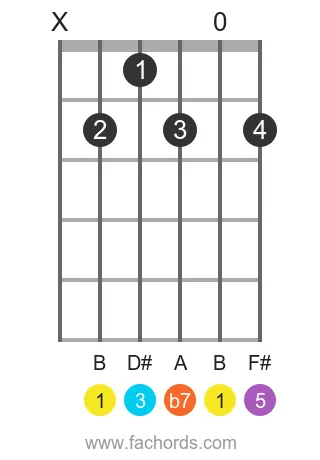
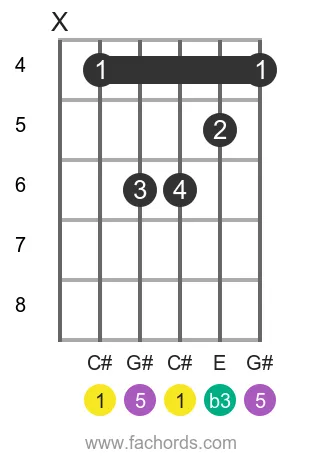
iii-VI-ii-V Turnaround: Chords and Audio in C, G, D, A and E
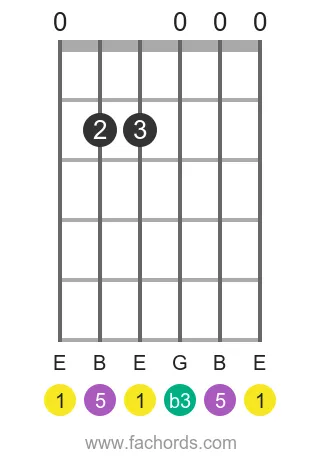
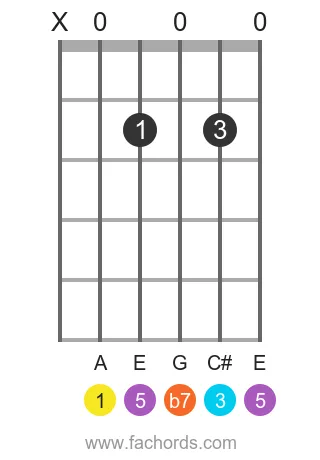
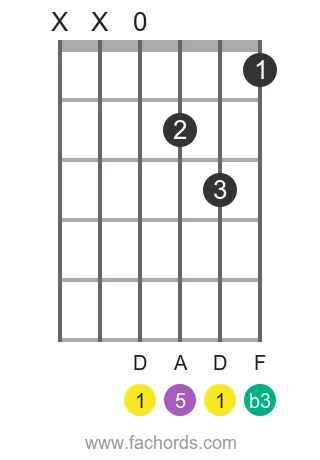
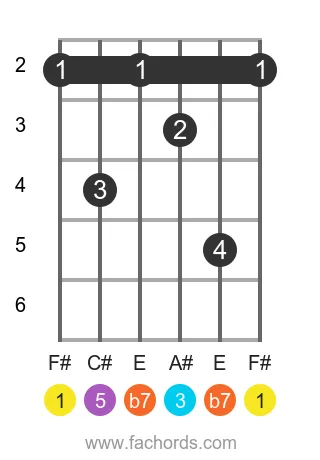
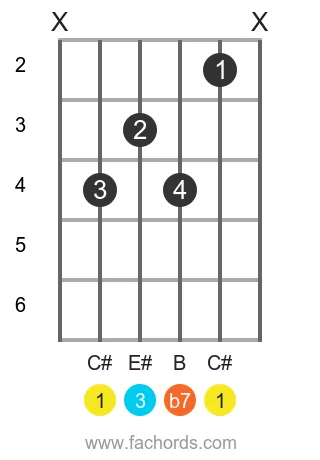
Press play to hear each key. The diagrams show the shapes used in the audio, and every chord links to its full page.

More progressions like this one
- Sears Roebuck bridge: E7 A7 D7 G7
- Tritone substitution cadence: Dm7 Db7 Cmaj7
- Tadd Dameron turnaround: Cmaj7 Eb7 Ab7 Db7
- Take the A Train changes: Cmaj7 D7 Dm7 G7

Created by
Giancarlo is a musician (teaching guitar since 2000), software engineer, AI consultant and published researcher
FAQ
How does the iii-VI-ii-V turnaround move through the keys?
In C major: Em A7 Dm G7. In G major: Bm E7 Am D7. In D major: F#m B7 Em A7. In A major: C#m F#7 Bm E7. In E major: G#m C#7 F#m B7.
Why does this turnaround start on iii and not on I?
The iii replaces I because the two chords share most of their notes. In C, Em and C both contain E and G, so Em can stand in for the tonic.
What does the A7 do in Em A7 Dm G7?
A7 is the secondary dominant of ii. Its C# is a note from outside the key of C, and it rises a half step to the D of Dm.
Which tunes use iii-VI7-ii-V7?
Oleo by Sonny Rollins plays Dm7 G7 Cm7 F7 in the A section, and Fly Me to the Moon by Bart Howard plays Em7 A7 Dm7 G7 in its last eight bars.