The Major-Key Romanesca: I-V-vi-iii in Cryin' and Basket Case
C G Am Em is four open shapes on a Renaissance frame: I-V-vi-iii, the major-key Romanesca. It's in the verse of Basket Case, and in its minor-key form it's in the refrain of Greensleeves.
In the Nashville Number System you write it 1 5 6m 3m. You may also see it called the first half of Pachelbel, and the reason is plain when you look at the chords. The Pachelbel sequence in C is C G Am Em F C F G, so these four chords are its opening half played as a loop. The diagrams and audio for five keys are further down.
Down a Fourth, Up a Step, Down a Fourth
Follow the roots. C drops a fourth to G. G rises a step to A. A drops a fourth to E. Each pair of chords drops a fourth and the next pair starts a step above where the last one ended, and that gives the frame its stately, walking-down feel.
Careful, though: only the root motion repeats. C and G are both major, Am and Em are both minor, so the second pair has a different colour from the first.
G to Am is also the one change where no note carries over. Compare that with Em back to C, where E and G both stay, and listen to how differently those two moves sit in the loop.
Walking the 1-7-6-3 Bass
Gjerdingen's galant Romanesca puts the bass line 1-7-6-3 under this frame. In C that's C, B, A, E, so the G chord gets its B in the bass.
Try it on your guitar:
- C: fifth string, fret 3
- B: fifth string, fret 2
- A: the open fifth string
- E: the open low E string
Play those four notes alone first, then add the chords on top. After that, go back to plain roots, C G A E, and compare. I suggest you do this slowly, because the only difference is one note in the bass, and it changes how the line walks.
Major III or Minor iii?
The Renaissance romanesca is a minor-key pattern: III-VII-i-V. In A minor that gives C G Am E. Read the same four chords from the relative major, C, and they become I-V-vi-III. The capital III means a major chord, and that's why you'll also find this frame written I-V-vi-III.
That major E brings in G#, a note from outside C major. Pop uses the diatonic minor iii instead, so the last chord is Em, with a plain G. Loop C G Am E for a while, then C G Am Em. Only one note changes, and it's worth hearing what it does.
Greensleeves sits on the minor-key side of this comparison: its refrain is III VII i V.
Four Verses and a Refrain
Four of the five songs use it in the verse, each in a different key.
| Song | Artist | Section | Chords | Key |
|---|---|---|---|---|
| Memories | Maroon 5 | verse | B F# G#m D#m | B major |
| Cryin' | Aerosmith | verse | A E F#m C#m | A major |
| Basket Case | Green Day | verse | Eb Bb Cm Gm | Eb major |
| The End of the World | Skeeter Davis | verse | Bb F Gm Dm | Bb major |
| Greensleeves | Traditional | refrain | III VII i V |
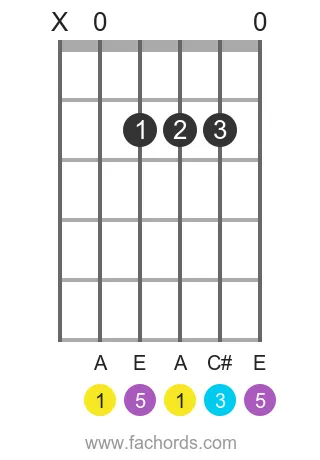
Cryin' matches the key of A exactly: A E F#m C#m. For Basket Case, listed in Eb, a capo on the third fret lets you play the C G Am Em shapes. Memories is in B, and with a capo on the fourth fret it becomes G D Em Bm. The End of the World takes the same G D Em Bm shapes with a capo on the third fret, and it comes out as Bb F Gm Dm.
One Chord From the Axis
Change only the last chord, Em to F, and you have the Axis progression, C G Am F. Or keep going past Em, as the Pachelbel order does: Am and Em followed by F and C make the vi-iii-IV-I phrase.
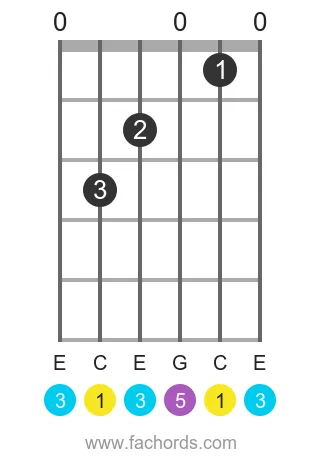
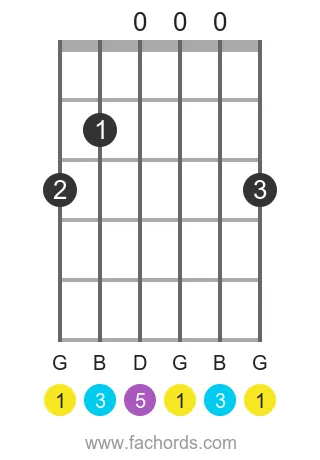
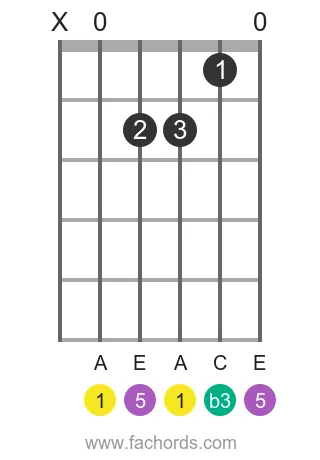
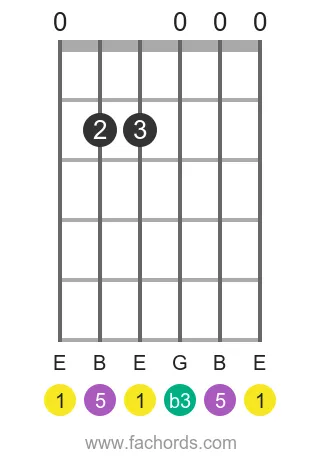
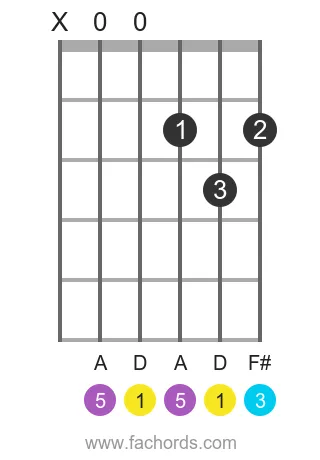
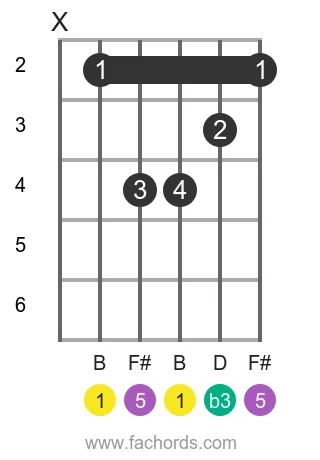
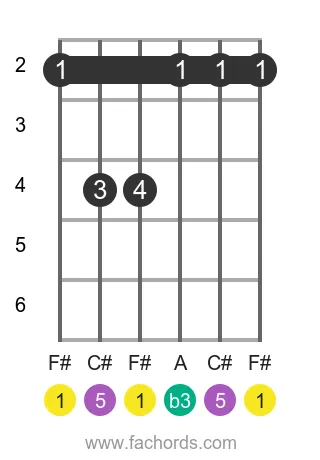
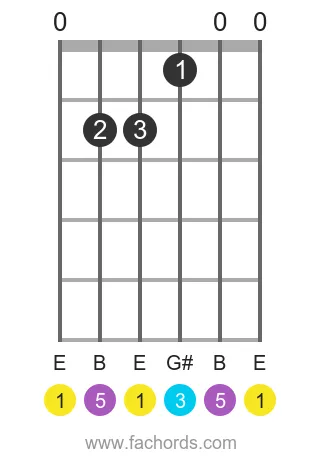
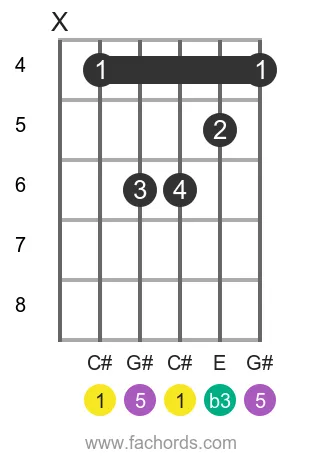
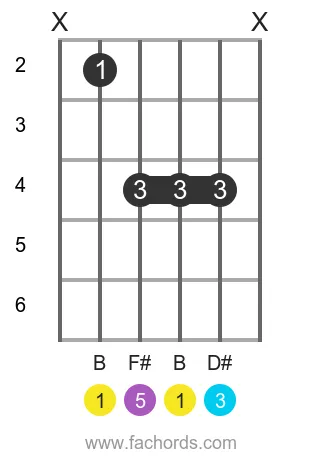
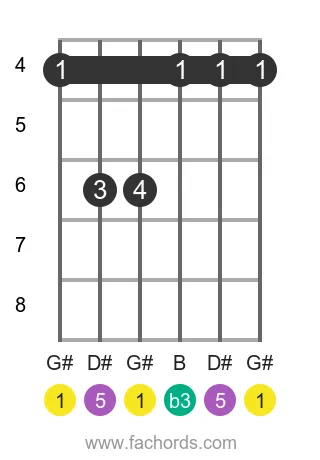
Major-Key Romanesca Chord Progression: Chords and Audio in C, G, D, A and E
Press play to hear each key. The diagrams show the shapes used in the audio, and every chord links to its full page.
Longer progressions that contain it
- Pachelbel's Canon progression: C G Am Em F C F G
More progressions like this one
- ii-IV-V climb: Dm F G
- I-vi: C Am
- vi-IV: Am F
- Stepwise descent to I: F Em Dm C

Created by
Giancarlo is a musician (teaching guitar since 2000), software engineer, AI consultant and published researcher
FAQ
What is the Romanesca chord progression?
It is a descending frame in which each pair of chords drops a fourth and rises a step. The major-key form is I-V-vi-iii, or C G Am Em in C, and it is also called the first half of Pachelbel.
Is it written I-V-vi-iii or I-V-vi-III?
Both appear. The Renaissance romanesca is III-VII-i-V in minor, which reads I-V-vi-III from the relative major, with a major III. Pop uses the diatonic minor iii, so in C the last chord is Em.
What bass line goes with the galant Romanesca?
Gjerdingen's galant Romanesca has the bass 1-7-6-3. In C that means C, B, A, E, so the G chord takes B as its bass note before the line jumps to E.
How do the Romanesca chords change from key to key?
In C major: C G Am Em. In G major: G D Em Bm. In D major: D A Bm F#m. In A major: A E F#m C#m. In E major: E B C#m G#m.
Which songs play the Romanesca in the verse?
Memories by Maroon 5, Cryin' by Aerosmith, Basket Case by Green Day and The End of the World by Skeeter Davis all use it in the verse, each in a different key.
