A13 Guitar Chord | Play, Hear and Practice Interactively
Want a structured chord roadmap instead of jumping between pages?
Go to the full guitar chords tutorial.
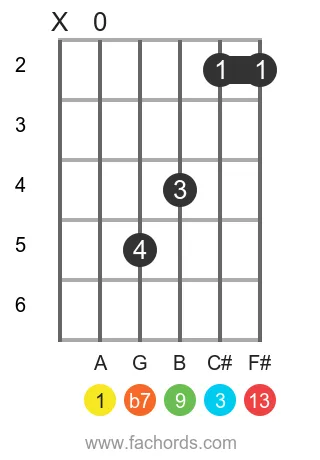
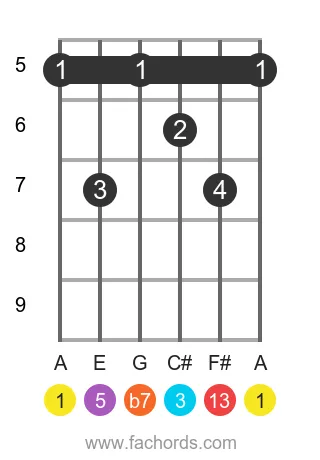
The A13 chord is a rich, complex member of the Dominant Chords family, built from the notes A, C#, E, G, B, D, and F#. These correspond to the intervals Root (1), Major Third (3), Perfect Fifth (5), Minor Seventh (b7), Major Ninth (9), Perfect Eleventh (11), and Major Thirteenth (13). Use our interactive fretboard tool at the top of this page to visualize every possible fingering, hear the chord played as a strum or arpeggio, and get instant feedback on your playing with the real-time microphone feedback.
Understanding the intricate intervals of the A13 chord is key to mastering its complex sound, which is often found enriching jazz and R&B progressions. For a deeper dive into how these extended chords are built, explore our Chord Construction tutorial, or learn more about the role of tension and resolution in the Dominant Chord family. If you're building your vocabulary of extended chords, our guide to Ninth Chords offers a great foundation. Once you're comfortable with the fingerings, focus on making your transitions smooth with tips from our Improve Chords Change article.
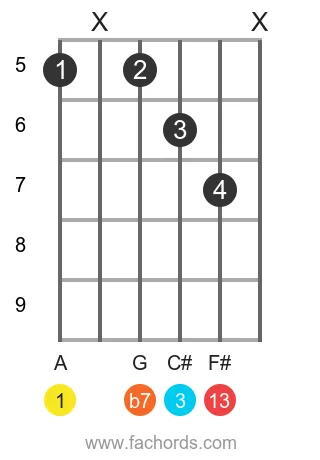
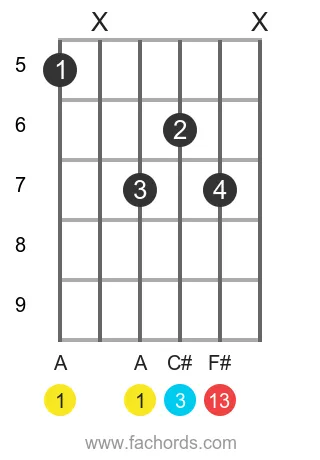
Further down this page, you'll discover a comprehensive collection of A13 chord diagrams, ordered from the easiest open positions to more challenging movable shapes. We'll also delve into the underlying music theory, highlight popular songs that feature the A13, and show you the keys where this chord naturally fits. Before you scroll, take advantage of the interactive tool above. Set a comfortable tempo with the BPM/drum tool, experiment with different fingerings on the virtual fretboard, and let the mic feedback guide you to perfect execution. This hands-on approach is the most effective way to truly learn and internalize new chords.
Notes in the A 13 chord:
Formula of the Dominant Thirteen chord:
Guitar Patterns for the A Dominant Thirteen chord
Position 1
Movable
Position 2
Movable
Position 3
Movable
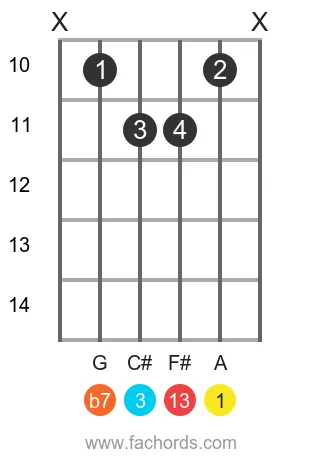
Position 4
Open
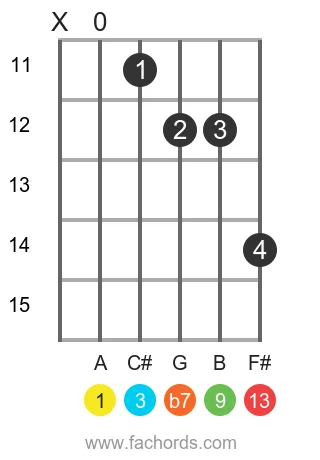
Position 5
Barre
Movable
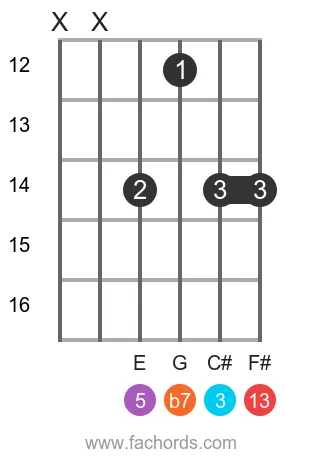
Position 6
Barre
Movable
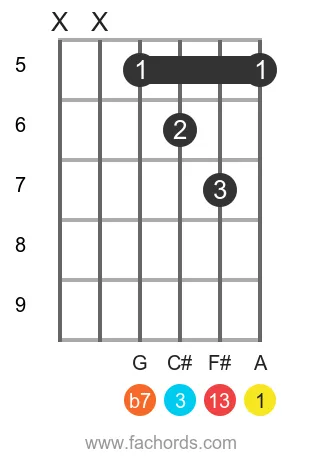
Position 7
Barre
Movable
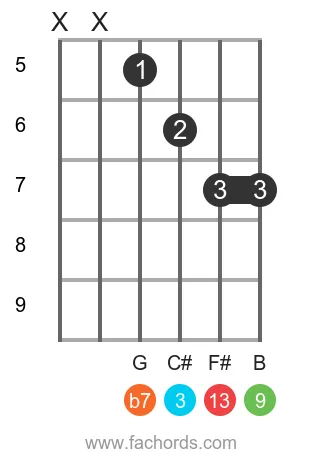
Position 8
Barre
Open
Position 9
Barre
Open
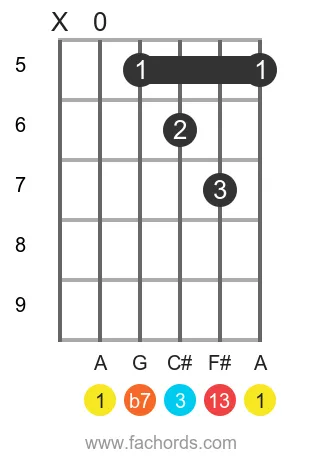
Position 10
Barre
Movable
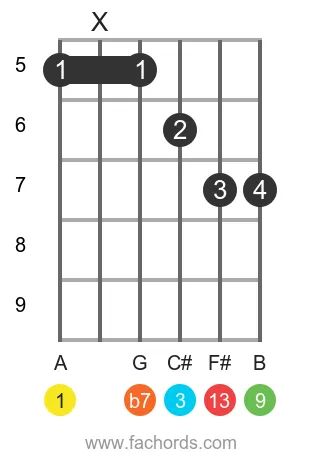
Position 11
Barre
Movable
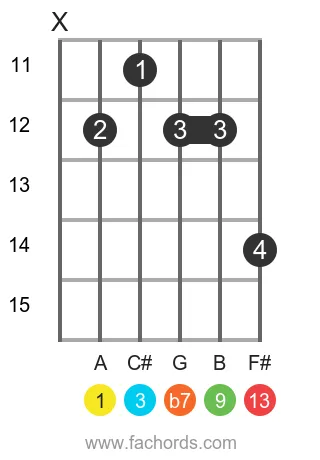
Position 12
Barre
Movable
 Find more shapes in our all guitar chords online library. If you
prefer a printable pdf, download
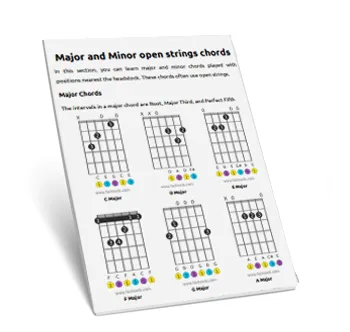
the Free Guitar Chords Chart Pdf
Find more shapes in our all guitar chords online library. If you
prefer a printable pdf, download
the Free Guitar Chords Chart Pdf
You can also use this accessible A13 chord page, with written diagram instructions and screen-reader support for blind users.

Created by
Giancarlo is a musician (teaching guitar since 2000), software engineer, AI consultant and published researcher
FAQ
What notes and intervals make up an A13 chord?
The A13 chord is built from the notes A, C#, E, G, B, D, and F#. These correspond to the following intervals relative to the root (A): Root (1), Major Third (3), Perfect Fifth (5), Minor Seventh (b7), Major Ninth (9), Perfect Eleventh (11), and Major Thirteenth (13).
Why is the A13 chord considered a 'dominant' chord?
The A13 chord is a member of the dominant chord family because it contains a minor seventh (b7) interval. This specific interval creates a harmonic tension that typically 'wants' to resolve, giving it a dominant function within a musical progression.
Does an A13 chord always include all seven of its theoretical notes when played on guitar?
No, while an A13 theoretically has seven distinct notes, guitar voicings often omit certain notes like the Perfect Fifth (5) or Perfect Eleventh (11). This is common for extended chords to make them playable on a six-string instrument and to emphasize the most characteristic intervals, such as the Root, Third, Minor Seventh, and Thirteenth.
What contributes to the A13 chord's 'rich and complex' sound?
The A13 chord's rich and complex sound stems from its extensive stack of intervals. Beyond the basic triad and minor seventh, the inclusion of the Major Ninth, Perfect Eleventh, and Major Thirteenth intervals adds significant harmonic density and color, creating a sophisticated and full texture.
When is an A13 chord typically used in music?
The A13 chord is frequently used in jazz chord progressions. Its dominant quality and extended harmonic richness make it particularly effective for creating tension and color, often leading into a resolution in a jazz context.
How do intervals like '3' (Major Third) and '13' (Major Thirteenth) relate in the A13 chord's structure?
The numbers in chord intervals describe their position in the scale relative to the root. The '3' refers to the Major Third, which is a core component. The '13' (Major Thirteenth) is an extension that also implies the presence of the 9th and 11th intervals, building upon the basic dominant seventh structure to add further harmonic complexity.