The Neapolitan Scale on Guitar
 The Neapolitan scale (also called the Neapolitan major scale or Neapolitan mode) is one of the most intriguing exotic guitar scales.
In this lesson you will learn its formula, how it relates to scales you already know, where to play it on the fretboard, and which chords it generates.
If you want to explore more modes like this one, download the free "40 Exotic Guitar Scales Patterns" guide.
Study the Neapolitan scale in the key of your choice:
Neapolitan Scale Formula
The Neapolitan scale formula is 1-b2-b3-4-5-6-7. In the key of C the notes are C, Db, Eb, F, G, A, B.
The first half of the scale has the 1-b2-b3 of the Phrygian mode, a cold sounding minor scale.
The second half has the 4-5-6-7 of the Ionian, or major diatonic, scale. So which is it: major or minor?
The third degree is a flat third (b3), so the Neapolitan scale is technically a minor scale.
How to Approach a New Scale
When you meet a new scale, give your fingers a rest and look for patterns first: compare its degrees with the scales you already know.
The closest relative of the Neapolitan scale is the jazz minor scale, identical to the melodic minor ascending scale: 1-2-b3-4-5-6-7.
The only difference is the flat second (b2), and that single note is what gives the Neapolitan scale its distinctive, exotic color.
The Neapolitan Scale on the Fretboard
The examples below use a custom key signature written for this mode: the 2nd and 3rd degrees are always flat, so no accidentals are placed before them.
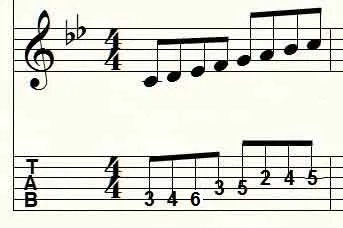
Learn the basic positions and fingerings of the Neapolitan scale, and practice it in at least two locations on the neck:
- Position 1: start with the first finger on the third fret of the fifth string, then shift so your first finger lands on the second fret of the third string when you reach that part of the scale.
- Position 2: play the same range starting on the eighth fret of the sixth string.
Both positions show the structure of the scale under your fingers: the first part feels like the Phrygian mode, the second part like the major scale.
Run through the notes a few times and improvise freely to get the sound in your ears.
Neapolitan Scale Exercise in Thirds
Next, test the scale with familiar patterns. This exercise plays a series of thirds ascending then descending, followed by scalar passages bracketing the same intervals:
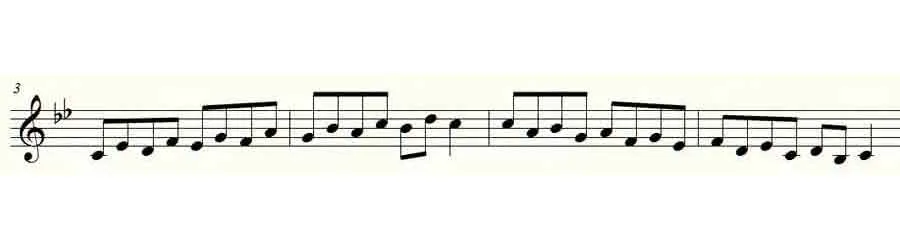
You can also apply the scale patterns you normally use to warm up, then move on to the harmony.
Neapolitan Mode Chords
To build the Neapolitan scale chords, add a third above each note of the scale (the fifth comes later).
Even without fifths and sevenths, the harmony already has a distinctive shape: i-II-III-IV-V-vi-vii(?)-i.
The vii chord shows an odd characteristic of exotic modes: there is no third above B in the traditional sense, because neither D nor D# belongs to the scale.
Eb is in the scale, but it is already paired with the root C to define the minor tonality.
The third note above B is Db (B, C, Db), so a second (or ninth) substitutes for the third. That is why the chord is labeled B- in the example: it does not fit the traditional idea of a B chord.
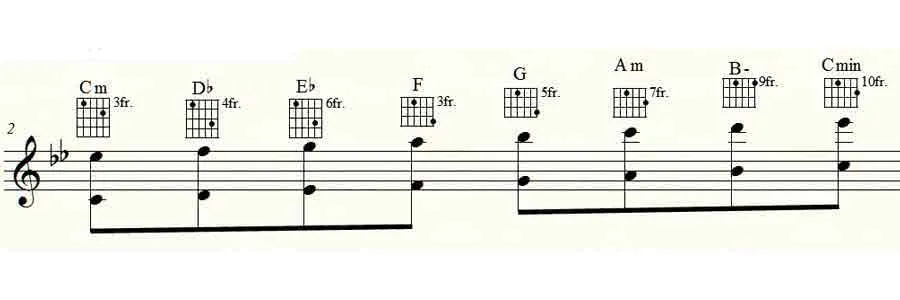
Spend some time with these chords: the strange harmonies and melodic colors of the Neapolitan mode are a great source of ideas for improvising and composing.
Neapolitan Scale Notes In All The Keys
| 1 | b2 | b3 | 4 | 5 | 6 | 7 |
| C | Db | Eb | F | G | A | B |
| G | Ab | Bb | C | D | E | F# |
| D | Eb | F | G | A | B | C# |
| A | Bb | C | D | E | F# | G# |
| E | F | G | A | B | C# | D# |
| B | C | D | E | F# | G# | A# |
| F# | G | A | B | C# | D# | E# |
| Gb | Abb | Bbb | Cb | Db | Eb | F |
| C# | D | E | F# | G# | A# | B# |
| Db | Ebb | Fb | Gb | Ab | Bb | C |
| G# | A | B | C# | D# | E# | F## |
| Ab | Bbb | Cb | Db | Eb | F | G |
| D# | E | F# | G# | A# | B# | C## |
| Eb | Fb | Gb | Ab | Bb | C | D |
| A# | B | C# | D# | E# | F## | G## |
| Bb | Cb | Db | Eb | F | G | A |
| F | Gb | Ab | Bb | C | D | E |
Conclusions
The Neapolitan scale combines a Phrygian beginning (1-b2-b3) with a major ending (4-5-6-7), producing an exotic minor sound and unusual chords.
Keep exploring exotic scales, or visit the main guitar scale page to learn other cool sequences.

Created by
Giancarlo is a musician (teaching guitar since 2000), software engineer, AI consultant and published researcher
FAQ
What is the Neapolitan Scale's defining characteristic and how is it constructed?
The Neapolitan Scale is an exotic scale defined by its interval structure of 1–b2–b3–4–5–6–7. This unique combination, particularly the flatted second and third degrees, gives it a distinct sound different from more common scales.
Is the Neapolitan Scale considered a major or minor scale, given its mixed characteristics?
Despite having the latter half (4-5-6-7) similar to a major diatonic scale, the Neapolitan Scale is nominally considered a 'minor' scale because its third degree is flatted (b3). This flatted third is a key indicator of a minor quality.
How does the Neapolitan Scale relate to other familiar scales like the Phrygian or Melodic Minor?
The Neapolitan Scale shares its initial 1–b2–b3 structure with the Phrygian Mode. It also bears resemblance to the ascending melodic minor scale (1-2-b3-4-5-6-7). The crucial difference from the melodic minor is its flatted second degree (b2), which significantly alters its character.
What is the recommended initial approach for learning a new exotic scale like the Neapolitan Scale on guitar?
It's advised to first use your brain to analyze and detect patterns within the scale's structure (like its major/minor qualities or similarities to other modes). After this analytical step, learn at least two different positions and fingerings for the scale on the fretboard, and practice familiar scalar patterns to explore its sound.
Are there any unusual characteristics when building basic chords from the Neapolitan Scale?
Yes, when you build chords by stacking thirds from the Neapolitan Scale, the vii chord (built on the seventh degree) has an odd characteristic. It does not have a traditional 'third' above its root; instead, a second or ninth interval functions in that position, making it a non-traditional chord form.