I-v: What Happens When the V Chord Turns Minor
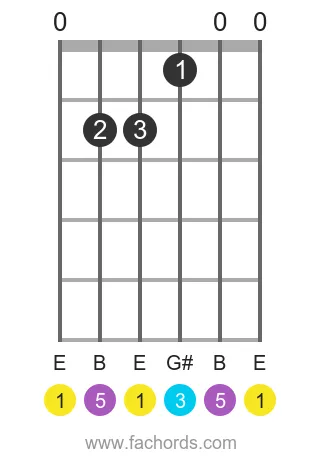
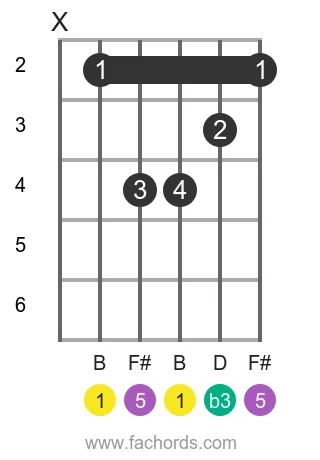
Take a plain I-V, turn the V minor, and you get I-v. In the key of A that's A Em, and it's exactly what Demon Days by Gorillaz plays in the pre-chorus.
In the Nashville Number System it's 1 5m. In the key of C the pair is C Gm, and Gm is the outsider, because its Bb doesn't belong to C major. You can hear the pair in C, G, D, A and E further down.
One Note Takes the Pull Away
Compare the two versions. The major V in the key of A is E, and its G# sits a half step under A: that's the leading tone. Em has a G natural in that spot. The key of C tells the same story, with Bb in place of B.
That lowered note is the flat seventh of the key, the colour note of the Mixolydian mode. So I-v is a relaxed, modal shuttle, where I-V has a pull. Don't take my word for it: play A E A E for a minute, then A Em A Em, and listen for which one is in a hurry to get home.
The two chords share one note, E in the key of A, and the bass falls a fourth from A to E, the open fifth string to the open sixth.
A Jam, or a Pinch of Spice
We usually see I and V together, so the minor v rubs against the habit, and some songwriters take advantage of that clash. A simple I-v can be a whole jam, but in most cases it's used sparingly, on top of more popular progressions.
Four of these six songs add sevenths, so keep an eye on the Chords column.
| Song | Artist | Section | Chords | Key |
|---|---|---|---|---|
| Fire and Rain | James Taylor | verse | C Gm F C (charted A Em D A) | C major |
| Love Shack | The B-52's | verse | C Gm7 | C Mixolydian |
| Hey Bulldog | The Beatles | verse | B7 F#m | B Mixolydian |
| Hourglass | Squeeze | verse | C7 Gm7 | C Mixolydian |
| Cream | Prince | chorus | Bb7 Fm7 | Bb Mixolydian |
| Demon Days | Gorillaz | pre-chorus | A Em | A Mixolydian |
Hourglass plays C7 Gm7, so the Bb is now in both chords and the flat seventh never leaves. Hey Bulldog (B7 F#m) works the same way, and so does the Bb7 Fm7 in the chorus of Cream. Love Shack keeps the C plain and saves the seventh for Gm7. Try all three colours on A and Em and pick your favourite.
Fire and Rain goes one chord further. It's charted as the shapes A Em D A, and a capo on the third fret turns those into C Gm F C. That extra IV gives you I-v-IV, and I-v-bVII-IV stretches the same minor v into a four-chord loop.
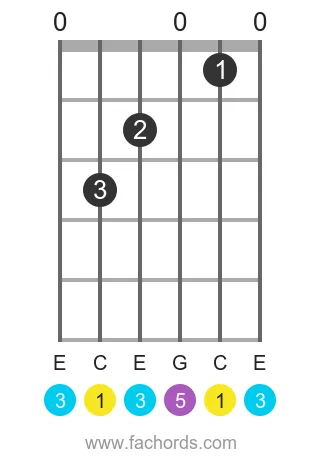
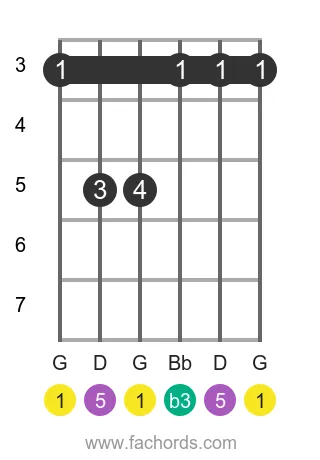
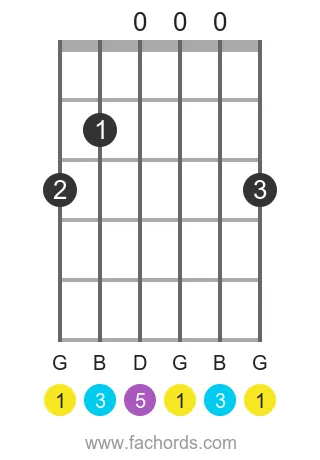
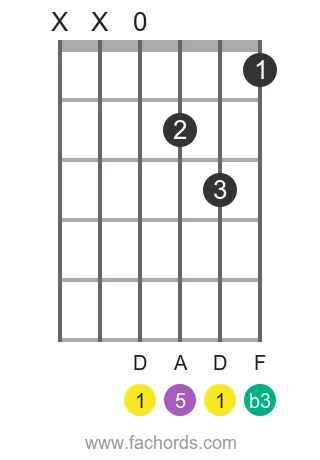
I v Chord Progression: Chords and Audio in C, G, D, A and E
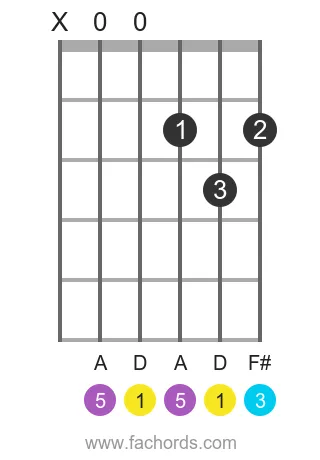
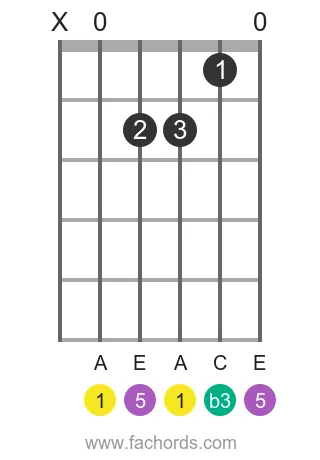
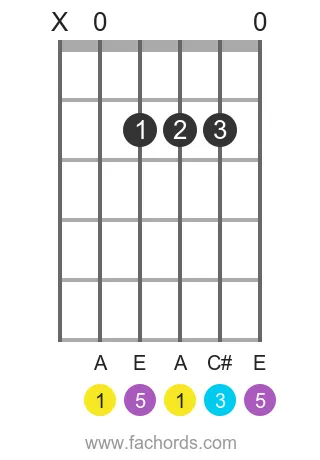
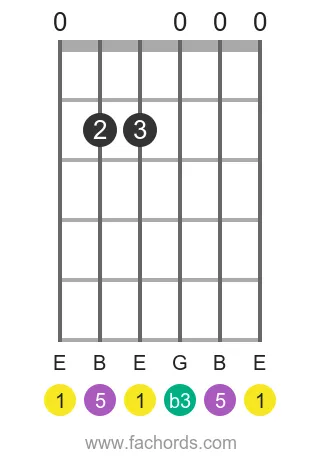
Press play to hear each key. The diagrams show the shapes used in the audio, and every chord links to its full page.
More progressions like this one
- Quadruple plagal: Ab Eb Bb F C
- I-IV-bVII-IV: C F Bb F
- Mario cadence: Ab Bb C
- bVII-V7 cadence: Bb G7

Created by
Giancarlo is a musician (teaching guitar since 2000), software engineer, AI consultant and published researcher
FAQ
Which two chords make I-v in each key?
In C major: C Gm. In G major: G Dm. In D major: D Am. In A major: A Em. In E major: E Bm.
How is I-v different from I-V?
The V chord turns minor. In the key of C, G becomes Gm, so the leading tone B drops to Bb, the flat seventh of the key. That removes the pull of I-V and leaves a relaxed, modal shuttle.
Why does a minor v point to Mixolydian?
Mixolydian has a flat seventh, so the chord on its fifth degree is minor: C Mixolydian gives C and Gm. Love Shack and Hourglass are both in C Mixolydian.
Do any song verses sit on just I and v?
Yes. Love Shack by The B-52's plays C Gm7 in the verse, Hey Bulldog by The Beatles plays B7 F#m, and Hourglass by Squeeze plays C7 Gm7.
