I IV: The Relaxed Two-Chord Loop Behind Born in the U.S.A.
Keep one finger on the third fret of the B string and you can rock between D and G for as long as you like. That's the I-IV chord progression in the key of D. The note under your finger is D, and it belongs to both chords (use the G shape with the third fret on both top strings).
In the Nashville Number System it's simply 1 4. Some songs repeat these two chords the entire time, which is common in rock and folk. Diagrams and audio for five keys are waiting further down.
A Root That Climbs and Nothing That Pulls
From I to IV the root rises a fourth: D up to G, or C up to F. Come back the other way and you get the plagal motion, the sound behind the "Amen" ending, which has its own page as the plagal cadence.
There's no leading tone in either chord, so nothing is pulling anywhere, and the loop can sit for a whole song. Compare it with its neighbour: play D G for a minute, then D A for a minute, the I-V progression. Listen for which one is happier to stay put.
Six Songs on the Same Two Degrees
Born in the U.S.A. stays on B and E through the intro, verse and chorus, and What I Got sits on D and G in the verse and chorus. In the Midnight Hour keeps E and A for the verse, while Once Bitten, Twice Shy saves C and F for the chorus.
| Song | Artist | Section | Chords | Key |
|---|---|---|---|---|
| Feelin' Alright | Traffic | verse and chorus | C F7 | C major |
| Everyday People | Sly and the Family Stone | verse and chorus | G C (chart: capo 3, E A shapes) | G major |
| Born in the U.S.A. | Bruce Springsteen | intro, verse and chorus | B E | B major |
| In the Midnight Hour | Wilson Pickett | verse | E A | E major |
| Once Bitten, Twice Shy | Great White | chorus | C F | C major |
| What I Got | Sublime | verse and chorus | D G | D major |
Everyday People sounds in G, and you can play it with E and A shapes and a capo on the third fret. And Feelin' Alright plays F7 instead of F. A b7 on the IV adds a bluesy Eb, and a b7 on the I gives a Mixolydian colour. Try C F, then C F7, and hear the change.
Keeping Two Chords Interesting
Riffing on two chords can get monotonous. Two ways out:
- Change the right hand. Pick one of these strumming patterns and switch to another when the section changes.
- Use inversions. Keep the same two chords, but put a different chord note in the bass, or play them higher on the neck.
It's also a perfect campfire loop, since many people who don't call themselves musicians can sing along. And when you want more chords to chew on, add the V for the three-chord progression, or go much further with these jazz chord progressions.
I IV Chord Progression: Chords and Audio in C, G, D, A and E
Press play to hear each key. The diagrams show the shapes used in the audio, and every chord links to its full page.
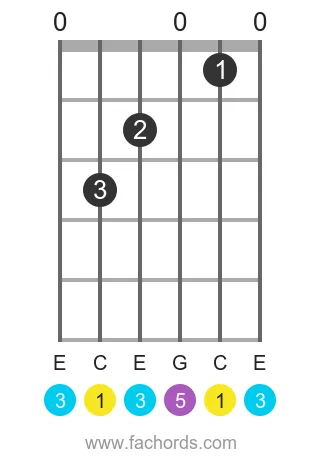
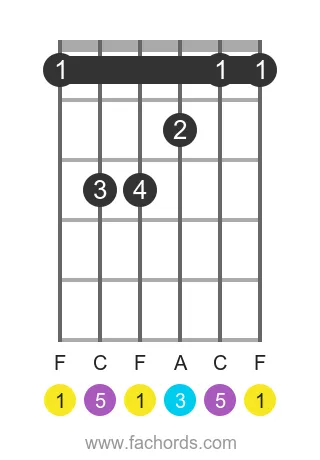
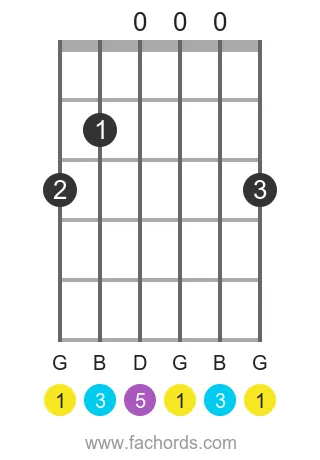
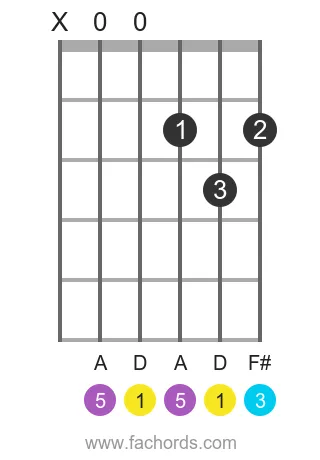
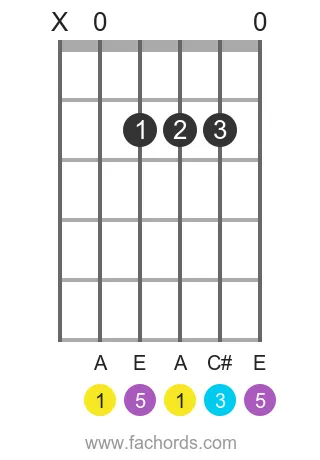
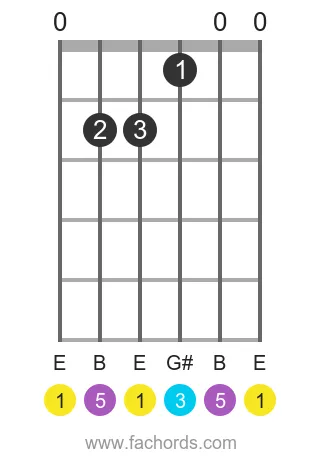
Same loop, different starting chord
- I7-IV7 vamp: C7 F7
- Plagal cadence: F C
More progressions like this one
- I-V: C G
- Three-chord progression: C F G
- 50s progression: C Am F G
- Axis progression: C G Am F

Created by
Giancarlo is a musician (teaching guitar since 2000), software engineer, AI consultant and published researcher
FAQ
How does I IV look in each key?
In C major: C F. In G major: G C. In D major: D G. In A major: A D. In E major: E A.
Why does I IV sound so relaxed?
The root rises a fourth and neither chord contains a leading tone, so nothing pulls anywhere. Going back from IV to I is the plagal motion of the Amen ending.
What songs stay on I and IV?
Born in the U.S.A. by Bruce Springsteen plays B and E in the intro, verse and chorus. What I Got by Sublime plays D and G, and Feelin' Alright by Traffic plays C and F7.
How do you stop a two-chord loop from getting boring?
Change the strumming, or use inversions so the bass note moves while the two chords stay the same. A b7 on the IV adds a bluesy colour, and a b7 on the I a Mixolydian one.
