The Plagal Cadence: A Soft Landing With One Note Held
Sing "Amen" over two chords and you have it. The plagal cadence, or Amen cadence, is IV-I: A to E in the key of E, F to C in the key of C. Hymns set it to that word. In the Nashville Number System it's 4 1.
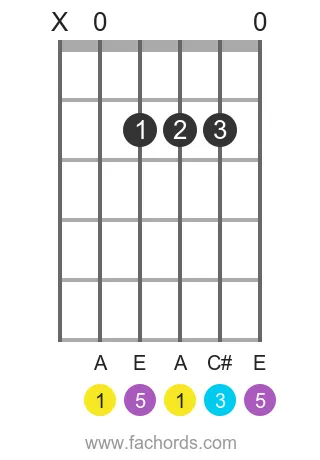
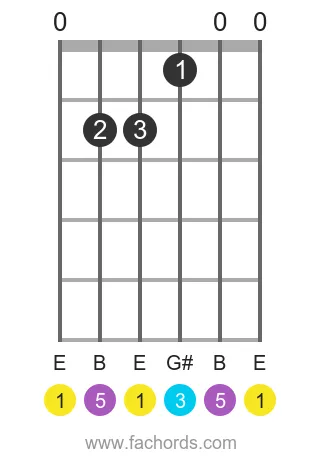
I'm starting in E because both chords are open shapes and the movement is easy to see. Hear IV-I in all five keys.
One Finger Stays, Two Strings Fall
There's no leading tone in this cadence, so the close is soft rather than forceful. The tonic note, E, is already in the A chord, and it's held as a common tone while the other voices fall by step. Look at the open shapes:
- Fourth string: E on fret 2 stays where it is.
- Third string: A on fret 2 falls one fret to G#.
- Second string: C# on fret 2 falls to the open B.
Play only those three strings, slowly, and follow the two moving notes. Then compare it with B to E, the authentic cadence in the same key. One has a leading tone climbing up, the other has no such note. Which ending would you put on a ballad?
From Amen to the Beatles
Rock uses this cadence constantly, because IV is the most common chord before the tonic there. Both songs here are by The Beatles, and in both the IV-I comes at the end of a longer line.
| Song | Artist | Section | Chords | Key |
|---|---|---|---|---|
| Let It Be | The Beatles | end of the verse and chorus lines | G F C | C major |
| Hey Jude | The Beatles | outro, the na-na-na section | F Eb Bb F | F major |
- Let It Be plays G F C at the end of the verse and chorus lines. G doesn't go to C directly: it steps down to F first, so the last move is F to C.
- Hey Jude plays F Eb Bb F in the na-na-na outro. The Bb to F at the end is IV-I in F major.
Try the Let It Be line both ways. Play G F C, then G C, and listen for what changes.
The same idea with a minor chord on the fourth degree is the minor plagal cadence. And if you turn the two chords around, you get the I-IV move.
Plagal Cadence: Chords and Audio in C, G, D, A and E
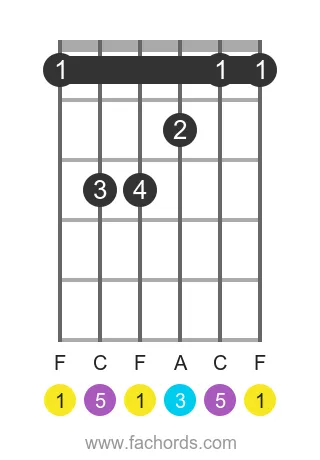
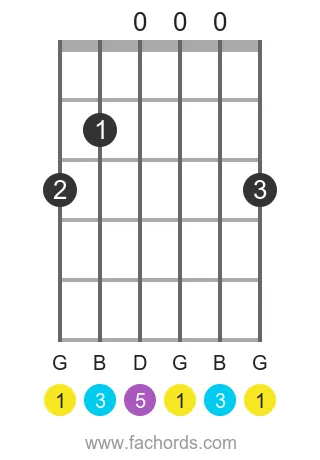
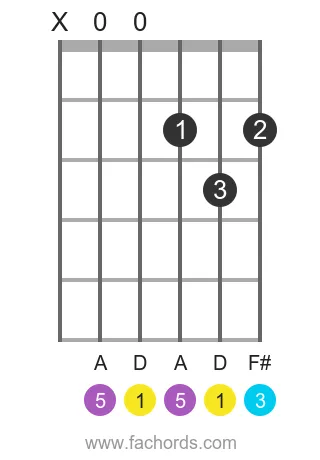
Press play to hear each key. The diagrams show the shapes used in the audio, and every chord links to its full page.

Same loop, different starting chord
- I-IV: C F
- I7-IV7 vamp: C7 F7
More progressions like this one
- Deceptive cadence: G Am
- Phrygian half cadence: Fm/Ab G
- Cadential six-four: Dm C/G G C
- Romanesca: Eb Bb Cm G Eb Bb Cm G Cm

Created by
Giancarlo is a musician (teaching guitar since 2000), software engineer, AI consultant and published researcher
FAQ
Which chords make a plagal cadence in each key?
In C major: F C. In G major: C G. In D major: G D. In A major: D A. In E major: A E.
Why is the plagal cadence called the Amen cadence?
Hymns set this move to the word Amen. The IV chord goes to the I, the tonic note is held, and the other voices fall by step.
How is a plagal cadence different from a perfect cadence?
A plagal cadence goes from IV to I and has no leading tone, so the close is soft. An authentic cadence goes from V to I, with a leading tone rising a half step.
Where does Let It Be use a plagal cadence?
Let It Be by The Beatles plays G F C at the end of the verse and chorus lines. The last move, F to C, is IV to I in the key of C.