The ii-V-I: How Jazz Gets Home in Three Chords
The ii-V-I is the core cadence of jazz. In the key of C the chords are Dm G C, and with sevenths they become Dm7 G7 Cmaj7. You'll also see it called the 2 5 1, and in the Nashville Number System it's written 2m 5 1.
Just as the I-IV-V is known for rock and pop, the ii-V-I is a staple of jazz, and most jazz standards are built on chains of this little cell. Learn it well and a lot of tunes stop looking like a long list of chords. Ready to play? Here are the chords and audio in five keys.
Roots That Fall by Fifths
Follow the roots: D, G, C. Each one falls by a fifth, the strongest root motion in tonal harmony. You can play those roots as D on the fifth string, G on the sixth and C back on the fifth. That last jump goes up a fourth, which lands on the same note name as falling a fifth. Each step feels like it's being pulled towards the next, and by the time you reach C you've arrived.
Guide Tones: Two Lines That Barely Move
Now add the sevenths and look only at two notes of each chord, the third and the seventh. These are the guide tones:
- One line goes F to F to E. It's the third of Dm7, the seventh of G7, the third of Cmaj7.
- The other goes C to B to B. It's the seventh of Dm7, the third of G7, the seventh of Cmaj7.
So while the roots jump around, these two voices barely move: a half step here, a note held there. That's why a ii-V-I sounds so smooth. Here's an exercise I suggest: play only these two notes through the changes, with no roots at all. If the sound of the cadence is still there, you've understood the whole idea. Then use it in your voice leading.
Chains, Key Changes and Other Variations
You will meet this cell in lots of disguises, across several genres:
- Chained through different keys. Afternoon in Paris plays Cm7 F7 Bbmaj7, then the same thing a step lower, Bbm7 Eb7 Abmaj7. The bridge of Satin Doll does Gm7 C7 Fmaj7, then Am7 D7 G7.
- With the final I dropped. Sometimes the ii-V never lands, and moves on somewhere else.
- Ending on a minor i. The minor ii-V-i goes further and changes the ii as well.
- Starting on the I. Written I-ii-V, the same chords become a loop that opens on the tonic, like C Dm G in In Dreams.
There's also a modal reading. Hear Dm as home and the chords become i-IV-bVII, with a Dorian colour.
Far Beyond the Jazz Club
Look at the list: Duke Ellington sits next to Maroon 5. Sunday Morning plays Dm7 G7 C in the intro, verse and chorus, which makes it a very friendly way in if jazz standards feel like too much for now.
| Song | Artist | Section | Chords | Key |
|---|---|---|---|---|
| I'd Really Love to See You Tonight | England Dan and John Ford Coley | verse | Dm7 G Cmaj7 | C major |
| Sunday Morning | Maroon 5 | intro, verse and chorus | Dm7 G7 C | C major |
| Satin Doll | Duke Ellington | bridge | Gm7 C7 Fmaj7, Am7 D7 G7 | C major |
| Afternoon in Paris | John Lewis | A section | Cm7 F7 Bbmaj7, Bbm7 Eb7 Abmaj7 | C major |
| Left Alone | Fiona Apple | verse | G#m C#7 F# (plays i-IV-bVII) | G# minor |
| Autumn Leaves | Kosma and Prévert | A section | Em7 A7 Dmaj7 | D major |
| In Dreams | Roy Orbison | verse | C Dm G (plays I-ii-V) | C major |
| Seasons in the Sun | Terry Jacks | chorus | F# G#m C# (plays I-ii-V) | F# major |
| It's Now or Never | Elvis Presley | chorus | E F#m B E (plays I-ii-V) | E major |
Keep Practicing the ii-V-I
When you can play it in five keys, take it further with this ii-V-I workout, then explore more jazz chord progressions.
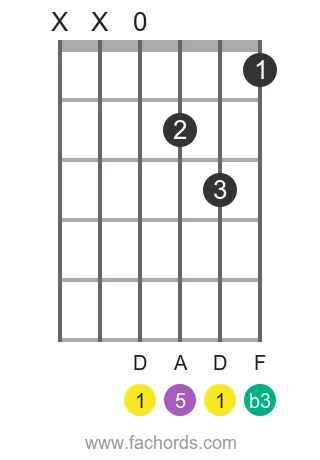
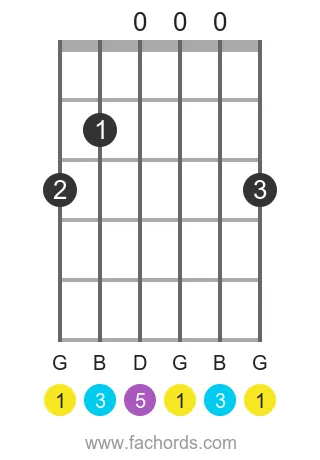
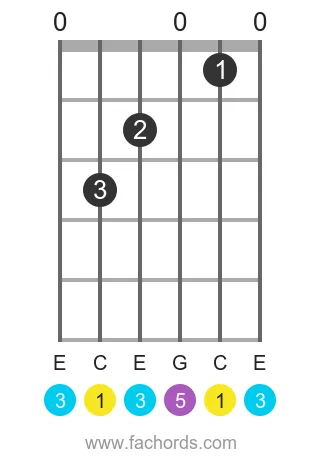
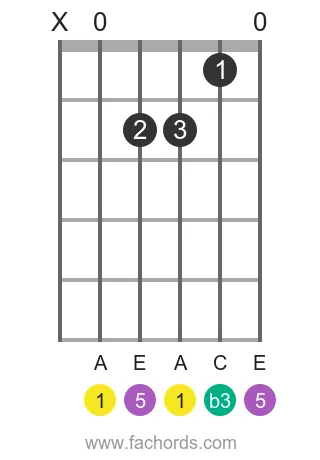
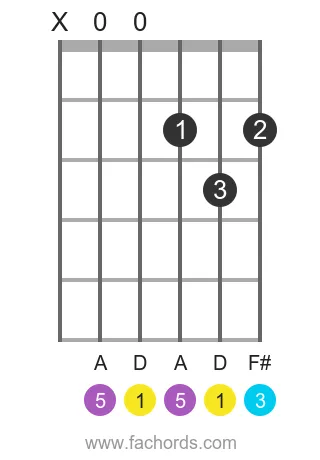
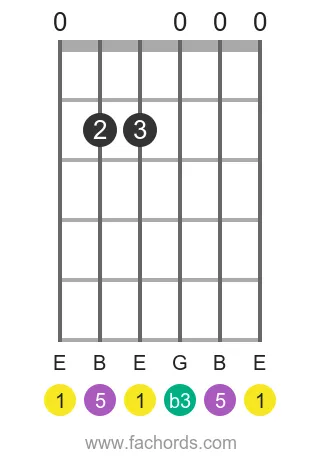
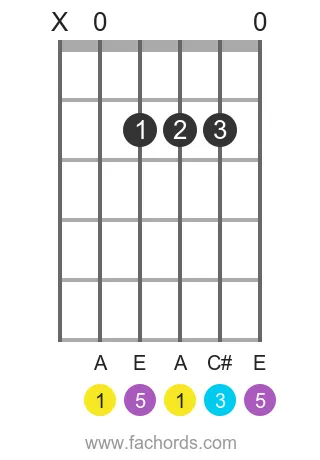
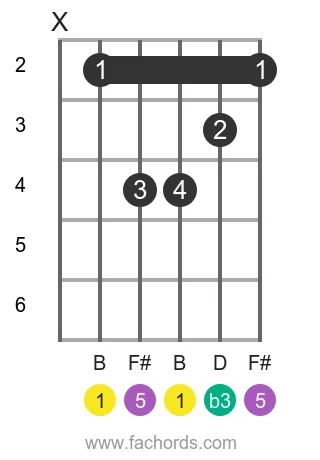
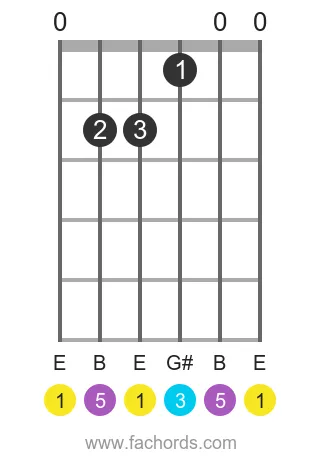
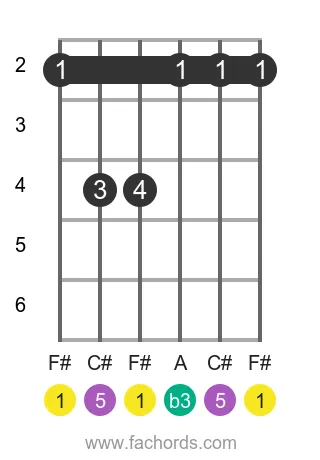
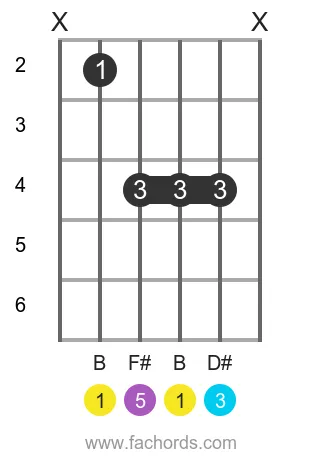
ii-V-I Chord Progression: Chords and Audio in C, G, D, A and E
Press play to hear each key. The diagrams show the shapes used in the audio, and every chord links to its full page.
Longer progressions that contain it
- Diatonic circle of fifths: C F Bdim Em Am Dm G C
More progressions like this one
- Circle progression: C Am Dm G
- Backdoor progression: Fm7 Bb7 C
- I-#Idim-ii-V: C C#dim Dm G
- Ascending augmented: C Caug C6 C7

Created by
Giancarlo is a musician (teaching guitar since 2000), software engineer, AI consultant and published researcher
FAQ
What is a ii-V-I chord progression?
It is the core cadence of jazz: the chords built on the second, fifth and first degrees of a key. In C major that means Dm G C, or Dm7 G7 Cmaj7 with sevenths.
What are the chords of the ii-V-I in each key?
In C major: Dm G C. In G major: Am D G. In D major: Em A D. In A major: Bm E A. In E major: F#m B E.
Why does the ii-V-I sound so strong?
Its roots fall by fifths, D to G to C, the strongest root motion in tonal harmony. With sevenths the guide tones move by a half step or stay put, so the voices connect smoothly.
What are guide tones in a ii-V-I?
They are the thirds and sevenths of the chords. In Dm7 G7 Cmaj7 one line goes F to F to E and the other goes C to B to B, so they barely move.
Which songs use the ii-V-I?
Satin Doll by Duke Ellington uses it in the bridge and Afternoon in Paris by John Lewis in the A section. In pop, Sunday Morning by Maroon 5 plays Dm7 G7 C.
