The Neapolitan Sixth: One Finger Turns Dm Into Bb/D
One finger, one fret. Play Dm, move the note on the third string up a fret, and you're holding the Neapolitan sixth. Its progression is i-bII/4-V-i, which in A minor gives you Am Bb/D E Am. You'll also see it called the Neapolitan chord, or N6, and the Nashville form is 1m b2/4 5 1m.
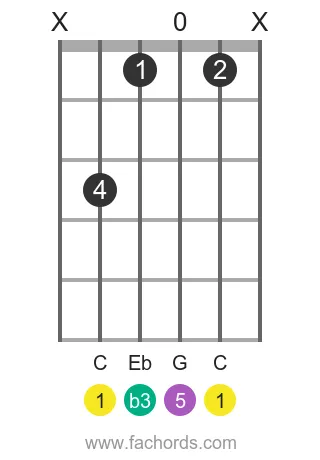
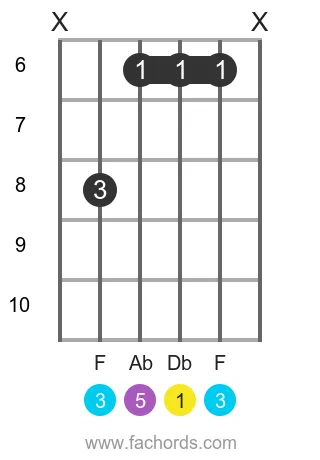
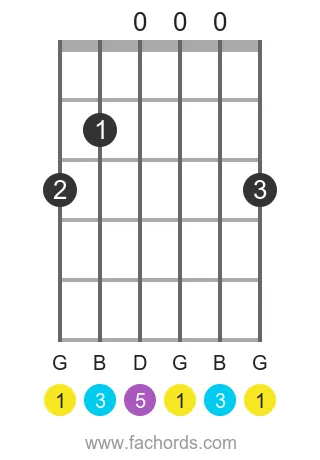
In C minor it's Cm Db/F G Cm, and two chords come from outside the key: Db/F has a Db where the key has D, and G has a B natural. Here are the diagrams and audio in five keys.
The Same Bass as iv, With a Darker Top
The bII is a major chord on the flattened second degree. In first inversion the bass is scale degree 4, the same bass as iv, and that's why it acts as a darker subdominant. Here's the proof on your fretboard:
- Dm: xx0231
- Bb/D: xx0331
The only thing that changes is A going up to Bb. Now play Am Dm E Am, then Am Bb/D E Am, and listen to what one fret does to the whole line. That Bb is the flat second borrowed from the Phrygian mode: A Phrygian has Bb, A minor has B.
Follow the Third String
The b2 falls through the leading tone to the tonic. On the guitar you can trace it without leaving one string. In the open shapes, the third string goes:
- Bb/D: Bb on fret 3
- E: G# on fret 1
- Am: A on fret 2
Pick that string alone through the changes, then play the full chords again and try to keep hearing it. The result is tragic and intense, at least on paper. What do you hear?
Bar 3 of the Moonlight Sonata
Beethoven gets there quickly in the Moonlight Sonata, first movement: C#m D/F# G#7 C#m, in bar 3.
| Song | Artist | Section | Chords | Key |
|---|---|---|---|---|
| Moonlight Sonata, first movement | Ludwig van Beethoven | bar 3 | C#m D/F# G#7 C#m | C# minor |
You can get close to it with a capo on the fourth fret: the A minor shapes then sound in C# minor, and Bb/D becomes D/F#. Add a seventh to the E shape to match the G#7.
The same chord also works in a major key, usually with its root in the bass. That's the Neapolitan in major.
Neapolitan Sixth Chord: Chords and Audio in C, G, D, A and E
Press play to hear each key. The diagrams show the shapes used in the audio, and every chord links to its full page.


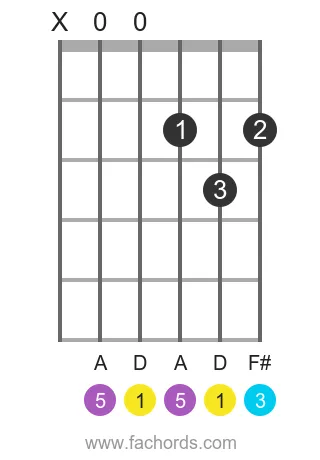
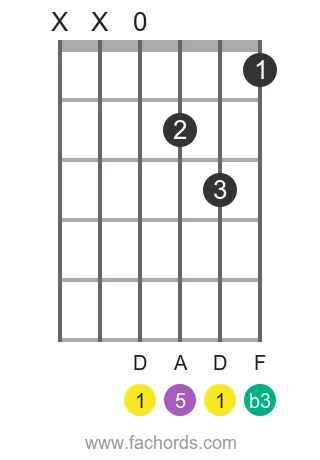
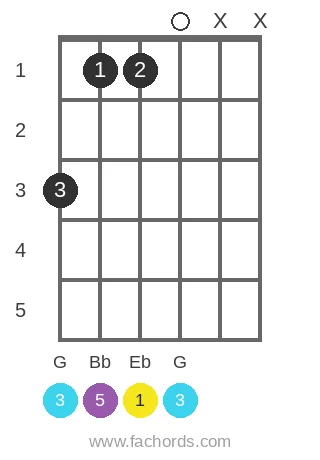
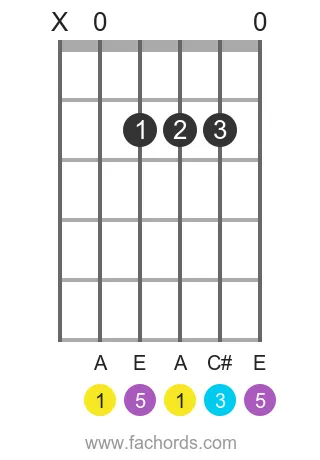
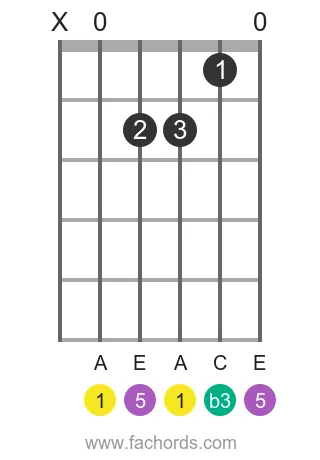

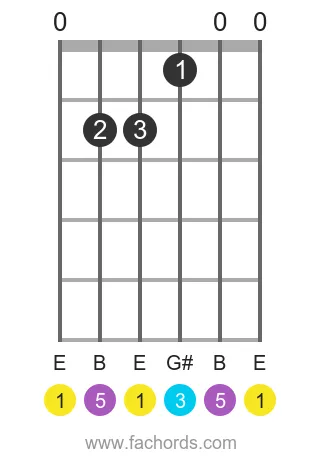
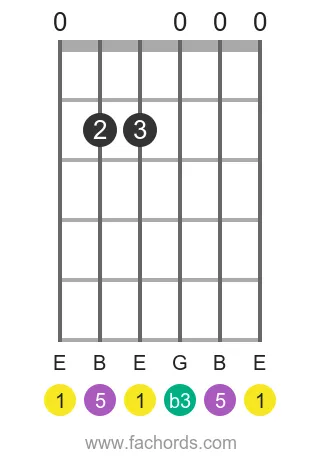

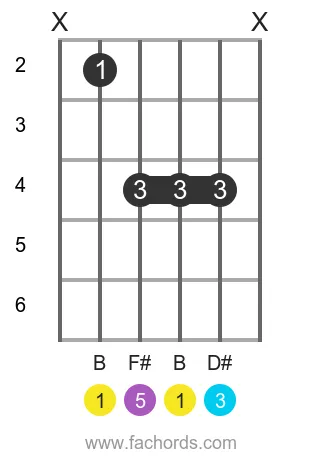
More progressions like this one
- Neapolitan in major: C Db G C
- German sixth approach: Ab7 G7 Cm
- Omnibus progression: G7 Bb7/Ab Dm/A Bb7 G7/B C
- Stomp progression: F7 F#dim7 / C7/G C7 / F7 F#dim7 / C7/G C7 / F7 F#dim7 / C7/G A7 / D7 / G7 C7

Created by
Giancarlo is a musician (teaching guitar since 2000), software engineer, AI consultant and published researcher
FAQ
What are the chords of the Neapolitan sixth in each key?
In C minor: Cm Db/F G Cm. In G minor: Gm Ab/C D Gm. In D minor: Dm Eb/G A Dm. In A minor: Am Bb/D E Am. In E minor: Em F/A B Em.
Why is it called a sixth if the chord is bII?
It is played in first inversion, so the bass is scale degree 4, the same bass as iv. In A minor the chord is Bb with D in the bass, and going up from D to Bb is a sixth.
What does the Neapolitan chord do in a progression?
It acts as a darker subdominant. It leads to V, and its b2 falls through the leading tone to the tonic, Bb to G# to A in A minor.
Where is the Neapolitan chord in the Moonlight Sonata?
It comes in bar 3 of the first movement, in C# minor. The chords are C#m D/F# G#7 C#m, so D/F# is the N6.