The Phrygian Half Cadence: Bach's Two-Chord Movement
Two chords can fill a whole movement. In Brandenburg Concerto No. 3, second movement, Bach plays just Am/C and B. That's the Phrygian half cadence, or Phrygian cadence: iv/b6-V, a iv chord with the flat sixth degree in the bass, going to V. In A minor it's Dm/F E, and it's the key I'd start with.
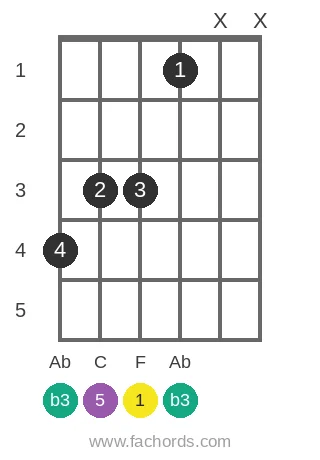
In the Nashville Number System it reads 4m/b6 5. In C minor the chords are Fm/Ab G, and the G is the outsider: natural minor has no B natural. The five keys are right here, with audio.
Two Notes Meet on E
This cadence is about two voices closing in on one note. The bass falls a half step from b6 to 5, while the top voice rises to meet it. Try it with only two notes at a time:
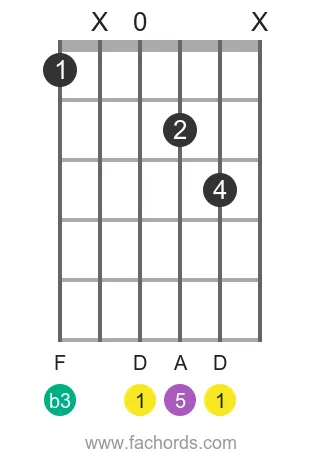
- Start: F on the fourth string, fret 3, and D on the second string, fret 3.
- Land: E on the fourth string, fret 2, and E on the second string, fret 5.
One finger drops a fret, the other climbs two, and you end up on an octave. Now play the full chords: xx3231 for Dm/F, then an open E. The fourth string moves from fret 3 to fret 2 just as before.
Where the Phrygian Comes From
The half step in the bass is the same move as the closing step of the Phrygian mode, and that gives the cadence its name. Play E Phrygian down to the bottom note and you finish on F to E, the exact bass of Dm/F E.
Like any half cadence, it stops on V, and the phrase stays open. Listen for an old-sounding question.
From the Brandenburg to Schubert
Baroque composers often used it to link slow and fast movements, and the Brandenburg is the extreme case: the whole movement is these two chords. Schau, lieber Gott, wie meine Feind (chorale) finishes its excerpt on them too, and Die Mainacht by Schubert has the same move, written iv6 V in classical shorthand, in measures 1 to 10.
| Song | Artist | Section | Chords | Key |
|---|---|---|---|---|
| Brandenburg Concerto No. 3, second movement | J. S. Bach | the whole movement is these two chords | Am/C B | E minor |
| Schau, lieber Gott, wie meine Feind (chorale) | J. S. Bach | last two chords of the excerpt | Am/C B | E minor |
| Die Mainacht | Franz Schubert | mm. 1-10 | iv6 V |
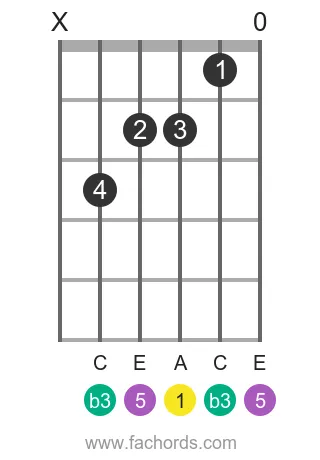
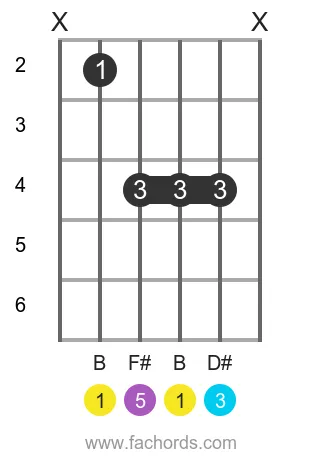
Both Bach pieces are in E minor. To play along, use Am/C as x32210, then barre the B. The bass goes from the third to the second fret of the fifth string, the same one-fret drop.
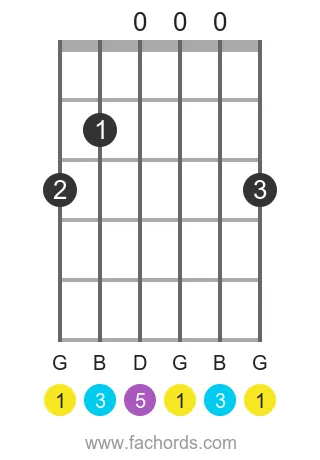
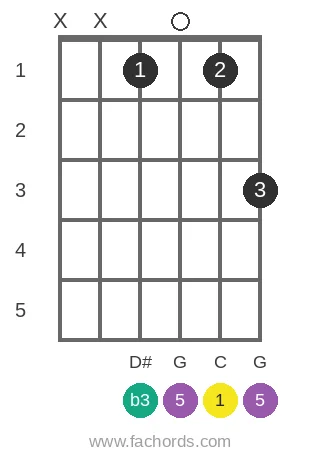
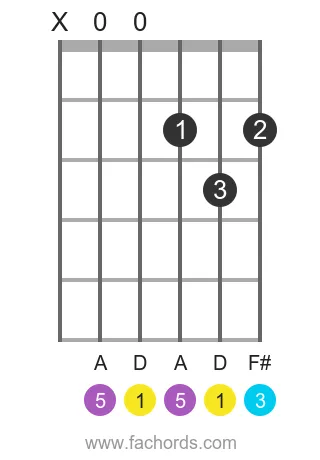
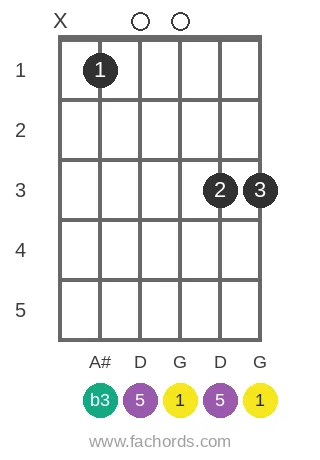
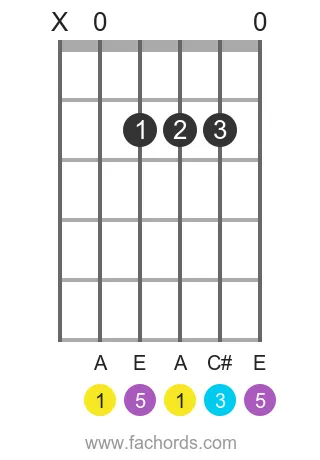
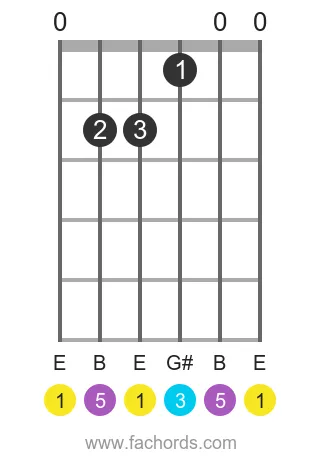
Phrygian Half Cadence: Chords and Audio in C, G, D, A and E
Press play to hear each key. The diagrams show the shapes used in the audio, and every chord links to its full page.
More progressions like this one
- Cadential six-four: Dm C/G G C
- Romanesca: Eb Bb Cm G Eb Bb Cm G Cm
- Neapolitan sixth: Cm Db/F G Cm
- Neapolitan in major: C Db G C

Created by
Giancarlo is a musician (teaching guitar since 2000), software engineer, AI consultant and published researcher
FAQ
What are the chords of the Phrygian half cadence in each key?
In C minor: Fm/Ab G. In G minor: Cm/Eb D. In D minor: Gm/Bb A. In A minor: Dm/F E. In E minor: Am/C B.
Why is it called a Phrygian cadence?
The bass falls a half step from b6 to 5, the same move as the closing step of the Phrygian mode. In A minor that step is F to E.
Which Bach piece uses the Phrygian half cadence?
The second movement of Brandenburg Concerto No. 3 is these two chords, Am/C and B in E minor. A chorale excerpt, Schau, lieber Gott, wie meine Feind, ends on them too.
Does the Phrygian half cadence resolve?
It stops on V, so the phrase stays open like a question. Baroque composers often used it to link a slow movement to a fast one.
