D Major: Open String Root and Shapes
D, E, F#, G, A, B and C#: that is the D major scale, a key with two sharps. The open D string hands you the root for free, so you can sing the tonic while your fretting hand finds the rest.
For box shapes the root also lies on the 10th fret of the low E string and the 5th fret of the A string. B minor shares all seven notes. Once the shapes feel steady, a three notes per string exercise turns them into fast, even runs.
Play the D major scale
Use the step menu in the player to switch between the single-string run and the box shapes.
Notes of the D major scale
| Note | Degree | Interval | Semitones from root |
|---|---|---|---|
| D | 1 | Root | 0 |
| E | 2 | Major 2nd | 2 |
| F# | 3 | Major 3rd | 4 |
| G | 4 | Perfect 4th | 5 |
| A | 5 | Perfect 5th | 7 |
| B | 6 | Major 6th | 9 |
| C# | 7 | Major 7th | 11 |
Structure
D major scale notes:
How the major scale is built:
The major scale is built from the degrees 1 2 3 4 5 6 7, which gives the step pattern W-W-H-W-W-W-H (W = whole step, H = half step).
Counting in semitones from the root: 0, 2, 4, 5, 7, 9, 11. That makes it a 7-note scale.
It is the parent scale of its own modal family.
It is also known as Ionian.
D Major Scale Guitar Patterns
Static diagrams of every position shown in the player above.
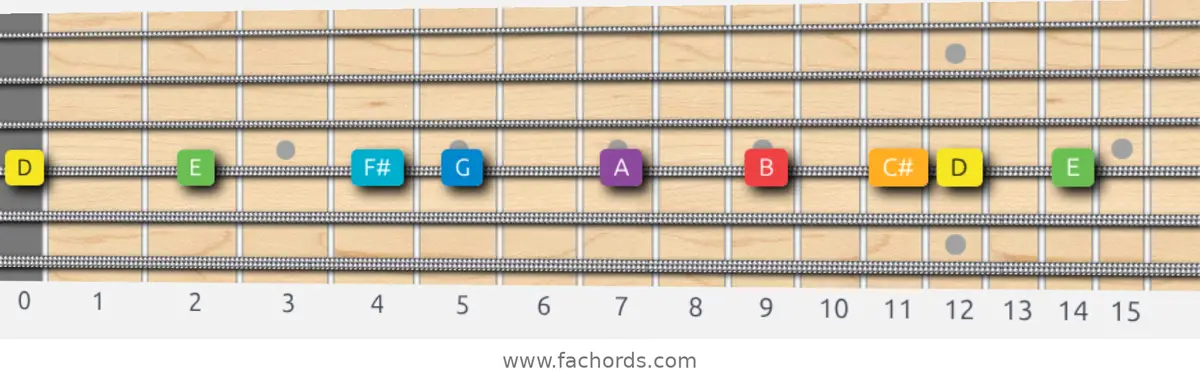
On one string (D)
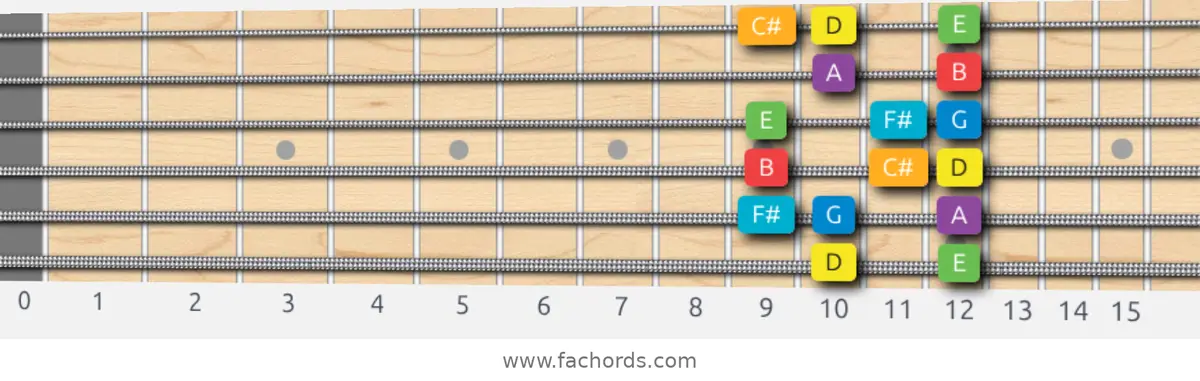
Box pattern — position 1
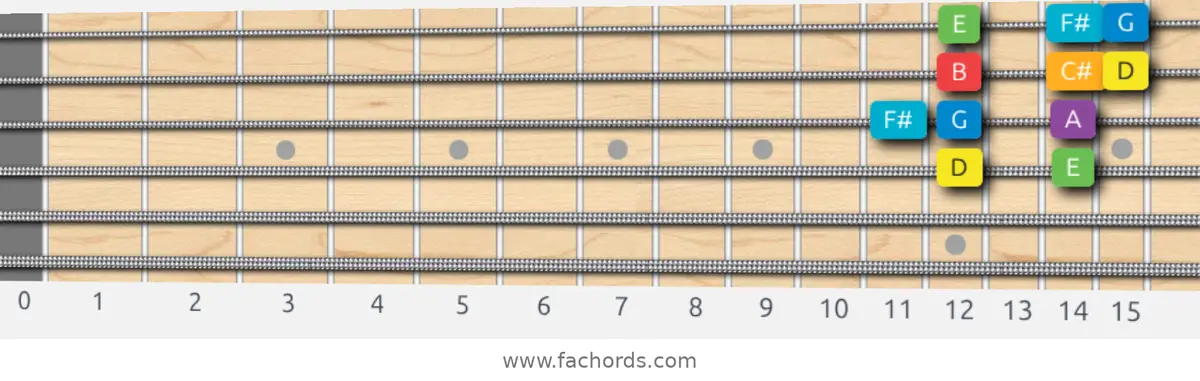
Box pattern — position 2
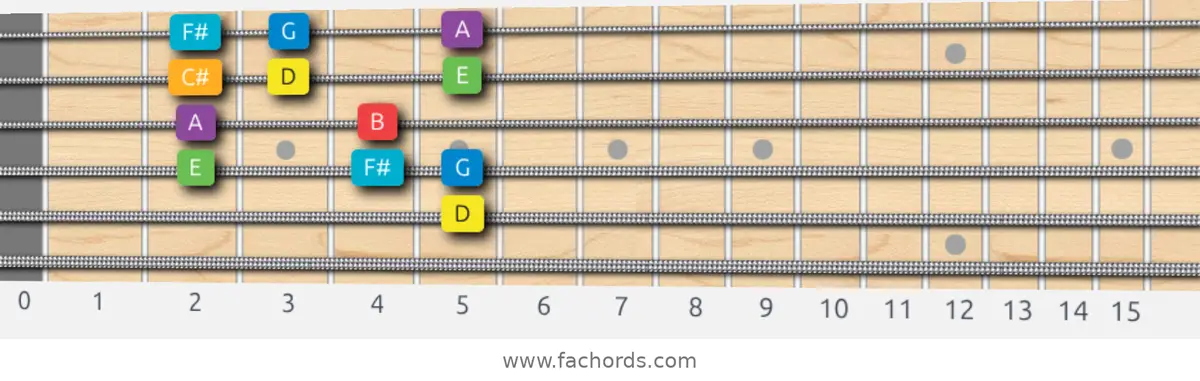
Box pattern — position 3
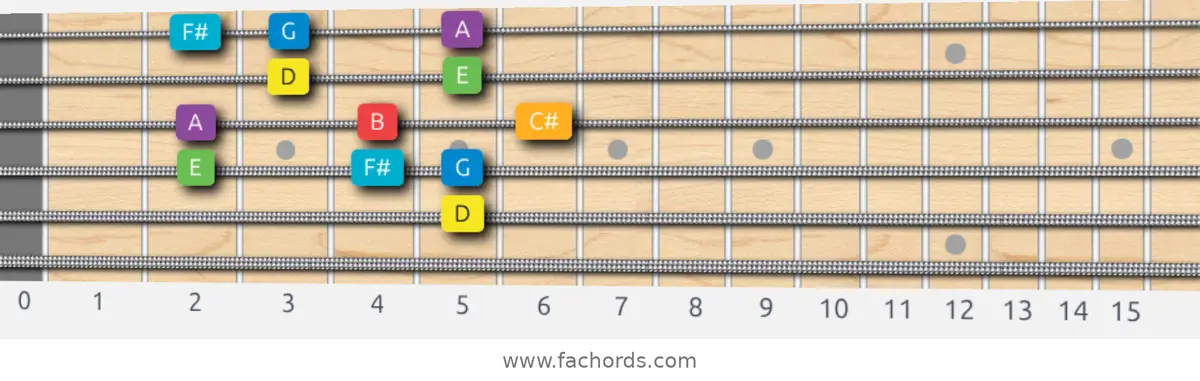
Box pattern — position 4
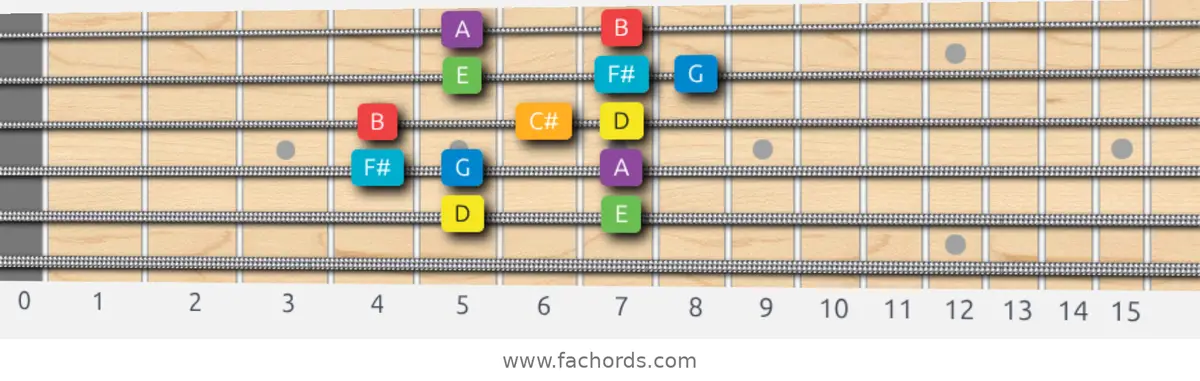
Box pattern — position 5
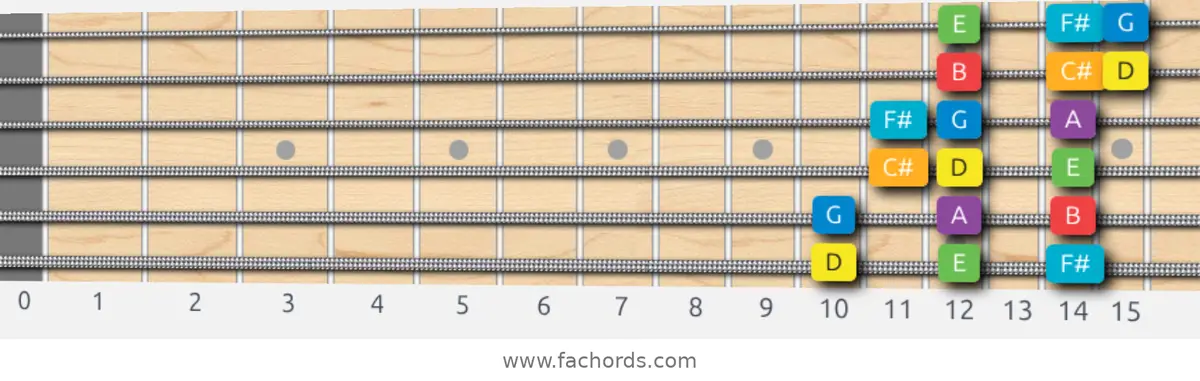
3 notes per string — position 1
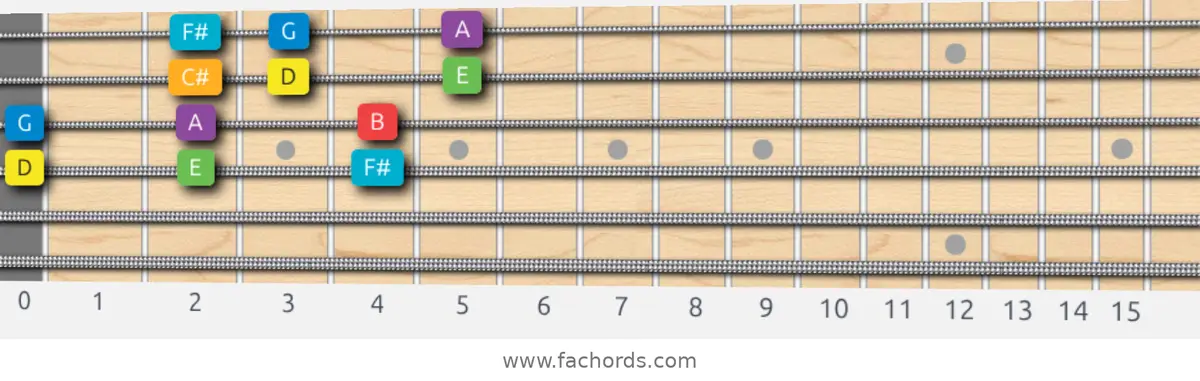
3 notes per string — position 2
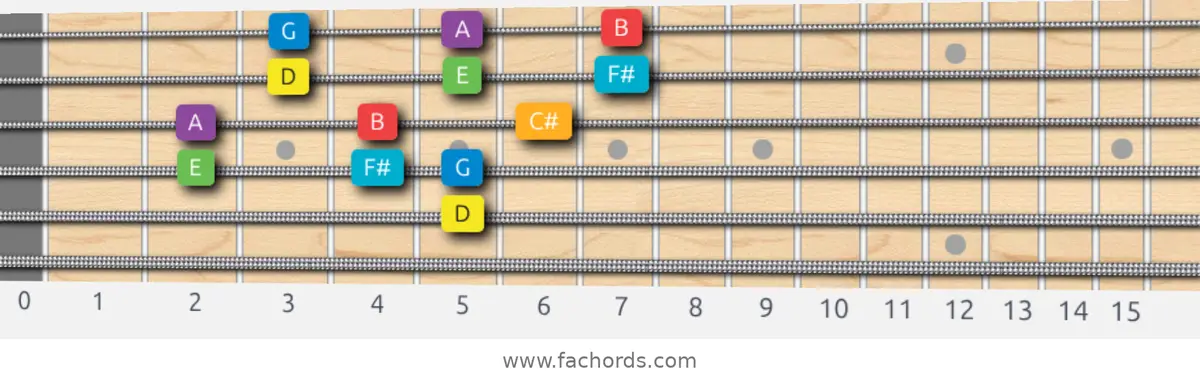
3 notes per string — position 3
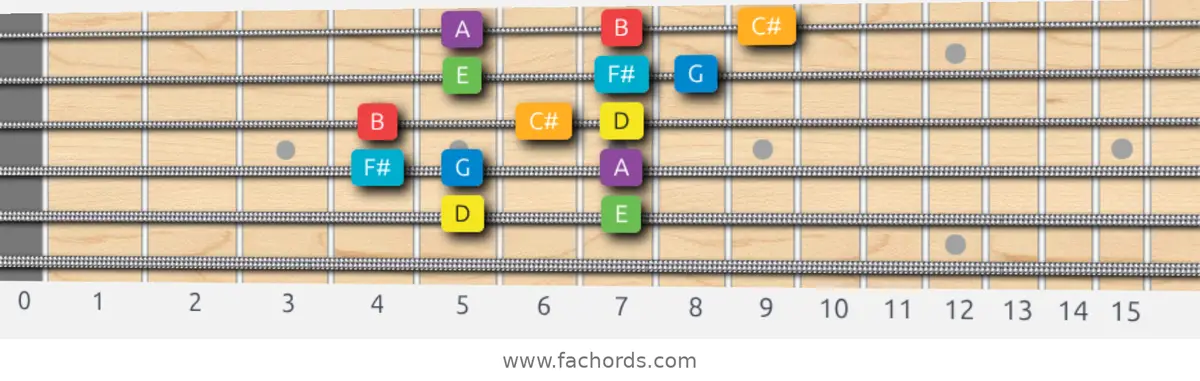
3 notes per string — position 4
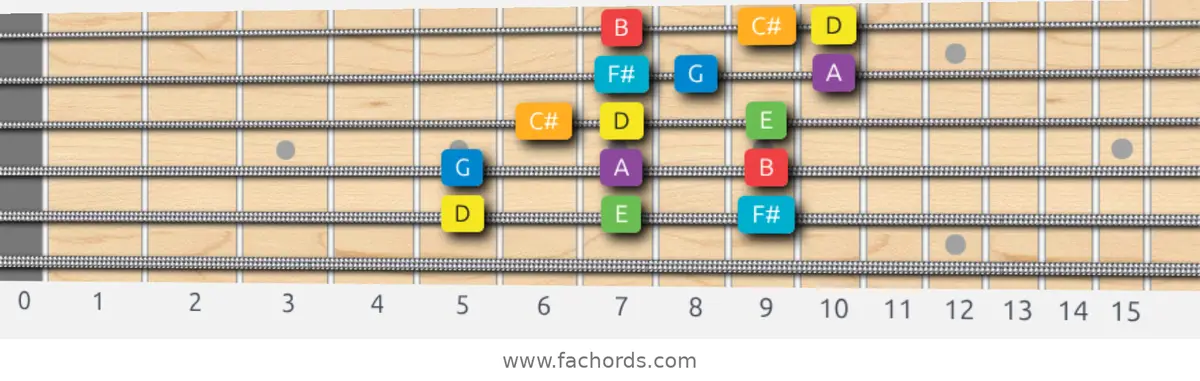
3 notes per string — position 5
Chords in the D major scale
Stacking thirds on each degree of the scale gives these chords.
Related modes
These scales share the same notes as the major scale, starting from a different degree.
The major scale in other keys

Created by
Giancarlo is a musician (teaching guitar since 2000), software engineer, AI consultant and published researcher