The A Major Scale, Position by Position
Three sharps shape the A major scale: A, B, C#, D, E, F# and G#. The open A string is the root, and the 12th fret gives the octave.
On the low E string the root lies at the 5th fret, a position many guitarists use for their first box. F# minor shares these notes. If you want to know how the other six modes grow from the same notes, read how modes work on guitar.
Play the A major scale
Use the step menu in the player to switch between the single-string run and the box shapes.
Notes of the A major scale
| Note | Degree | Interval | Semitones from root |
|---|---|---|---|
| A | 1 | Root | 0 |
| B | 2 | Major 2nd | 2 |
| C# | 3 | Major 3rd | 4 |
| D | 4 | Perfect 4th | 5 |
| E | 5 | Perfect 5th | 7 |
| F# | 6 | Major 6th | 9 |
| G# | 7 | Major 7th | 11 |
Structure
A major scale notes:
How the major scale is built:
The major scale is built from the degrees 1 2 3 4 5 6 7, which gives the step pattern W-W-H-W-W-W-H (W = whole step, H = half step).
Counting in semitones from the root: 0, 2, 4, 5, 7, 9, 11. That makes it a 7-note scale.
It is the parent scale of its own modal family.
It is also known as Ionian.
A Major Scale Guitar Patterns
Static diagrams of every position shown in the player above.
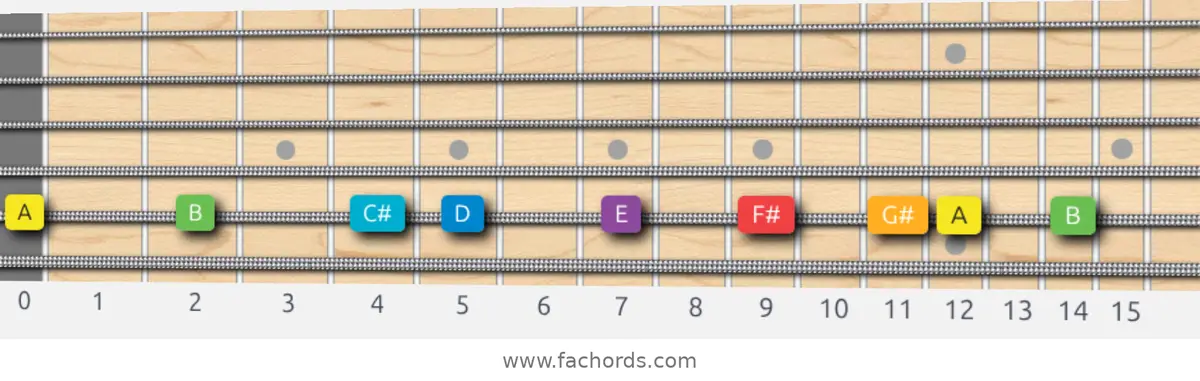
On one string (A)
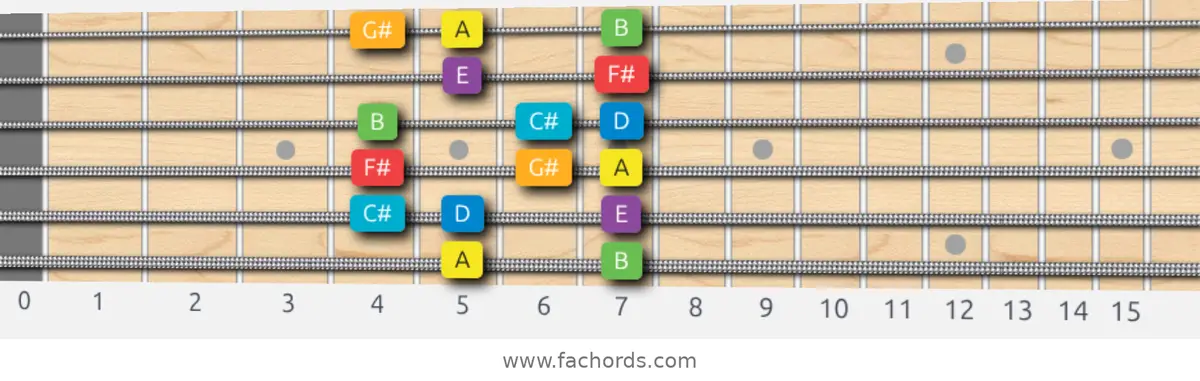
Box pattern — position 1
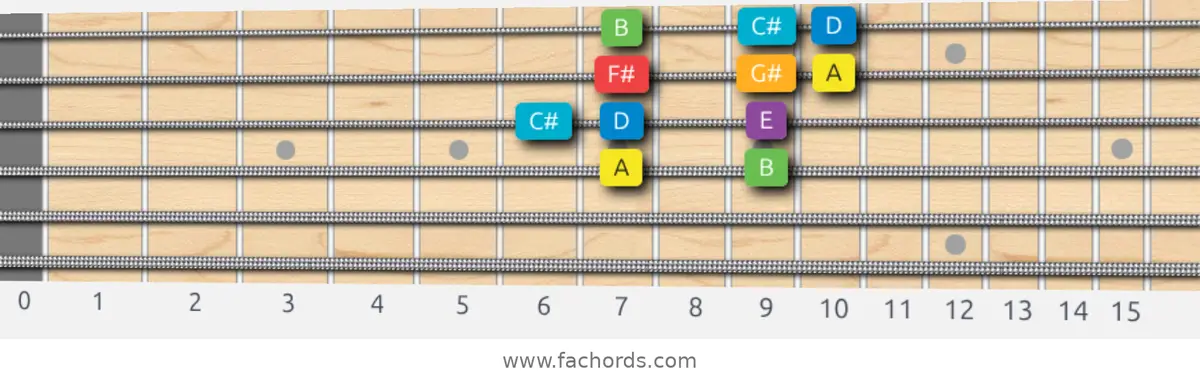
Box pattern — position 2
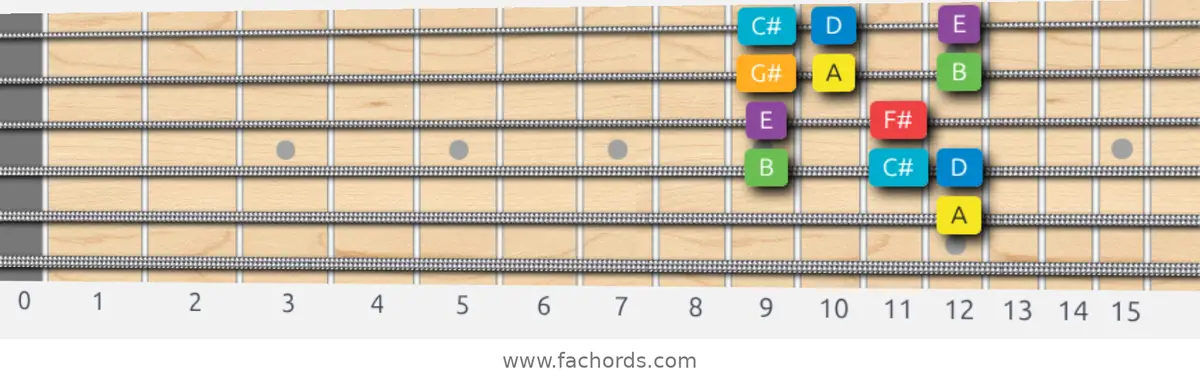
Box pattern — position 3
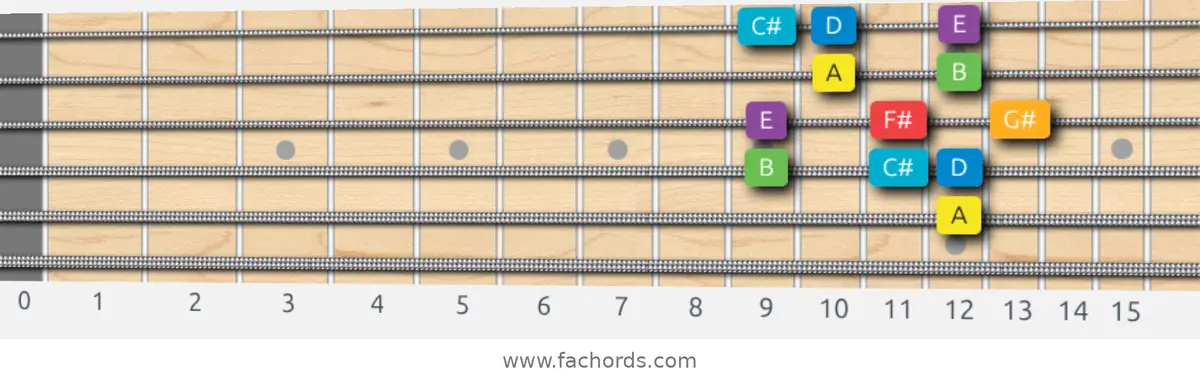
Box pattern — position 4
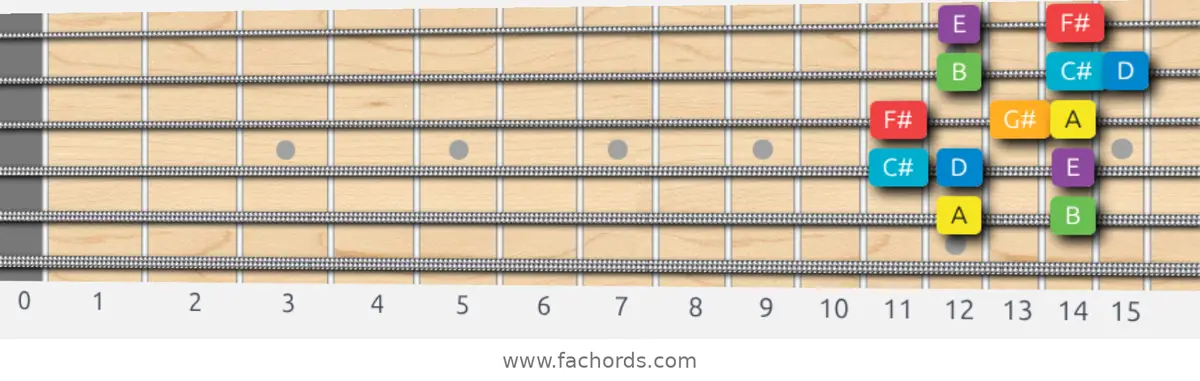
Box pattern — position 5
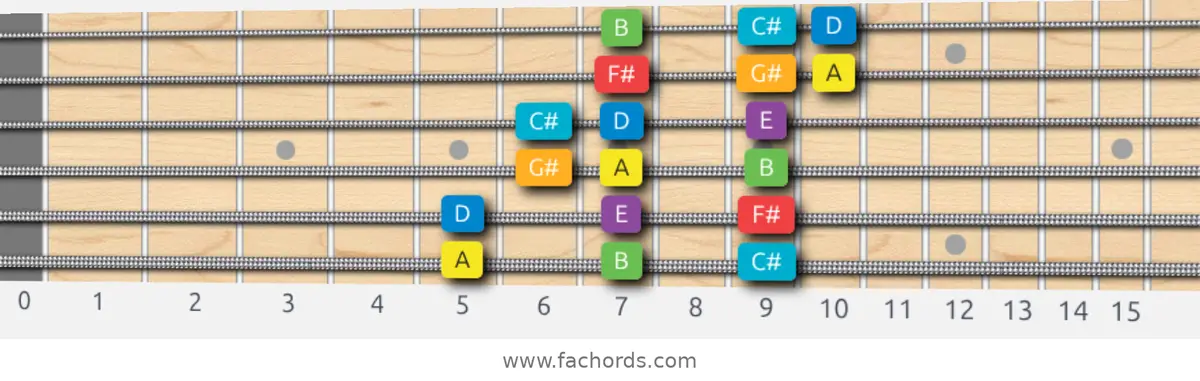
3 notes per string — position 1
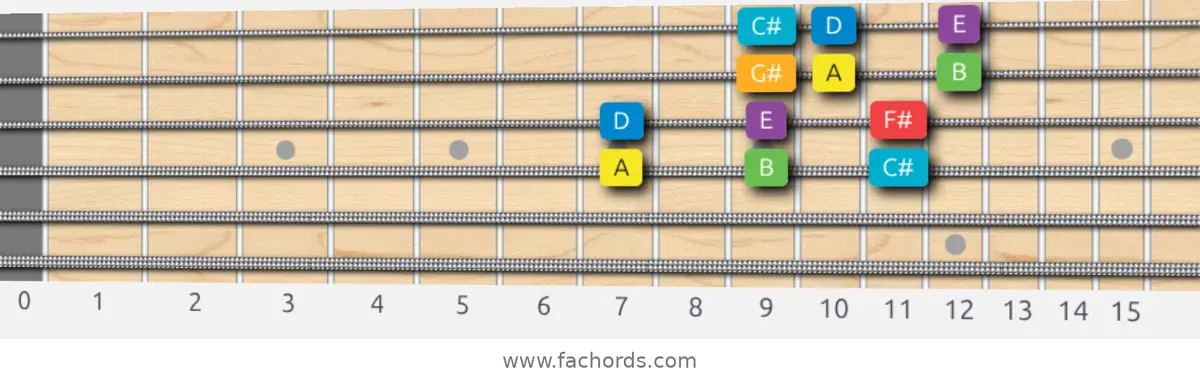
3 notes per string — position 2
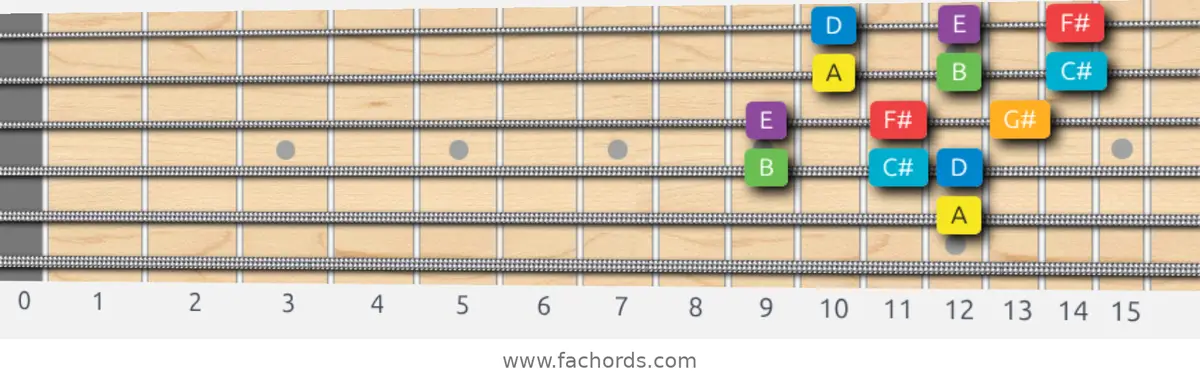
3 notes per string — position 3
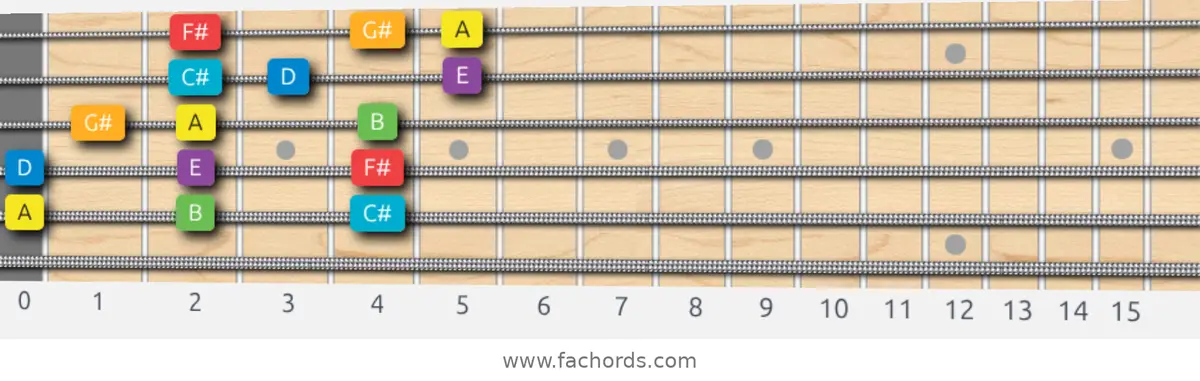
3 notes per string — position 4
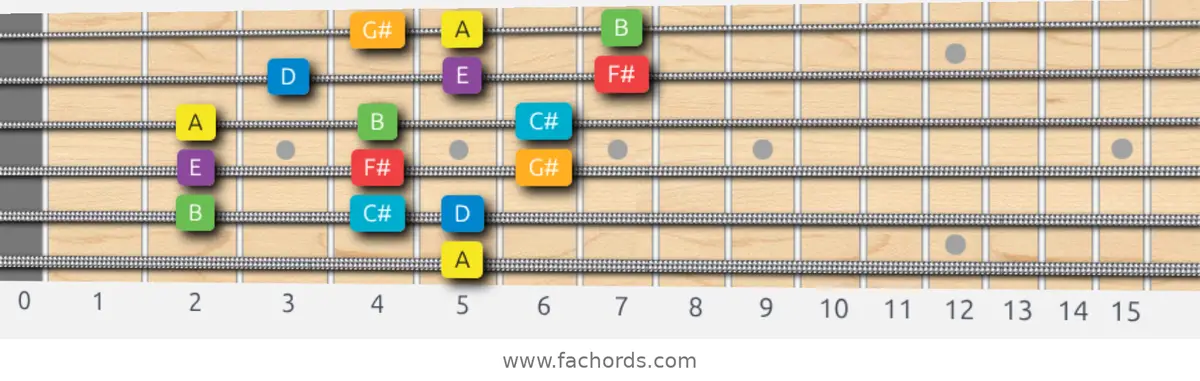
3 notes per string — position 5
Chords in the A major scale
Stacking thirds on each degree of the scale gives these chords.
Scales with the same notes as A Major
These scales use exactly the same notes. Each one starts somewhere else, so the root and the mood change.
| Scale | Starts on degree | Learn the scale |
|---|---|---|
| B Dorian | 2 | Dorian |
| C# Phrygian | 3 | Phrygian |
| D Lydian | 4 | Lydian |
| E Mixolydian | 5 | Mixolydian |
| F# Minor | 6 | Minor |
| Ab Locrian | 7 | Locrian |
Other scales on A
Same root, different notes. Play them back to back to hear what changes.
- A Major Pentatonic: drops the 4 and 7
- A Lydian: #4 instead of 4
- A Mixolydian: b7 instead of 7
- A Harmonic Major: b6 instead of 6
- A Ionian #5: #5 instead of 5
The major scale in other keys
Keep learning

Created by
Giancarlo is a musician (teaching guitar since 2000), software engineer, AI consultant and published researcher
