The 12-Bar Minor Blues: From The Thrill Is Gone to Mr. P.C.
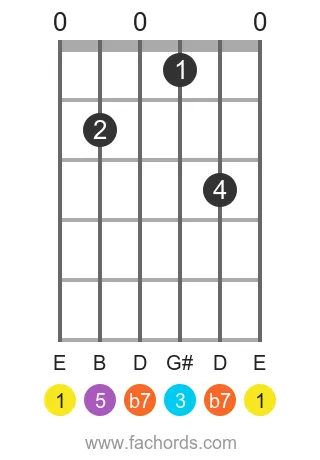
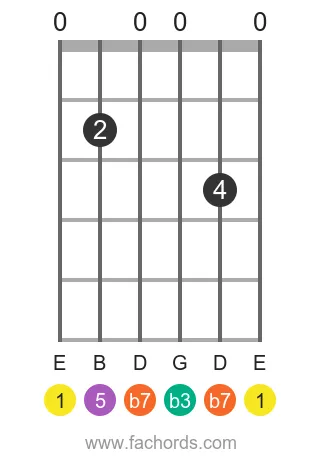
Four chords and twelve bars, and it sounds darker and more serious than the major form. That's the 12-bar minor blues, also known simply as the minor blues. I like it in E minor, because Em7, Am7, C7 and B7 are all open shapes:
- Bars 1 to 4: Em7 Em7 Em7 Em7 (i7 i7 i7 i7)
- Bars 5 to 8: Am7 Am7 Em7 Em7 (iv7 iv7 i7 i7)
- Bars 9 to 12: C7 B7 Em7 B7 (bVI7 V7 i7 V7)
In the Nashville Number System the last line is b6(7) 5(7) 1m(7) 5(7). If you would rather start from the sound, the audio and diagrams in five keys are ready.
What Changes From the Major Form
Lay it over the 12-bar blues and the first eight bars line up: I becomes i7, IV becomes iv7, and the chords change in the same places. The real difference comes at bar 9. Where the major form plays V then IV, this one plays bVI7 then V7.
Bars 9 and 10: One Shape, One Fret
In the key of C minor those two chords are Ab7 and G7, and both reach outside natural minor. The root of Ab7 comes from natural minor, but its Gb doesn't. G7 carries B natural, the leading tone, which comes from harmonic minor.
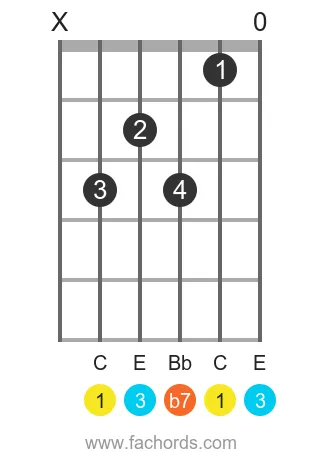
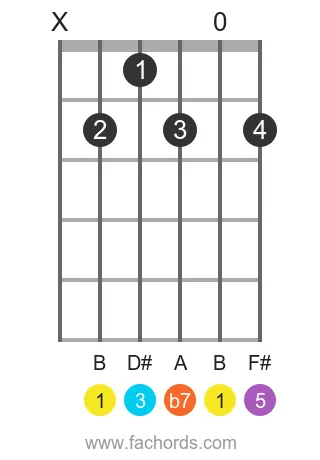
Now look at what this means for your fingers in E minor. Take the open C7 shape (x32310) and slide it down one fret: you get B7 (x21202), with one difference. The first string goes from open E to F# at fret 2. The bass moves from C to B on the fifth string, a half step, and that slide is the whole move.
Play bars 9 to 11 on their own a few times, C7 B7 Em7. Let the bass lead and listen to how B7 points at Em7: its D# sits a half step under E.
Three Tunes, Three Readings of Bar 9
In the Chords column the two Coltrane tunes show their bar counts. The Thrill Is Gone is shorter, so check it against the form as you go.
| Song | Artist | Section | Chords | Key |
|---|---|---|---|---|
| The Thrill Is Gone | B.B. King | verse | Bm | Em Bm | Gmaj7 F#7 Bm | B minor |
| Equinox | John Coltrane | head and solos | C#m7 x4 | F#m7 x2 | C#m7 x2 | A7#11 | G#7 | C#m7 x2 | C# minor |
| Mr. P.C. | John Coltrane | head and solos | Cm7 x4 | Fm7 x2 | Cm7 x2 | Ab7 | G7 | Cm7 x2 | C minor |
- Mr. P.C. is the form in C minor, down to Ab7 and G7. The one change is at the end: it stays on Cm7 for the last two bars, with no V7.
- Equinox has the same layout in C# minor, with A7#11 in place of the plain bVI7, then G#7.
- The Thrill Is Gone uses plain Bm and Em, and turns the bVI7 into Gmaj7.
That Gmaj7 deserves a closer look. Its notes, G B D F#, all belong to B natural minor, so of the two chords in that spot only F#7 reaches outside the scale, with its A#. Play Gmaj7 F#7 Bm, then G7 F#7 Bm, and decide which one you like. Same roots, one note changed.
What to Play Over It
One scale won't cover everything. The natural minor scale in E fits Em7 and Am7, so it works for the first eight bars. C7 has a Bb and B7 has a D#, and neither note is in that scale. Over B7, E harmonic minor contains every note of the chord.
So in bars 9 and 10, aim for the chord tones. Land on Bb over C7 and D# over B7, and you are playing the two notes that make those bars different. These blues chord tone exercises will help you hear the changes coming.
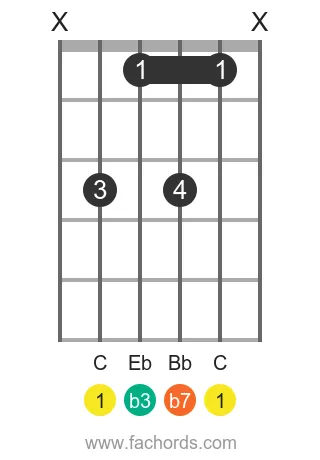
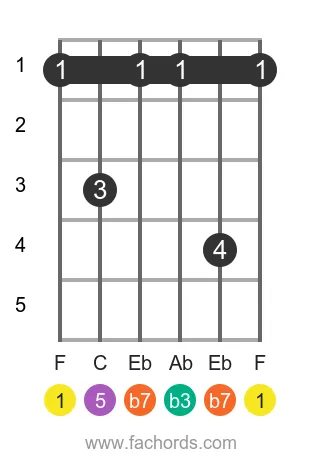
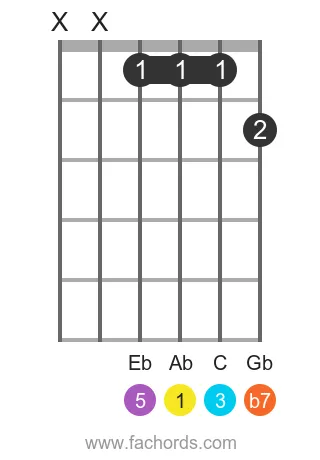
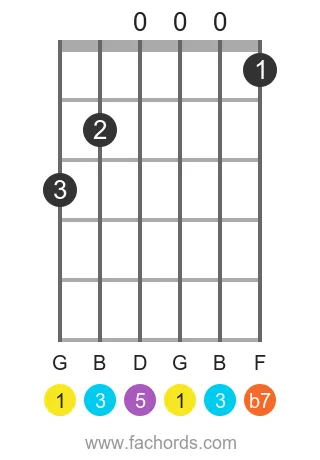
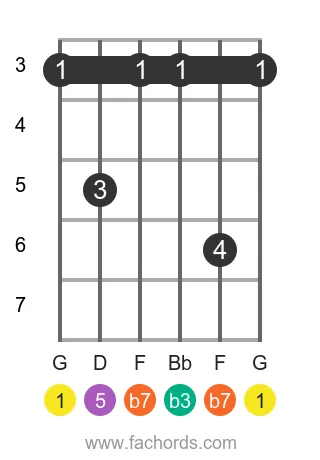
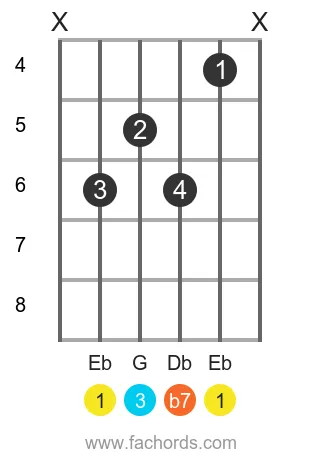
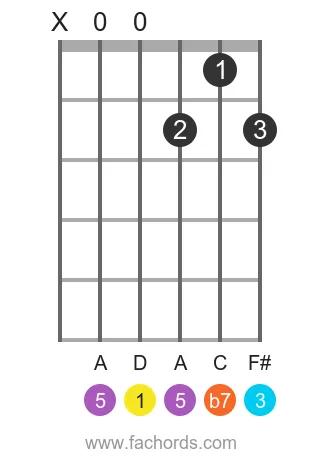
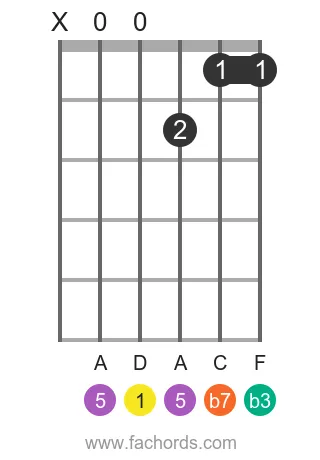
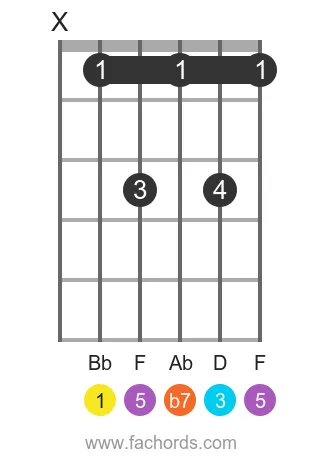
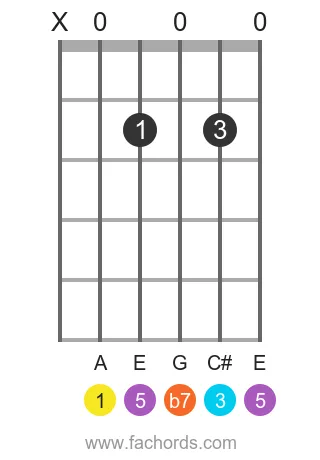
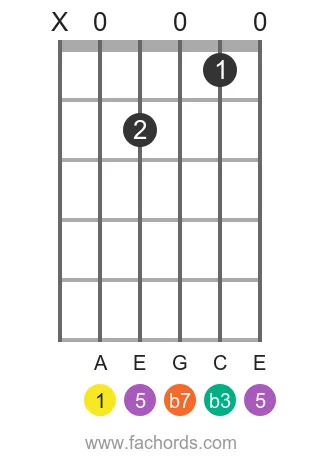
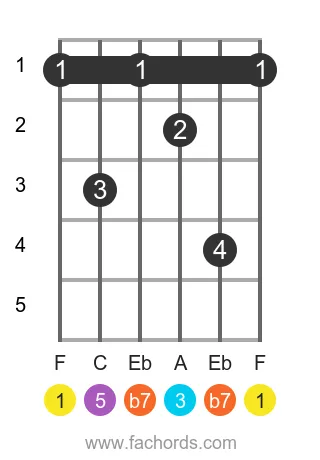
12-Bar Minor Blues Chord Progression: Chords and Audio in C, G, D, A and E
Press play to hear each key. The diagrams show the shapes used in the audio, and every chord links to its full page.
More progressions like this one
- Bird blues: Cmaj7 Bm7b5 E7 / Am7 D7 / Gm7 C7 / F7 Fm7 Bb7 / Em7 A7 / Ebm7 Ab7 / Dm7 G7 / C A7 Dm7 G7
- 8-bar blues: C G F F / C G C G
- 16-bar blues: C C C C / C C C C / F F C C / G F C C
- 8-bar blues, Worried Life form: C / C / F / F / C / G / C F / C G

Created by
Giancarlo is a musician (teaching guitar since 2000), software engineer, AI consultant and published researcher
FAQ
What makes a minor blues different from a major 12-bar blues?
The I and IV become minor sevenths, and bars 9 and 10 use bVI7 sliding down a half step into V7 instead of V then IV. The result sounds darker and more serious.
Where do the Ab7 and G7 of a C minor blues come from?
The root of the bVI comes from natural minor, while the leading tone of the V7, B natural, comes from harmonic minor. The Gb of Ab7 also sits outside natural minor.
Which key suits the minor blues on guitar with open shapes?
E minor, because Em7, Am7, C7 and B7 are all open shapes. In E minor: Em7 Em7 Em7 Em7 Am7 Am7 Em7 Em7 C7 B7 Em7 B7.
Does Mr. P.C. by John Coltrane follow the minor blues form?
Yes, in C minor: Cm7 for four bars, Fm7 for two, Cm7 for two, then Ab7, G7 and two closing bars of Cm7. The only change is that it skips the final V7.
Which scale works over a 12-bar minor blues?
Natural minor fits the i7 and iv7 chords of the first eight bars. The bVI7 and V7 each contain a note outside it, so aim for chord tones in bars 9 and 10.
