Jazz Blues: The 12-Bar Frame With a Diminished Step and a ii-V
Keep the 12 bars and add motion: that's the jazz blues, also known as the jazz blues changes. Here it is in G, where every chord except C#dim7 has an open shape:
- Bars 1 to 4: G7 C7 G7 G7 (I7 IV7 I7 I7)
- Bars 5 to 8: C7 C#dim7 G7 E7 (IV7 #ivdim7 I7 VI7)
- Bars 9 to 12: Am7 D7 G7 D7 (ii7 V7 I7 V7)
In the Nashville Number System the middle line reads 4(7) #4dim7 1(7) 6(7) and the last one 2m(7) 5(7) 1(7) 5(7). Listen to it in all five keys, then come back for the three spots that make it jazz.
Three Spots Where a Plain Blues Gets New Chords
Spelled in the key of C the form is C7 F7 C7 C7, F7 F#dim7 C7 A7, Dm7 G7 C7 G7. Only Dm7 and G7 belong to C major. C7 and F7 sit outside the key because of their Bb and Eb, a habit from the 12-bar blues. The two new outsiders are these:
- F#dim7 in bar 6: a chromatic step from IV back to I. F7 and F#dim7 share A, C and Eb, so the only note that moves is F, up a half step to F#.
- A7 in bar 8: the dominant of ii. Its C# sits a half step under the D of Dm7.
The third spot is bars 9 and 10. The old V to IV goes, and a ii-V takes its place and drives home.
Follow the Bass Through Bar 6
Go back to G and play bars 5 to 7 with just the roots on the fifth string: C at fret 3, C# at fret 4. Now, instead of the root of G7, play D at fret 5, the fifth of that chord. Three frets in a row. Then add the chords on top and listen for that line.
How Much of It Do the Tunes Use?
Less than you might think, so read the Chords column closely.
| Song | Artist | Section | Chords | Key |
|---|---|---|---|---|
| Blue Monk | Thelonious Monk | head and solos | Bb | Eb7 | Bb7 | Bb7 | Eb7 | Edim7 | Bb7 | Bb7 | Cm7 | F7 | Bb7 | Bb7 | Bb major |
| Now's the Time | Charlie Parker | head and solos | F7 | Bb7 | F7 | F7 | Bb7 | Bdim7 | F7 | F7 | Gm7 | C7 | F7 | F7 | F major |
| Stormy Monday | T-Bone Walker / The Allman Brothers Band | verse | G7 C9 G7 Ab7 G7 | C9 C9 G7 Am7 Bm7 Bb7 | Am7 Abm7 Am7 Cm7 G7 C9 G7 Daug | G major |
Blue Monk and Now's the Time both have the diminished chord in bar 6 and the ii-V in bars 9 and 10, but they stay on I through bars 7 and 8 and through the last two bars. No VI7, no final V7. Stormy Monday goes the other way, with slides like G7 Ab7 G7 and Am7 Bm7 Bb7 Am7.
The sound is smoother and more urban than a plain blues, and it invites bebop lines. Want more ii-Vs? The bebop blues is the next step.
Jazz Blues Chord Progression: Chords and Audio in C, G, D, A and E
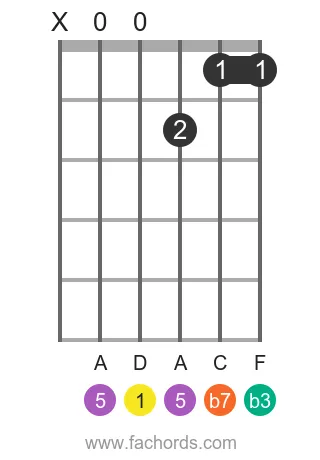
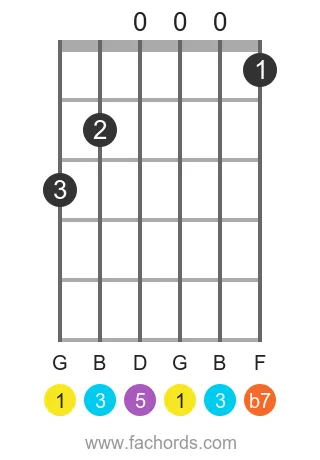
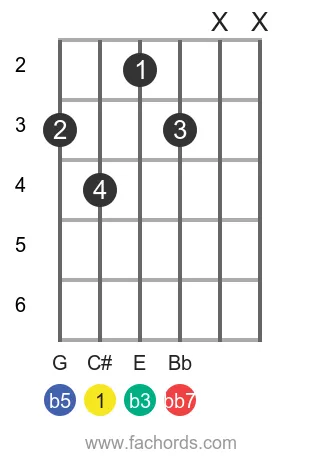
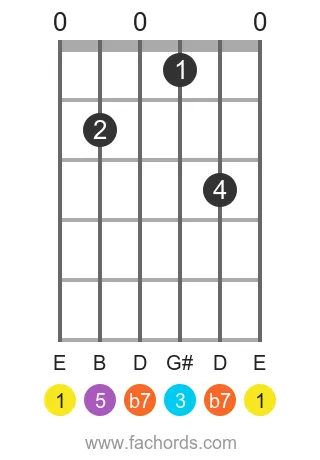
Press play to hear each key. The diagrams show the shapes used in the audio, and every chord links to its full page.
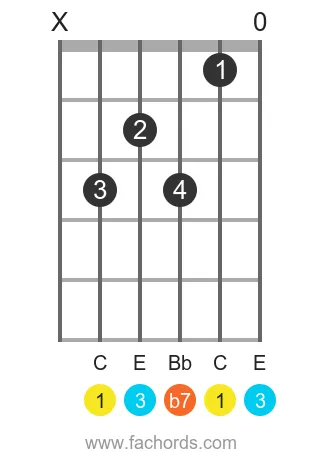
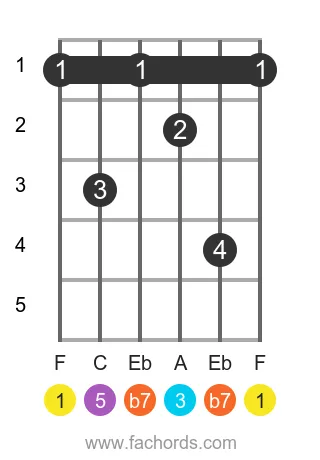
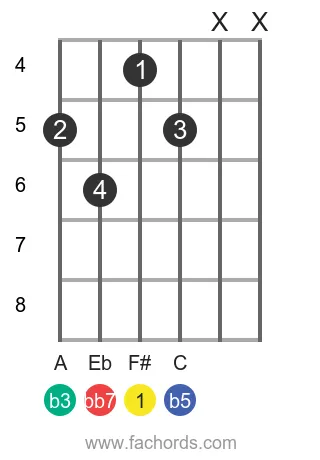
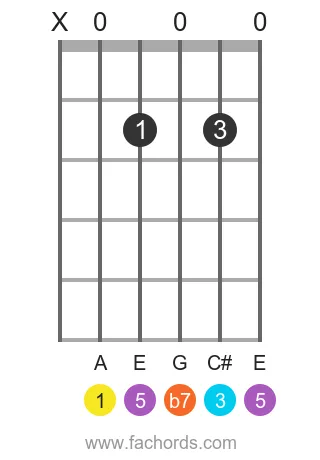
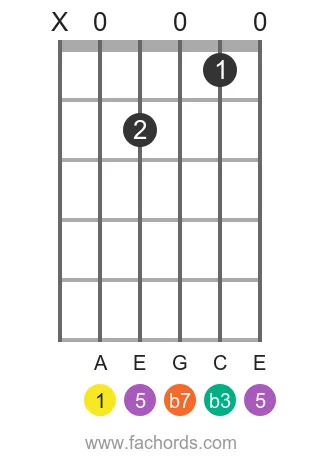
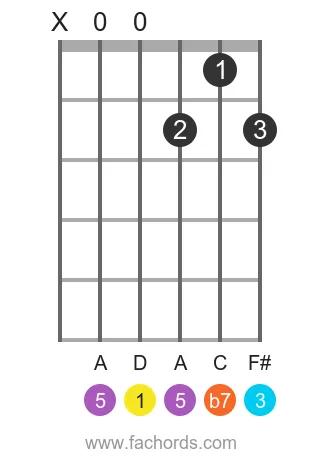
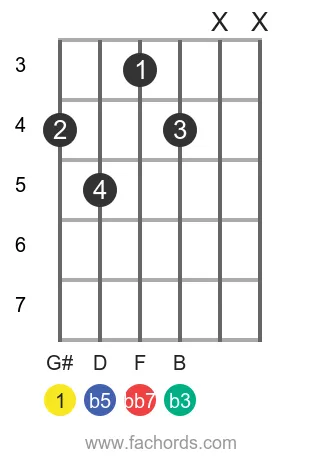
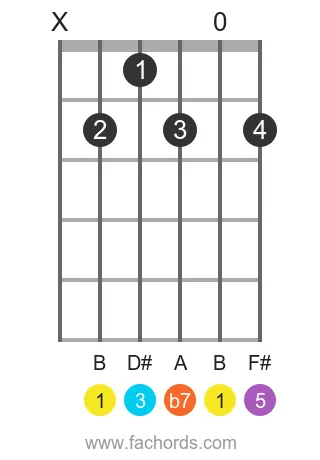
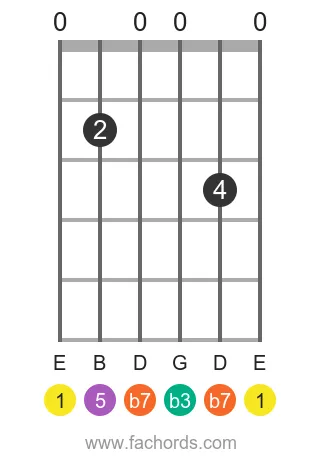
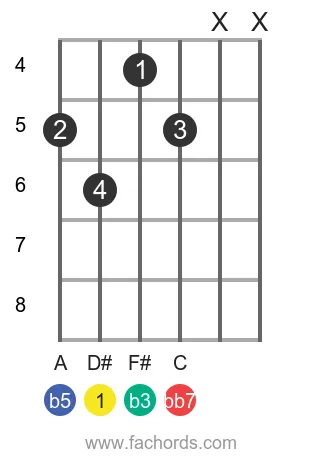
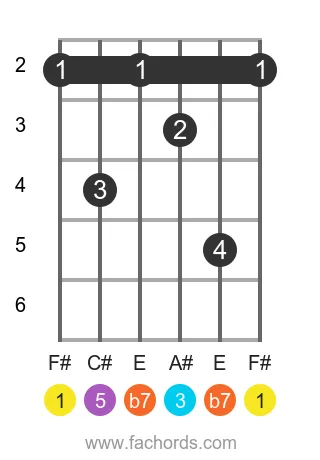
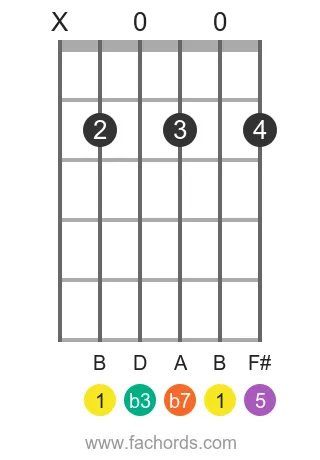
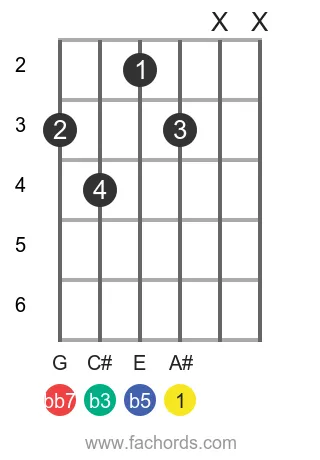
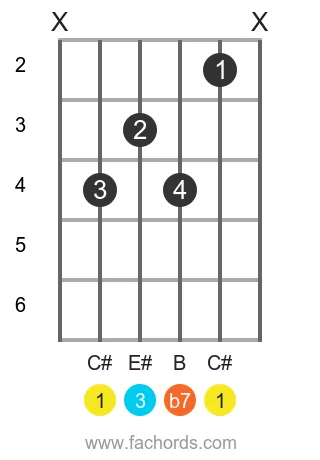
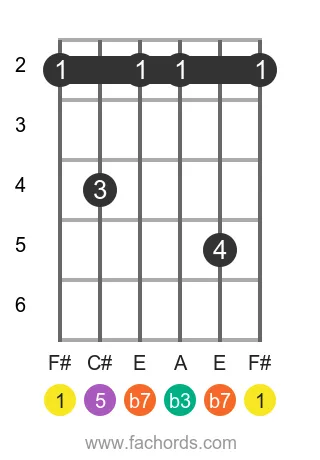
More progressions like this one
- 12-bar minor blues: Cm7 Cm7 Cm7 Cm7 / Fm7 Fm7 Cm7 Cm7 / Ab7 G7 Cm7 G7
- Bird blues: Cmaj7 Bm7b5 E7 / Am7 D7 / Gm7 C7 / F7 Fm7 Bb7 / Em7 A7 / Ebm7 Ab7 / Dm7 G7 / C A7 Dm7 G7
- 8-bar blues: C G F F / C G C G
- 16-bar blues: C C C C / C C C C / F F C C / G F C C

Created by
Giancarlo is a musician (teaching guitar since 2000), software engineer, AI consultant and published researcher
FAQ
How is a jazz blues different from a regular 12-bar blues?
It keeps the 12-bar frame but adds motion: a diminished chord in bar 6, the dominant of ii in bar 8, and a ii-V in bars 9 and 10 in place of the old V to IV.
What does the F#dim7 do in bar 6 of a jazz blues in C?
It is a chromatic step from IV back to I. It shares A, C and Eb with F7, so only one note changes, F rising a half step to F#.
Do Blue Monk and Now's the Time follow the jazz blues exactly?
Not exactly. Both have the diminished chord in bar 6 and the ii-V in bars 9 and 10, but neither plays the VI7 in bar 8 or the V7 in bar 12.
How does the jazz blues read in C and in G?
In C major: C7 F7 C7 C7 F7 F#dim7 C7 A7 Dm7 G7 C7 G7. In G major: G7 C7 G7 G7 C7 C#dim7 G7 E7 Am7 D7 G7 D7.
