E m Guitar Chord
Chord Diagrams, Interactive Fretboard and Chord Theory
E minor guitar chord is also written as Em, Emin, E- or Emi.
Position 1
Open
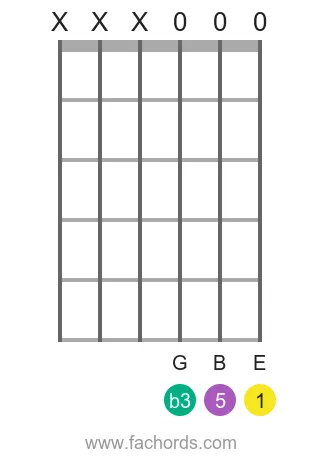
Position 2
Movable
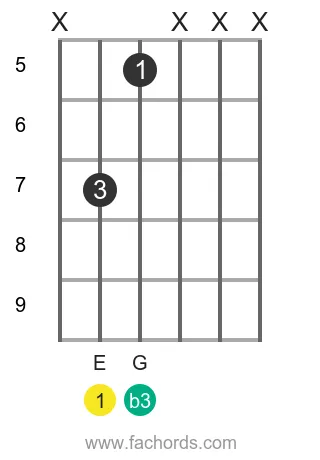
Position 3
Open
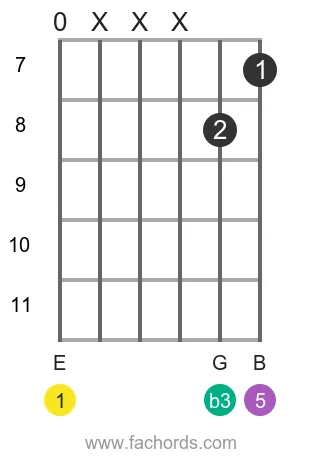
Position 4
Open
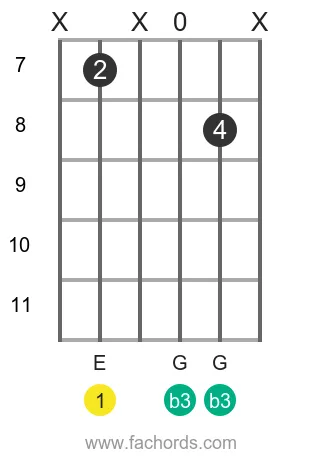
Position 5
Open
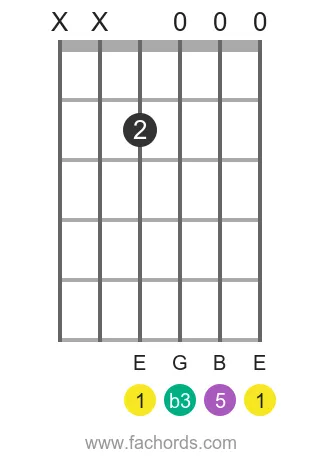
Position 6
Open
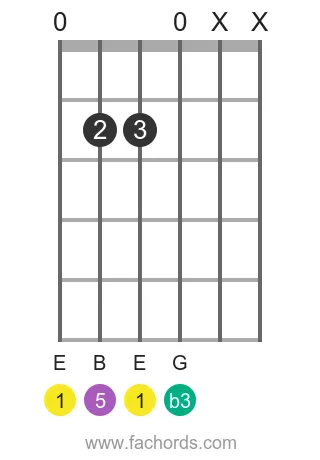
Position 7
Movable
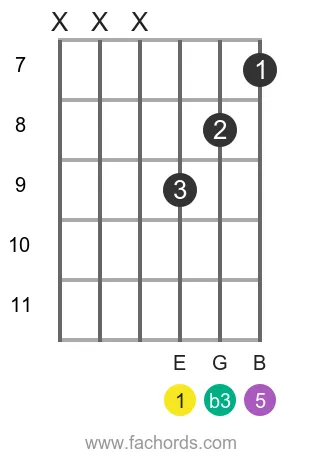
Position 8
Open
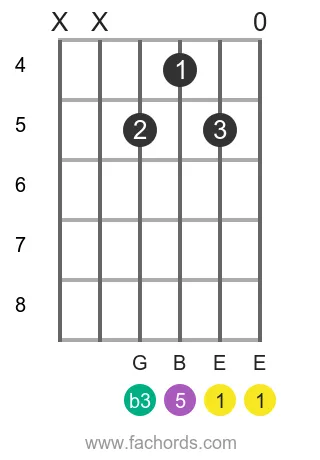
Position 9
Open
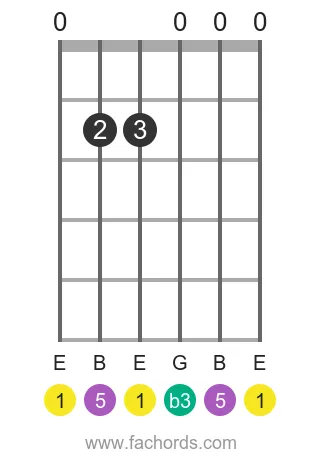
Position 10
Movable
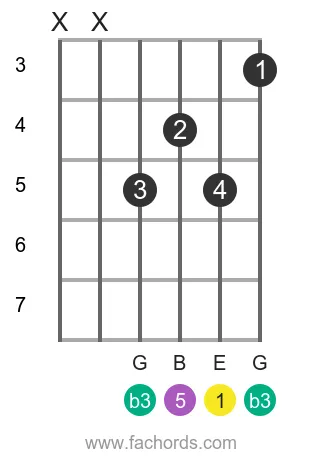
Position 11
Movable
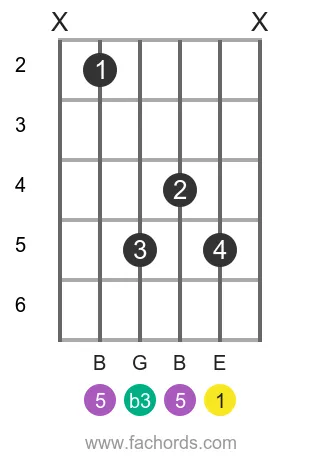
Position 12
Movable
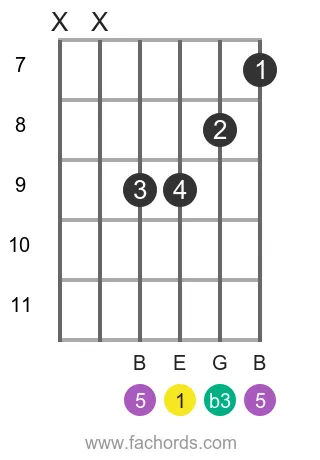
Position 13
Open
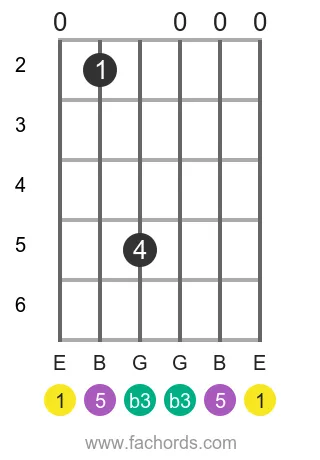
Position 14
Open
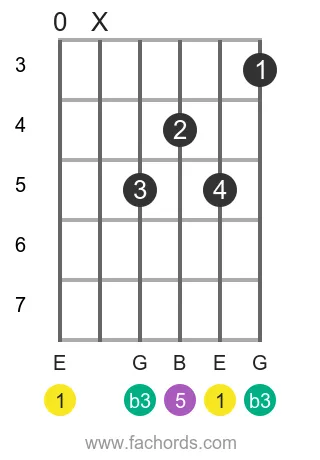
Position 15
Open
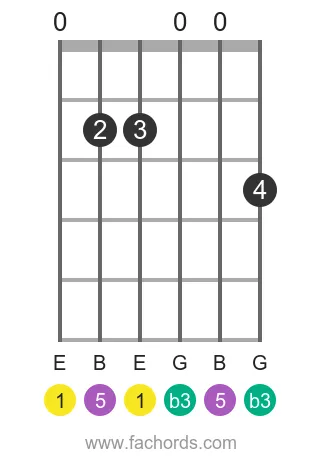
Position 16
Open
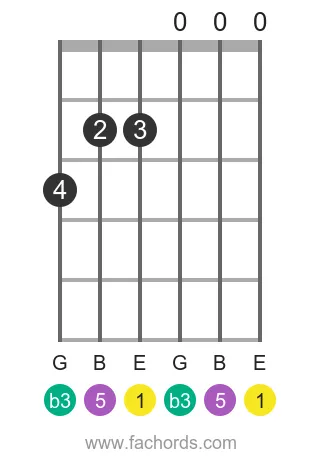
Position 17
Barre
Movable
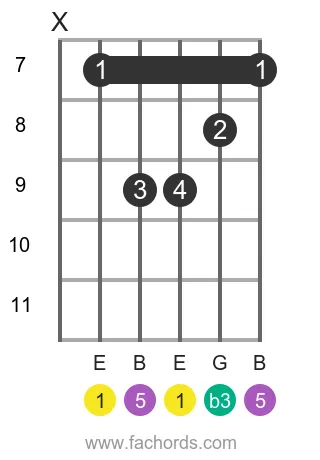
Position 18
Barre
Open
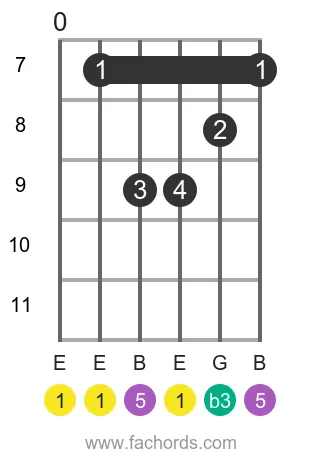
Position 19
Barre
Movable
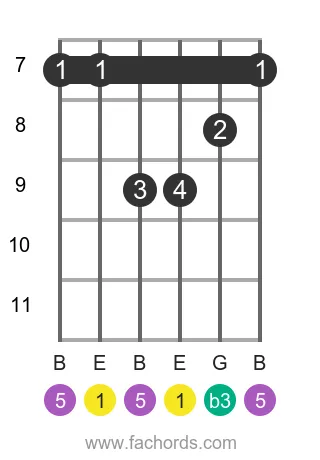
 Find more shapes in our all guitar chords online library. If you
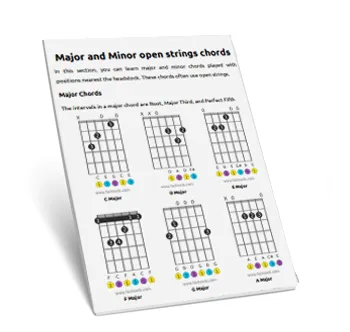
prefer a printable pdf, download
the Free Guitar Chords Chart Pdf
Find more shapes in our all guitar chords online library. If you
prefer a printable pdf, download
the Free Guitar Chords Chart Pdf
You can also use this accessible Em chord page, with written diagram instructions and screen-reader support for blind users.
Master the Em Guitar Chord: Play with Precision
Want a structured chord roadmap instead of jumping between pages?
Go to the full guitar chords tutorial.
The E minor (Em) chord is a cornerstone in countless ballads, rock anthems, and blues progressions, immediately conveying a sense of introspection or melancholy. This essential chord, part of the Minor Chords family, is built from the notes E, G, and B, defined by the intervals 1 (Root), b3 (Minor Third), and 5 (Perfect Fifth). Dive into its expressive potential on our interactive virtual fretboard, where you can explore its sound with real-time mic feedback ensuring every note you play is perfectly accurate. Use our chord/arpeggio playback feature to hear the Em chord in action and integrate it seamlessly into your playing.
The minor quality of the Em chord is crucial for adding depth and emotional color to your compositions. To truly harness this, it's vital to grasp the underlying principles of chord construction. Understanding how intervals like the minor third shape a chord's feeling will elevate your playing beyond memorized shapes. Exploring how chords connect in sequences can transform your songwriting; for instance, learning to smoothly improve chords change will allow you to craft more compelling musical narratives.
Scroll down to find comprehensive chord diagrams for the Em chord, presented from the simplest voicings to more complex arrangements, enabling you to play across the fretboard in various keys. While theory provides a foundational understanding, we encourage you to first grab your guitar and explore the sounds and feelings of this chord. Experiment with our interactive tools, create your own progressions, and start weaving the Em chord into your songs. Play before you over-analyze; the true understanding of music comes through the hands.
Notes that compose the E m chord:
Chord Structure:
Play This Chord With Other Roots
C m | D m | E m | F m | G m | A m | B m | C#m | D#m | F#m | G#m | A#m | Abm | Bbm | Dbm | Ebm | Gbm

Created by
Giancarlo is a musician (teaching guitar since 2000), software engineer, AI consultant and published researcher
FAQ
What are the specific notes that make up the E minor (Em) chord?
The E minor chord is constructed from three distinct notes: E, G, and B. These notes represent the root, minor third, and perfect fifth of the chord, respectively.
What do the intervals 1, b3, and 5 signify for the Em chord?
These numbers represent the musical intervals from the root note (E). '1' is the Root (E), 'b3' is the Minor Third (G), and '5' is the Perfect Fifth (B). These intervals define the unique harmonic structure and sound of the E minor chord.
How does the 'b3' (minor third) interval determine that the Em chord is a minor chord?
The presence of the 'b3' (minor third) interval is the defining characteristic that gives any chord its minor quality. In the Em chord, the G note (the minor third relative to E) creates the melancholic or 'minor' sound, distinguishing it from a major chord.
After I've learned to play the Em chord, what's the best way to start using it in actual music?
Once you're comfortable playing the Em chord, the next step is to explore common chord progressions. This teaches you how the Em chord fits with other chords to form musical phrases and enables you to start playing and understanding the structure of songs.