Major Line Cliche: The Falling Inner Voice of Something and Hey Jude
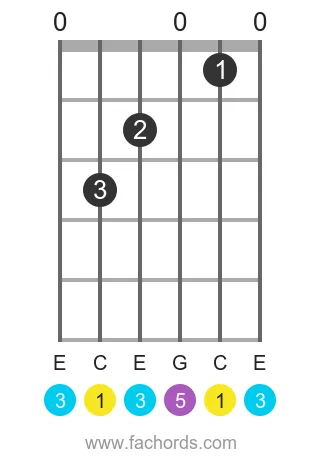
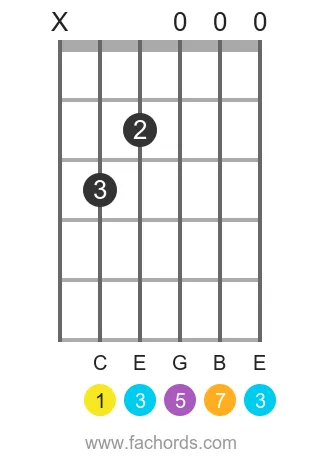
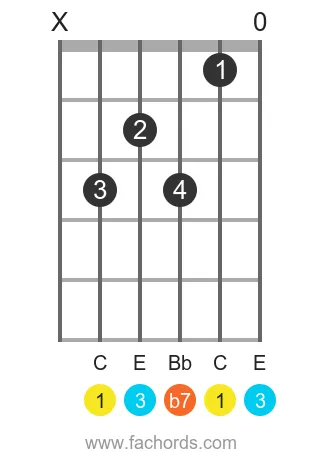
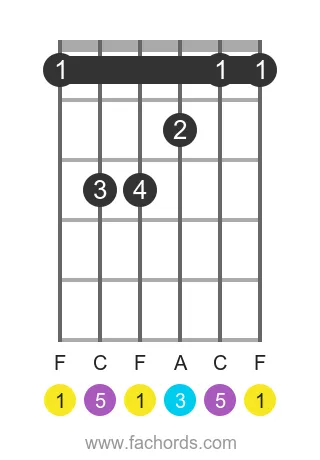
One string, three frets, and the chord never really changes. Play an open D, then Dmaj7, then D7, and let the G close it: that's D Dmaj7 D7 G, the major line cliché, or I-Imaj7-I7-IV. Something by The Beatles has it in the verse in the key of C, as C Cmaj7 C7 F.
In the Nashville Number System you write it 1 1(maj7) 1(7) 4. Everything comes from the major scale except for one chromatic note, so in the key of C the only outsider is C7, with its Bb. You can hear it in all five keys and come back for the fingering.
Follow String 2 All the Way Down
In a line cliché the tonic chord stays put while one inner voice moves. Here that voice falls by half steps: from the root, to the major seventh, to the flat seventh. In the key of D it all happens on one string:
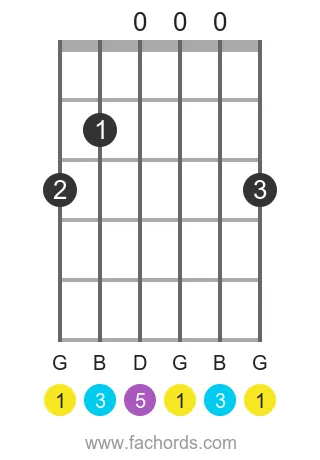
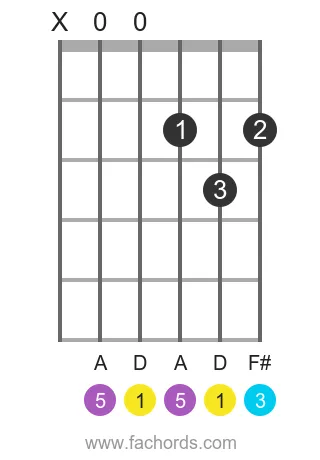
- D: fret 3 of string 2, the note D.
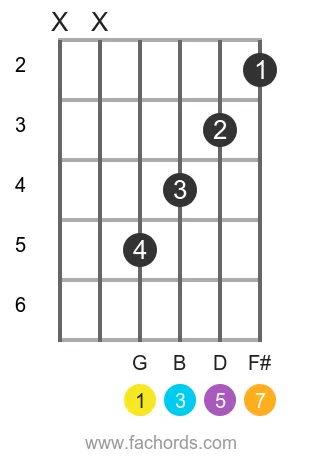
- Dmaj7: fret 2, the note C#.
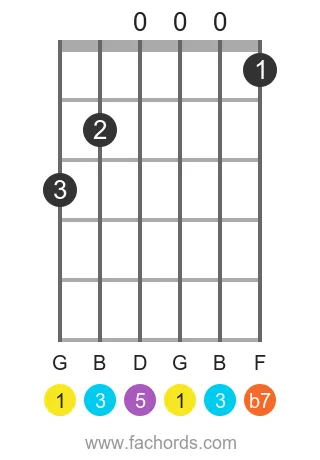
- D7: fret 1, the note C.
- G: the open string, B, if you play your G with string 2 open.
So the line goes one step further and lands on the third of the IV. Play it slowly at 60 bpm, one bar per chord, and let that string ring over the others. Then pick just string 2 and sing along.
That's voice leading you can see. The bass stays on the root for the first three chords, and all the movement sits in the middle of the sound.
Why D7 Slides Into G
Dmaj7 is a chord of the key. D7 isn't: that C natural turns it into V7 of IV, so a chord that started as a calm tonic now leans toward G. In the key of C the same thing happens with the Bb in C7, which points at F.
That's why the move to IV sounds so smooth. You don't change the harmony and then arrive. The line does the work one half step at a time, and it has a tender, gently moving sound. Try skipping straight from D to G, then play the whole line, and compare.
The Minor Twin
The same idea exists on a minor chord. The minor line cliché keeps a minor tonic and walks a line down from its root.
Capo Shapes and a Beatles Pair
Four songs here, and two of them are written as capo shapes, so read the Chords column with care.
| Song | Artist | Section | Chords | Key |
|---|---|---|---|---|
| Something | The Beatles | verse | C Cmaj7 C7 F | C major |
| Bridge Over Troubled Water | Simon & Garfunkel | verse | C Cmaj7 C7 F with capo 3, sounding Eb Ebmaj7 Eb7 Ab | Eb major |
| Can't Take My Eyes Off You | Frankie Valli | verse after the key change | F Fmaj7 F7 Bb with capo 2, sounding G Gmaj7 G7 C | G major |
| Hey Jude | The Beatles | bridge (And anytime you feel the pain), labelled chorus on UG | F Fmaj7 F7 Bb | F major |
- Something is the plain case: C Cmaj7 C7 F in the verse.
- Hey Jude uses it in the bridge ("And anytime you feel the pain"), as F Fmaj7 F7 Bb. Some charts label that part the chorus.
- Bridge Over Troubled Water plays the C shapes with a capo on the third fret, sounding Eb Ebmaj7 Eb7 Ab.
- Can't Take My Eyes Off You plays F Fmaj7 F7 Bb with a capo on the second fret, sounding G Gmaj7 G7 C, in the verse after the key change.
When you've got the line in D, move it to the key of the song you want to learn, and listen for that falling voice in all four.
Major Line Cliché: Chords and Audio in C, G, D, A and E
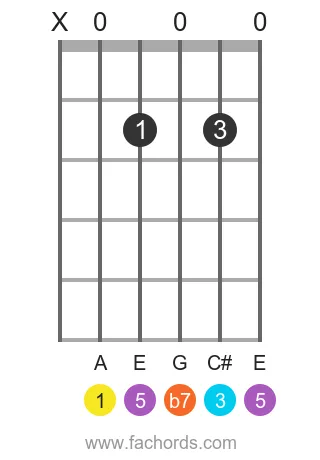
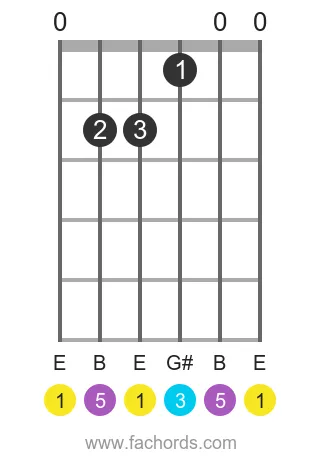
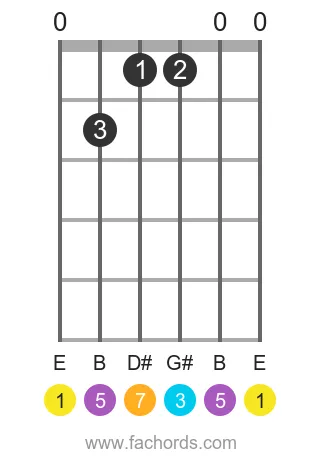
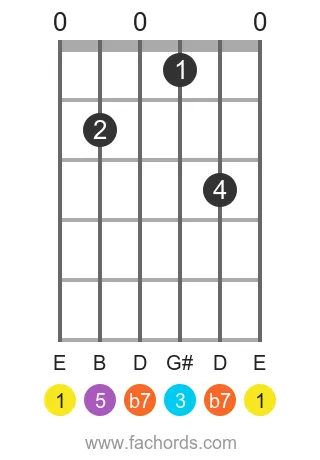
Press play to hear each key. The diagrams show the shapes used in the audio, and every chord links to its full page.
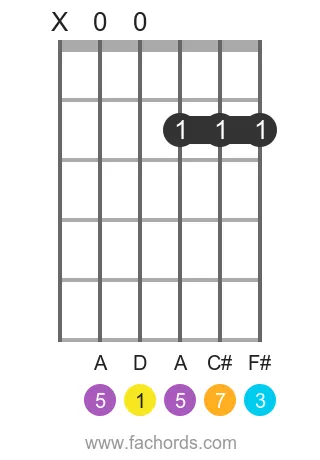
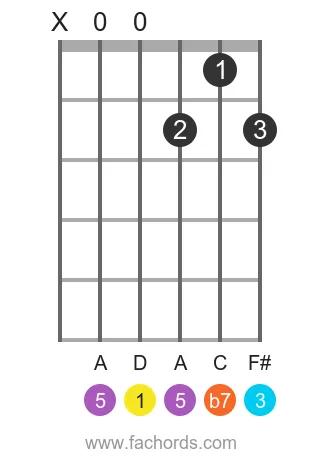
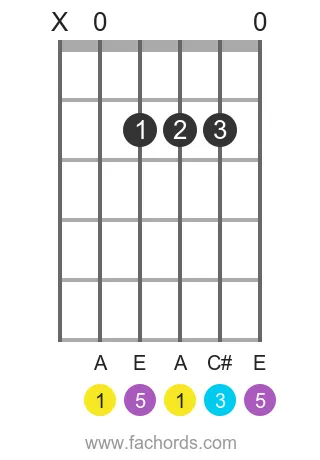
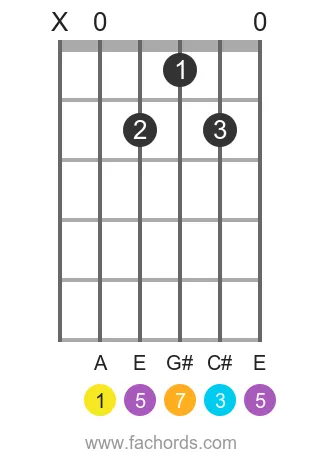
More progressions like this one
- bIII-V7 cadence: Eb G7 C
- Mixolydian I-v-IV: C Gm F
- I-bVII-IV: C Bb F
- I-II-IV-I: C D F C

Created by
Giancarlo is a musician (teaching guitar since 2000), software engineer, AI consultant and published researcher
FAQ
How does the major line cliche transpose to other keys?
In C major: C Cmaj7 C7 F. In G major: G Gmaj7 G7 C. In D major: D Dmaj7 D7 G. In A major: A Amaj7 A7 D. In E major: E Emaj7 E7 A.
What is a line cliche in a chord progression?
The tonic chord stays put while one inner voice moves. In the major version that voice falls by half steps from the root to the major seventh to the flat seventh: C, B, Bb in the key of C.
Why does C7 lead so smoothly to F?
The flat seventh, Bb, turns C into V7 of IV. So the tonic chord starts leaning toward F, and the falling line slides into the IV.
How do I play the Something line in the key of D?
The open D, Dmaj7 and D7 shapes walk down string 2 from fret 3 to fret 2 to fret 1, and a G with string 2 open finishes the line on B. Something itself is in C.
