Chords in the Key of E Major
E, F#m, G#m, A, B, C#m and D#dim: the shapes, the sound and three progressions
Ask a blues or rock guitarist about E and they will play you an open E chord with the low string ringing. The chords in the key of E major are E, F#m, G#m, A, B, C#m and D#dim.
With four sharps (F#, C#, G# and D#) the key looks scary on paper, but on guitar its I, IV and V chords, E, A and B, all sit in the first few frets.
E Major Chords, Numerals and Seventh Chords
One chord on each note of the E major scale, E F# G# A B C# D#.
| Numeral | Chord | Notes | 7th chord | Role |
|---|---|---|---|---|
| I | E | E G# B | Emaj7 | Tonic: the home chord |
| ii | F#m | F# A C# | F#m7 | Leads to the V chord |
| iii | G#m | G# B D# | G#m7 | Shares two notes with I |
| IV | A | A C# E | Amaj7 | Moves away from home |
| V | B | B D# F# | B7 | Pulls back to I |
| vi | C#m | C# E G# | C#m7 | Relative minor, a softer home |
| vii° | D#dim | D# F# A | D#m7b5 | Tense, leans into I |
B7 (x21202) is the V7 of E, and an open chord: many players use it in place of the B barre chord in every song in E.
How to Play the Chords in E
Only E and A are open in their standard shapes. F#m, G#m, B and C#m are barre chords, and D#dim is a small shape on the top four strings.
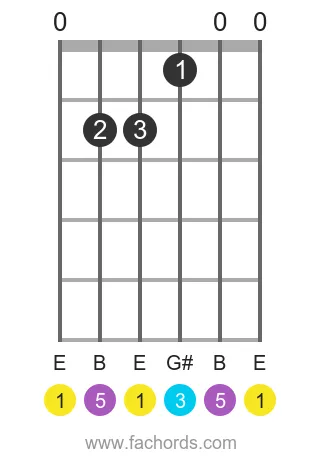
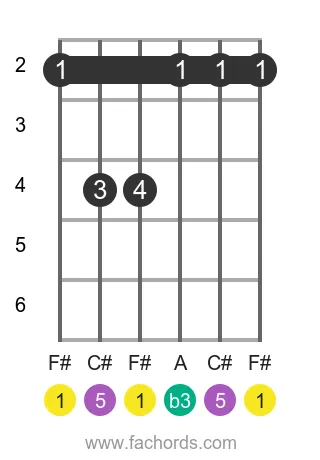

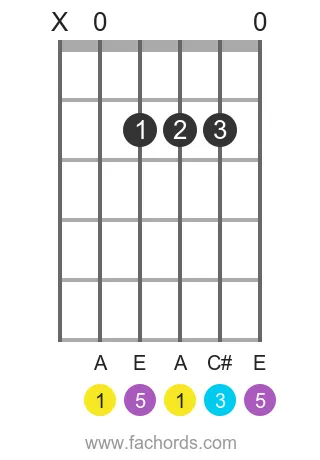
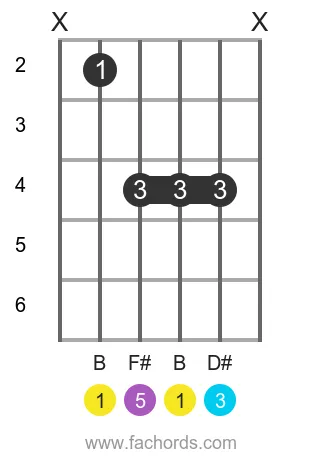
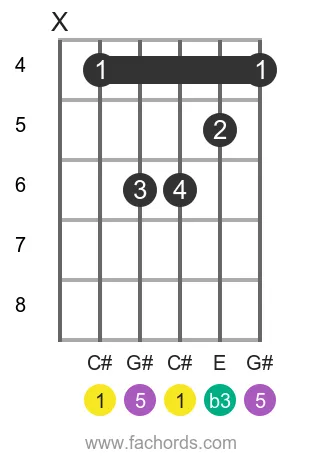

E - A - B - C#m in One Loop
I, IV, V and vi in E. The open low E string at the start of each loop is what makes this key sound so big on guitar.
Progressions in E Major
A blues and rock classic, an emotional pop loop and a driving rock pattern.
Three Chord Progression: E - A - B
Blues, rockabilly and punk all live here. Use B7 for the V chord when the barre slows you down, and try the 12-bar blues in E next.
Komuro Progression: C#m - A - B - E
Named after the Japanese producer Tetsuya Komuro, who used it in hit after hit. Starting on C#m and resolving to E gives it a big emotional lift at the end of each loop.
Hear it in five keys, with songs that use it
I-V-IV-V: E - B - A - B
A driving rock pattern, with the B chord coming back every other bar. Keep the strumming steady and accent the first beat of each bar.
Playing in E: Tips and Shortcuts
- The open high E string is a note of the key. Leave it ringing over A, B and C#m shapes played higher on the neck for a shimmering, open sound.
- Capo shortcuts: capo 2 with D shapes, or capo 4 with C shapes, both put you in E major with open fingerings.
- C# minor is the relative minor of E major, so the C# minor scale shares its notes with the E major scale.
Useful Links
- C# minor scale, the relative minor
- E major scale on the fretboard
- How to find the key of a song
- Circle of fifths, to see how the keys connect
- Transpose chords to another key
- All chord progressions
Chords in other keys: E minor · G major · C major · D major · F major · A minor · A major

Created by
Giancarlo is a musician (teaching guitar since 2000), software engineer, AI consultant and published researcher
FAQ
What chords are in the key of E major?
E (I), F#m (ii), G#m (iii), A (IV), B (V), C#m (vi) and D#dim (vii°).
Can I play B7 instead of B in the key of E?
Yes. B7 is the V7 chord of E major, it is an open chord (x21202), and it resolves to E even more strongly than B.
What is the relative minor of E major?
C# minor. Both keys have four sharps: F#, C#, G# and D#.
How do I play in E major with a capo?
Put the capo on the 2nd fret and play D, G, A and Bm shapes, or on the 4th fret and play C, F, G and Am shapes.