Chords in D Major
D, Em, F#m, G, A, Bm and C#dim on guitar, with the shapes, the sound and three progressions to start with
D major is a bright, ringing key on guitar. The open D and A strings are both notes of the D chord, and the key leaves plenty of room for hammer-ons and suspended chords. The chords in D major are D, Em, F#m, G, A, Bm and C#dim.
The key has two sharps, F# and C#, which turn the iii chord into F#m and the vii chord into C#dim.
D Major Chord Chart
The chords come from the D major scale, D E F# G A B C#. Here they are with their roman numerals and their four-note versions.
| Numeral | Chord | Notes | 7th chord | Role |
|---|---|---|---|---|
| I | D | D F# A | Dmaj7 | Tonic: the home chord |
| ii | Em | E G B | Em7 | Leads to the V chord |
| iii | F#m | F# A C# | F#m7 | Shares two notes with I |
| IV | G | G B D | Gmaj7 | Moves away from home |
| V | A | A C# E | A7 | Pulls back to I |
| vi | Bm | B D F# | Bm7 | Relative minor, a softer home |
| vii° | C#dim | C# E G | C#m7b5 | Tense, leans into I |
Dmaj7 (xx0222) and Gmaj7 are easy ways to make the key sound softer; A7 (x02020) is the chord to use when you want a strong return to D.
D Major Chords on the Fretboard
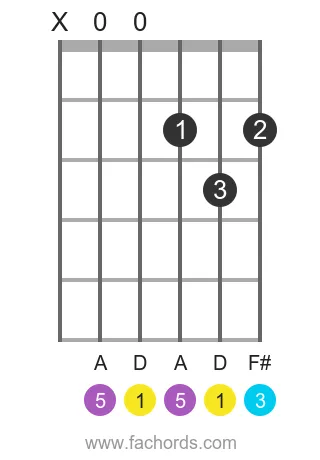
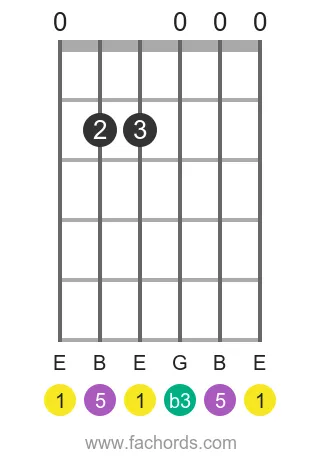
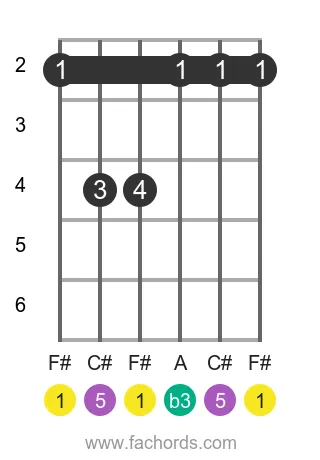
D, Em, G and A are open chords. F#m and Bm are barre chords in their standard shape (there is a shortcut in the tips below), and C#dim is a compact four-string shape.
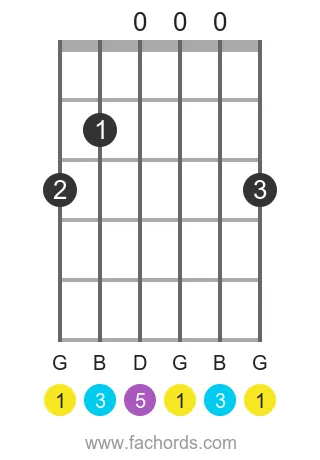
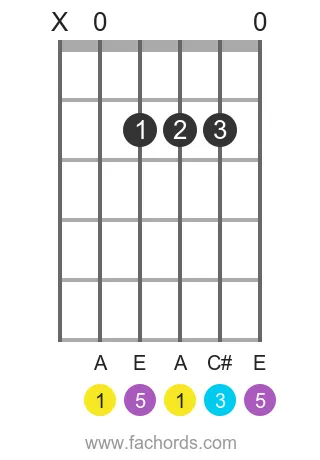
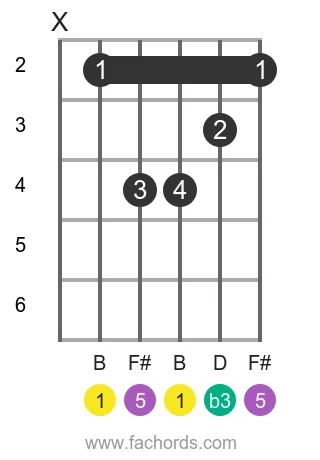
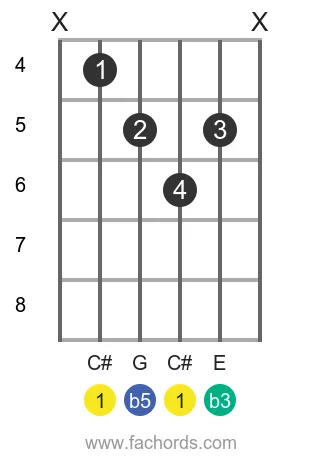
D - G - A - Bm: The Key in Four Chords
Press play to hear I, IV, V and vi in D. The Bm at the end is the relative minor, and it makes the loop want to start again.
Progressions in D to Start With
Two pop loops built on the same four chords and one rock-and-roll riff progression.
Axis Chord Progression: D - A - Bm - G
The most common loop in modern pop, in one of its most guitar-friendly keys. In D the four chords sit right under your fingers, with Bm as the only barre.
Singer-Songwriter Chord Progression: Bm - G - D - A
The same four chords, starting on Bm. Beginning on the minor chord makes the loop darker, and it is the version you hear in a lot of emotional pop choruses.
Hear it in five keys, with songs that use it
Wild Thing Chord Progression: D - G - A - G
D to G to A and back to G. Play it with short, punchy strums and let the open D string drone underneath.
Making the Most of D Major
- Dsus2 (xx0230) and Dsus4 (xx0233) are one finger away from D, and the same idea works on A (Asus2 x02200, Asus4 x02230). Moving between them is the sound of a lot of acoustic rock.
- Shortcut for F#m: play only the top four strings (xx4222). It keeps the F# in the bass and skips the full barre.
- Try drop D tuning: lower the low E string to D and you get a deep root under D, G and A.
- The relative minor of D major is B minor, so the B minor scale has exactly the same notes as the D major scale.
Related Pages
- B minor scale, the relative minor
- D major scale on the fretboard
- How to find the key of a song
- Circle of fifths, to see how the keys connect
- Transpose chords to another key
- All chord progressions
Chords in other keys: E minor · G major · C major · F major · A minor · A major · E major

Created by
Giancarlo is a musician (teaching guitar since 2000), software engineer, AI consultant and published researcher
FAQ
What chords are in D major?
D (I), Em (ii), F#m (iii), G (IV), A (V), Bm (vi) and C#dim (vii°). The seventh chords are Dmaj7, Em7, F#m7, Gmaj7, A7, Bm7 and C#m7b5.
What are the I, IV and V chords in D?
D, G and A. All three are open chords, which is why D is such a popular key for strummed songs.
What is the relative minor of D major?
B minor. It has the same two sharps, F# and C#.
Why is there a C#dim chord in D major and not a C chord?
The D major scale has C#, not C. The triad built on C# (C# E G) has a minor third and a flat fifth, so it is diminished.