Amaj Guitar Chord | Play, Hear and Practice Interactively
Want a structured chord roadmap instead of jumping between pages?
Download the step-by-step Guitar Chord Ebook
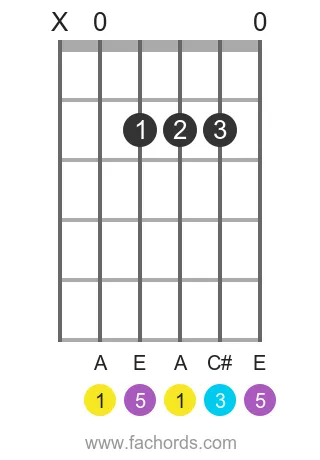
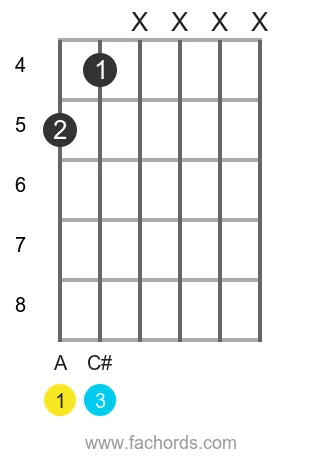
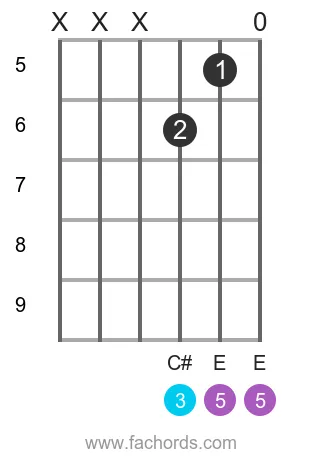
The A Major (A maj) chord, a fundamental member of the Major Chords family, is built from the notes A, C#, and E, corresponding to the intervals Root (1), Major Third (3), and Perfect Fifth (5). Unlock its potential with the interactive fretboard tool at the top of this page. You can visualize every fingering, listen to the chord played as a strum or arpeggio, and get instant guidance with real-time microphone feedback to ensure your playing is spot-on.
Understanding the intervals that form the A maj chord is crucial for mastering it and unlocking countless musical possibilities. This knowledge will also help you build other chords and understand how they function in music. Dive deeper into how chords are constructed with our Chord Construction tutorial. If you're encountering challenges with smoothly switching between chords, our tips on how to Improve Chords Change can help. Many shapes for A Major involve barre techniques; perfect them with our Guitar Bar Chords guide. You can also explore different ways to voice this chord by understanding Understanding Chord Inversions.
Further down this page, you'll discover a collection of A Major chord diagrams, presented from the simplest open positions to more advanced movable shapes, alongside in-depth music theory explanations, popular songs that feature this chord, and the various musical keys where it commonly appears. Before you scroll, take a moment to engage with the interactive tool above. Experiment with different fingerings, listen to how the chord should sound, and use the microphone feedback to refine your technique. This hands-on practice is the quickest way to integrate the A maj chord into your playing repertoire.
Notes in the A maj chord:
Chord formula for the Major chord:
How To Play The A Major chord on guitar
Position 1
Movable
Position 2
Open
Position 3
Movable
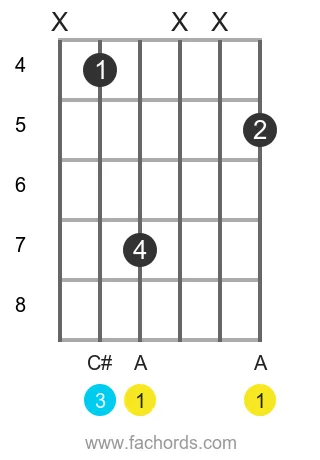
Position 4
Movable
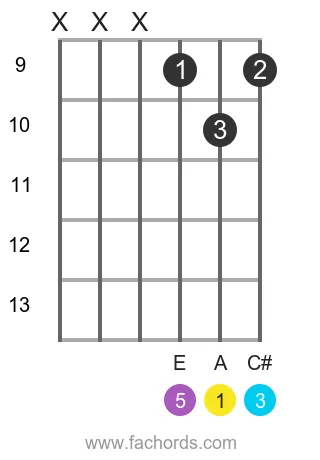
Position 5
Movable
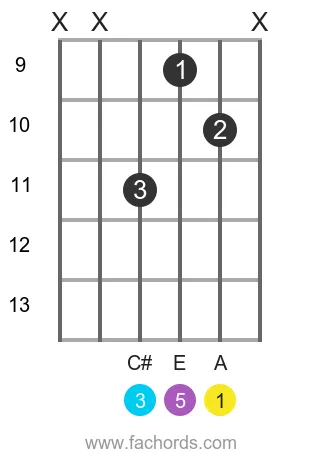
Position 6
Movable
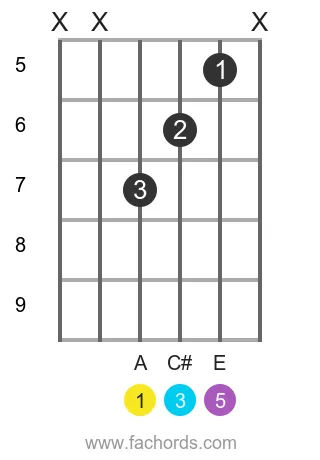
Position 7
Open
Position 8
Open
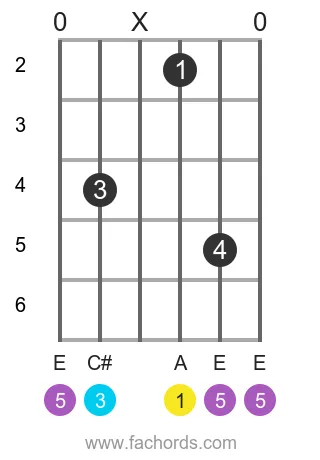
Position 9
Open
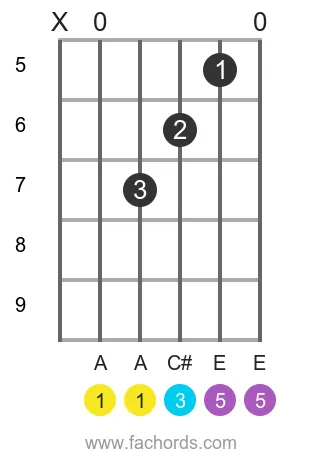
Position 10
Open
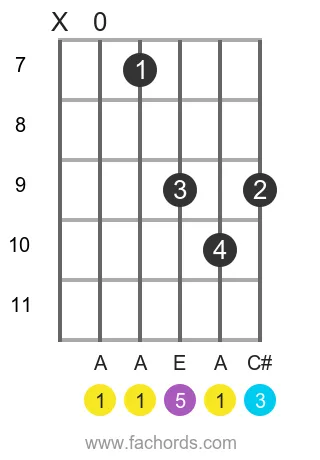
Position 11
Barre
Open
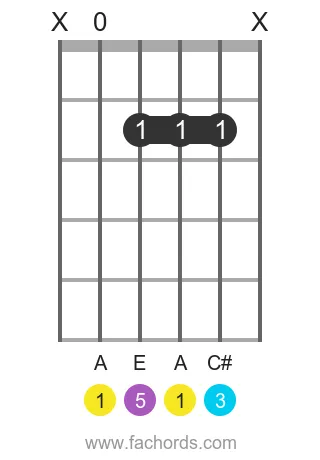
Position 12
Barre
Movable
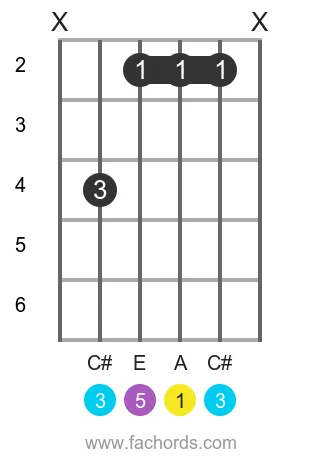
Position 13
Barre
Open
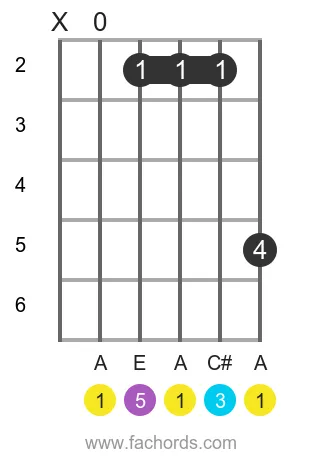
Position 14
Barre
Open
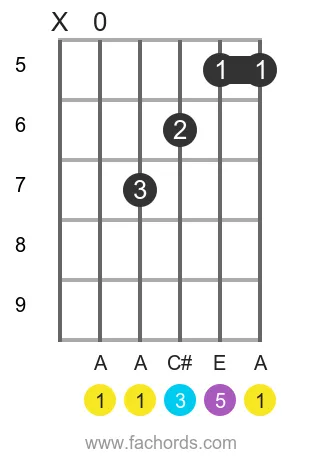
Position 15
Barre
Movable
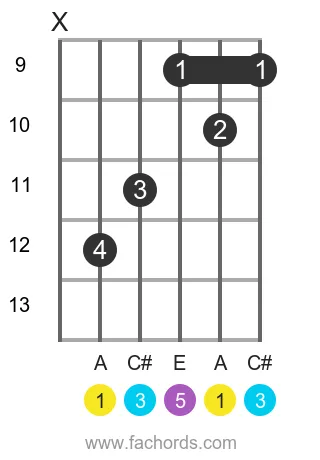
Position 16
Barre
Movable
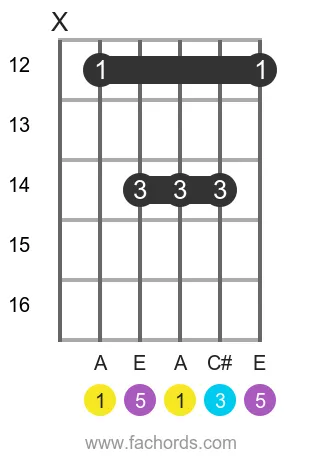
Position 17
Barre
Movable
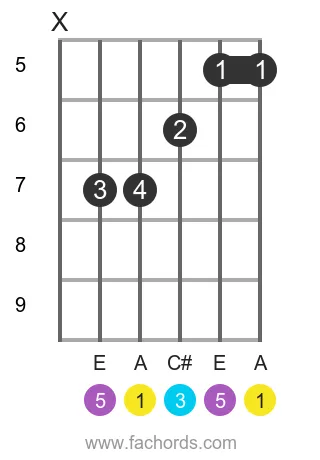
Position 18
Barre
Movable
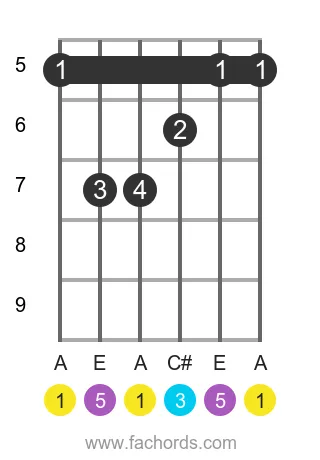
 Find more shapes in our all guitar chords online library. If you
prefer a printable pdf, download
the Free Guitar Chords Chart Pdf
Find more shapes in our all guitar chords online library. If you
prefer a printable pdf, download
the Free Guitar Chords Chart Pdf
You can also use this accessible Amaj chord page, with written diagram instructions and screen-reader support for blind users.
FAQ
What notes make up an A Major chord?
The A Major chord is composed of three specific notes: A, C#, and E. These notes are the fundamental building blocks that give the chord its unique sound.
What are the core intervals that define an A Major chord?
An A Major chord is built using the intervals 1, 3, and 5. These represent the root note, the major third above the root, and the perfect fifth above the root, respectively.
Why is this chord called an 'A Major' chord?
It's called an 'A' Major chord because its root note, or the foundational note from which all other notes and intervals are measured, is A. The 'Major' designation comes from the specific characteristic sound created by including a major third interval (C#) in its construction, classifying it within the Major Chords family.
How do the intervals 1, 3, and 5 relate to the notes A, C#, and E in an A Major chord?
For the A Major chord, the '1' interval directly corresponds to the root note A. The '3' interval refers to the major third above A, which is C#. The '5' interval represents the perfect fifth above A, which is E. These intervals establish the precise pitches for the chord.
What gives the A Major chord its 'beautiful' and 'uplifting' sound?
The A Major chord's 'beautiful' and 'uplifting' quality is characteristic of major chords in general. This bright, positive sound is primarily attributed to the presence of the major third interval (C#) in its structure, which resolves pleasantly with the root and fifth.