A7 Guitar Chord | Play, Hear and Practice Interactively
Want a structured chord roadmap instead of jumping between pages?
Go to the full guitar chords tutorial.
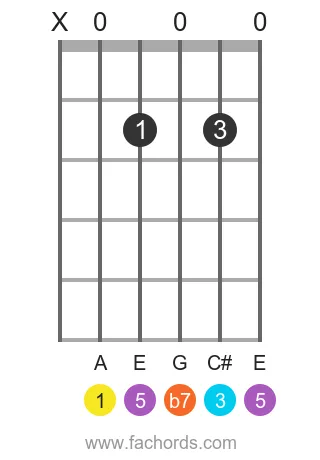
Take an A major triad, add the minor seventh G, and you have the A7 chord, A dominant seventh: A, C#, E and G.
Open strings feature in 12 of the 17 voicings, and two are barre shapes. A7 is the V7 chord of D major, so a move from A7 to D is a standard dominant-to-tonic step. The A Mixolydian scale covers every chord tone, and how chords are built explains why the seventh is a minor one.
Set a tempo, start the drum loop in the practice tool at the top and cycle A7 with your other chords.
A dominant 7th guitar chord is also written as A7, Adom7 or Adom.
A 7 chord Notes:
.
Dominant chords are the main chords used in blues progressions.
Formula of the Dominant Seventh chord:
Formula: 1 3 5 b7
A 7 Guitar Chord Diagrams
Position 1 Open
Finger Positions
- Mute the low E string
- Let the A string play without pressing any fret
- Let the G string play without pressing any fret
- Let the high E string play without pressing any fret
- Place your index finger (1) on the fret 2 of the D string
- Place your ring finger (3) on the fret 2 of the B string
Position 2 Barre Movable
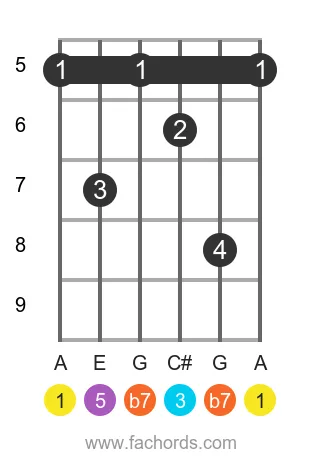
Finger Positions
- Place your index finger (1) on the fret 5 of the low E, D and high E strings at the same time
- Place your middle finger (2) on the fret 6 of the G string
- Place your ring finger (3) on the fret 7 of the A string
- Place your pinky finger (4) on the fret 8 of the B string
Position 3 Open
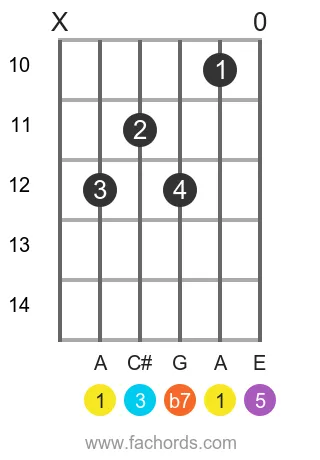
Finger Positions
- Mute the low E string
- Let the high E string play without pressing any fret
- Place your index finger (1) on the fret 10 of the B string
- Place your middle finger (2) on the fret 11 of the D string
- Place your ring finger (3) on the fret 12 of the A string
- Place your pinky finger (4) on the fret 12 of the G string
Position 4 Barre Movable
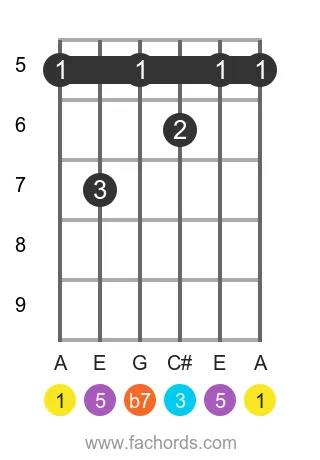
Finger Positions
- Place your index finger (1) on the fret 5 of the low E, D, B and high E strings at the same time
- Place your middle finger (2) on the fret 6 of the G string
- Place your ring finger (3) on the fret 7 of the A string
Position 5 Open
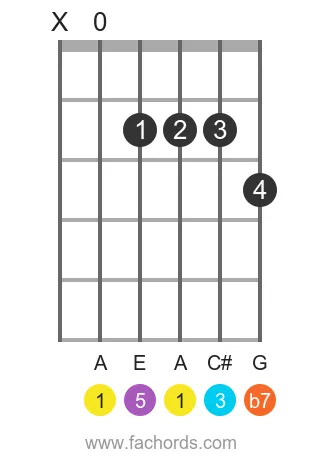
Finger Positions
- Mute the low E string
- Let the A string play without pressing any fret
- Place your index finger (1) on the fret 2 of the D string
- Place your middle finger (2) on the fret 2 of the G string
- Place your ring finger (3) on the fret 2 of the B string
- Place your pinky finger (4) on the fret 3 of the high E string
Position 6 Open
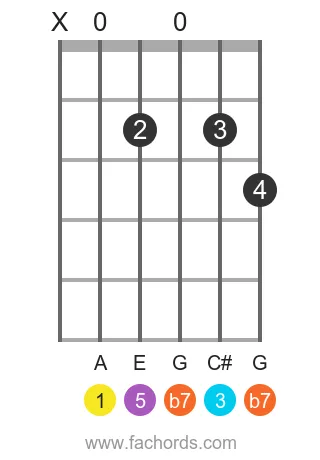
Finger Positions
- Mute the low E string
- Let the A string play without pressing any fret
- Let the G string play without pressing any fret
- Place your middle finger (2) on the fret 2 of the D string
- Place your ring finger (3) on the fret 2 of the B string
- Place your pinky finger (4) on the fret 3 of the high E string
Position 7 Open
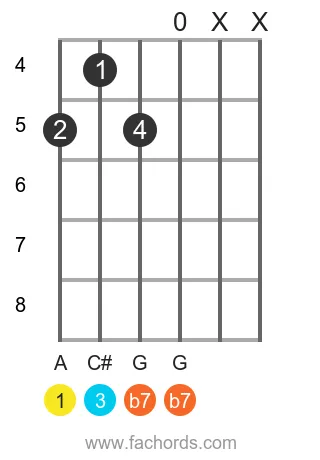
Finger Positions
- Let the G string play without pressing any fret
- Mute the B string
- Mute the high E string
- Place your index finger (1) on the fret 4 of the A string
- Place your middle finger (2) on the fret 5 of the low E string
- Place your pinky finger (4) on the fret 5 of the D string
Position 8 Open
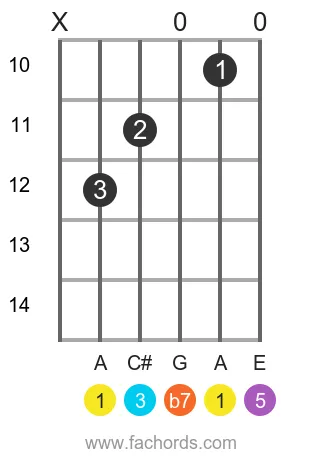
Finger Positions
- Mute the low E string
- Let the G string play without pressing any fret
- Let the high E string play without pressing any fret
- Place your index finger (1) on the fret 10 of the B string
- Place your middle finger (2) on the fret 11 of the D string
- Place your ring finger (3) on the fret 12 of the A string
Position 9 Open
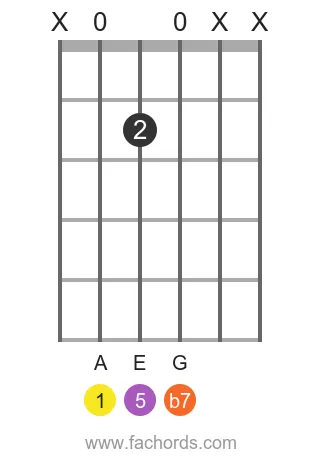
Finger Positions
- Mute the low E string
- Let the A string play without pressing any fret
- Let the G string play without pressing any fret
- Mute the B string
- Mute the high E string
- Place your middle finger (2) on the fret 2 of the D string
Position 10 Movable
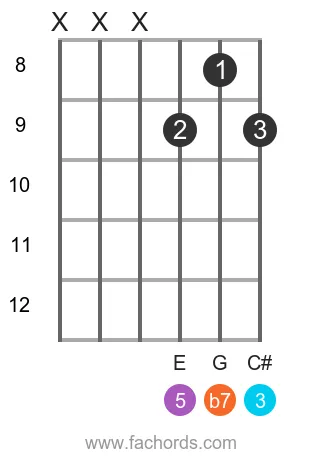
Finger Positions
- Mute the low E string
- Mute the A string
- Mute the D string
- Place your index finger (1) on the fret 8 of the B string
- Place your middle finger (2) on the fret 9 of the G string
- Place your ring finger (3) on the fret 9 of the high E string
Position 11 Open
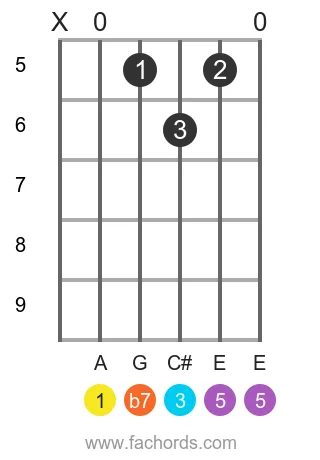
Finger Positions
- Mute the low E string
- Let the A string play without pressing any fret
- Let the high E string play without pressing any fret
- Place your index finger (1) on the fret 5 of the D string
- Place your middle finger (2) on the fret 5 of the B string
- Place your ring finger (3) on the fret 6 of the G string
Position 12 Movable
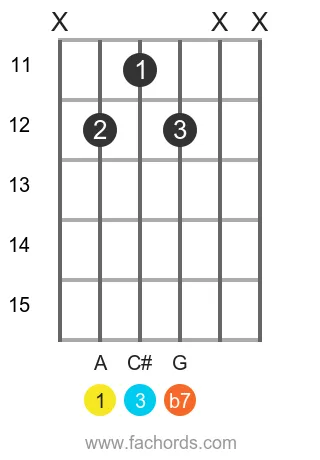
Finger Positions
- Mute the low E string
- Mute the B string
- Mute the high E string
- Place your index finger (1) on the fret 11 of the D string
- Place your middle finger (2) on the fret 12 of the A string
- Place your ring finger (3) on the fret 12 of the G string
Position 13 Open
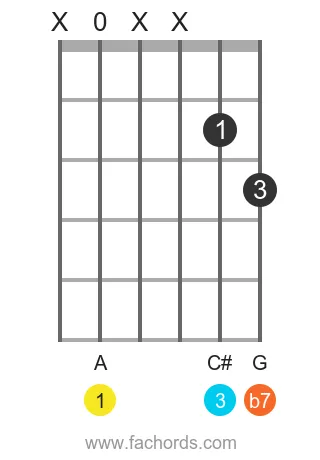
Finger Positions
- Mute the low E string
- Let the A string play without pressing any fret
- Mute the D string
- Mute the G string
- Place your index finger (1) on the fret 2 of the B string
- Place your ring finger (3) on the fret 3 of the high E string
Position 14 Movable
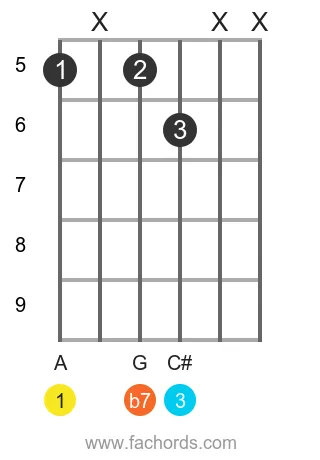
Finger Positions
- Mute the A string
- Mute the B string
- Mute the high E string
- Place your index finger (1) on the fret 5 of the low E string
- Place your middle finger (2) on the fret 5 of the D string
- Place your ring finger (3) on the fret 6 of the G string
Position 15 Open
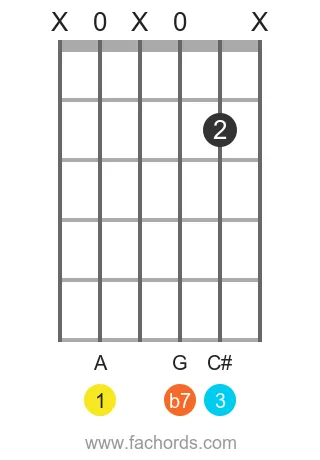
Finger Positions
- Mute the low E string
- Let the A string play without pressing any fret
- Mute the D string
- Let the G string play without pressing any fret
- Mute the high E string
- Place your middle finger (2) on the fret 2 of the B string
Position 16 Open
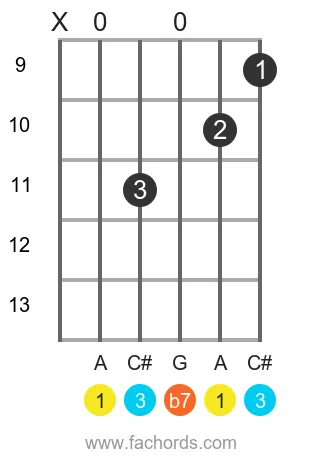
Finger Positions
- Mute the low E string
- Let the A string play without pressing any fret
- Let the G string play without pressing any fret
- Place your index finger (1) on the fret 9 of the high E string
- Place your middle finger (2) on the fret 10 of the B string
- Place your ring finger (3) on the fret 11 of the D string
Position 17 Open
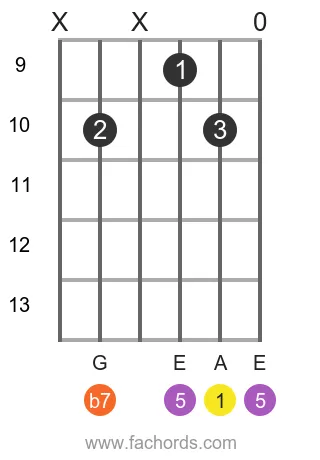
Finger Positions
- Mute the low E string
- Mute the D string
- Let the high E string play without pressing any fret
- Place your index finger (1) on the fret 9 of the G string
- Place your middle finger (2) on the fret 10 of the A string
- Place your ring finger (3) on the fret 10 of the B string
 Find more shapes in our all guitar chords online library. If you
prefer a printable pdf, download
the Free Guitar Chords Chart Pdf

Created by
Giancarlo is a musician (teaching guitar since 2000), software engineer, AI consultant and published researcher
FAQ
What notes make up A dominant seventh?
A7 is spelled A, C#, E and G. Take the A major triad and add the G, a minor seventh over the root.
Which key has A7 as its V7 chord?
D major. A is the fifth degree of D major, and the G in the chord is its fourth degree, so A7 leads home to D.
How many voicings has A7, and how many use open strings?
A7 has 17 voicings, from fret 2 to fret 12. Twelve of the voicings use open strings and two are barre voicings.
Which scale fits A7?
A Mixolydian is A, B, C#, D, E, F# and G. All four chord notes are in it, and G is the flat seventh that distinguishes it from A major.
What do the 5 and b7 in A dominant seventh mean?
The 5 is E, a perfect fifth over A. The b7 is G, a minor seventh over the root, one whole step under A at the octave.